![[blog]_[5 Key Reasons Why Digital PR Should Play An Important Role In Your SEO Campaign]_[Blog Picture]](https://cedarwood.digital/wp-content/uploads/2022/12/Untitled-design-46-1-900x506.png)
Digital PR has become a huge buzzword in the digital marketing industry over the last few years. We’ve increasingly seen companies look to leverage an online presence in the PR industry and gain those all important links back to their websites. For the most part, Digital PR has been seen as a more effective alternative to link building but, in actual fact, it is so much more than that. Away from the traditional “link building” title, Digital PR dials right into the key SEO elements of improving reputation, building relevant links and showcasing expertise across a range of external websites. Alongside all of this, it helps to enhance important E-E-A-T signals too.
If you’re looking to find out more about Digital PR and how it can support your SEO campaigns and, moreover, why it should be a significant factor in doing so, then read below to find out our five key reasons why Digital PR should play an important role in your SEO campaigns:
1. Reputation
No, I’m not talking about the Taylor Swift album (although I did go to her tour), I’m talking about section 3.1 of Google’s Quality Rater Guidelines, which talks to us about how important reputation is to a page’s quality rating – for reference you can find it here:
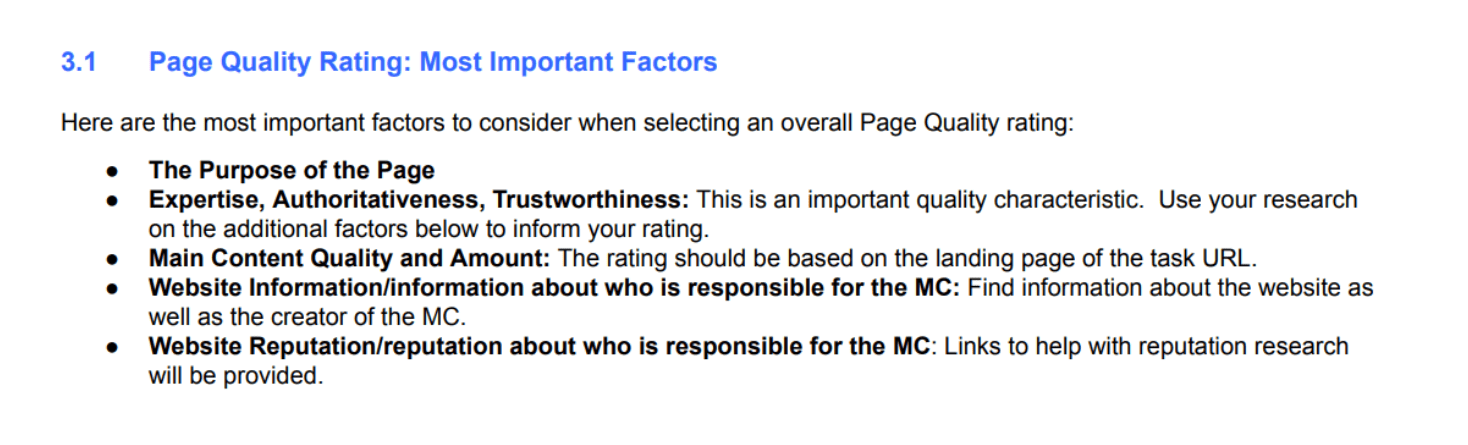
Reputation is important. Google and users want to know what your website’s reputation is and the reputation of the person who is responsible for creating the main content. So, where do they go to source this information? Yes, most likely they will start with your website, but chances are they will also go looking around the web to see if they can find out more information about you; that’s where Digital PR comes in. Demonstrating that your website has a good reputation, or giving information about the reputation of the person responsible for your content, is one of the main benefits of a strong Digital PR campaign.
Digital PR has the ability to really build out your reputation by growing your brand presence and expertise on external websites. A solid Digital PR campaign should use a range of techniques (newsjacking, thought leadership, data analysis) to build you a brand presence online. If done well, then it shouldn’t be hard for users or Google to find out about you and your reputation.
For many brands PR is seen as more of a personal branding exercise, but in the SEO space it’s about much more than that. Yes, it will help to build those high quality links into the website and, yes, it may lead to referral traffic if you get your product or services in front of the right audience, but more than that, it is your personality out there on the web. In short, it’s the way that you present yourself in front of an external audience.
2. Because It IS Important
Having an online PR presence is a great way to drive your brand in a market that is powered by journalists sourcing data online, and by the rise of social media. Heard of HARO? #prrequest and #journorequest? These are all ways that journalists look online for PRs and brands to help them out with their stories. Having a strong Digital PR function allows you to push your brand to these journalists at the exact time they are looking for information, therefore putting you at the front and centre of the conversation.
According to Cision’s State Of The Market report press releases are still a trusted source of information for around 54% of journalists in the UK. This means that if you are sending them something that is in the public interest there’s a good chance you’ll get it in front of the right audience. In fact, 73% of journalists go online to find press releases, so being able to connect with journalists who are looking for information that you or your client might possess is a very valuable skill.
It’s not just journalists who value Digital PR either. Even in the realms of SEO it is a highly regarded approach that helps to build on the key elements of a successful SEO campaign; namely expertise, authority and trust. Within Google’s Quality Rater Guidelines these three elements are highlighted within the report numerous times, and an effective Digital PR strategy will naturally weave these throughout.
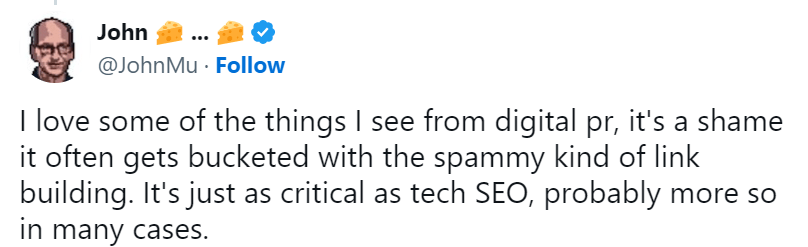
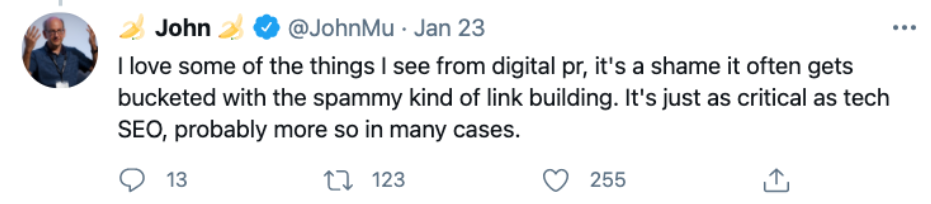
Also, who could forget what John Mueller said about Digital PR? I feel like I’ve seen this quote so many times now, but it really does reinforce the way that Digital PR is viewed across the SEO spectrum, and the power it can wield in terms of driving solid results for a brand:
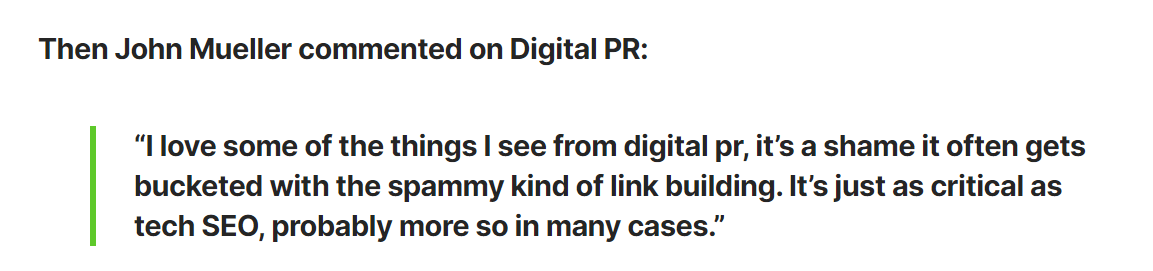
Digital PR has worked hard to distance itself from spammy link building tactics, as this method requires you to have a genuine piece of expertise-rich content or an article that is in the public interest (which is essential for it to be covered in the first place). That’s one of the main reasons it works so well for SEO; by its very nature it has to have that level of expertise, relevancy and trust, all of which are key signals for a solid SEO campaign.
3. Referrals
Great Digital PR isn’t just about building high quality links or getting your super relevant expertise covered. It’s about being able to put your product or service in front of the right audience, in order to drive referral traffic and/or leads or sales through to your website. Referrals help to build momentum, drive more traffic through your content and product pages, and help more people to find out about your brand. In turn, this can lead to an increase in positive signals to your website as well as a lot more people talking about your brand and, of course, the ultimate goal: sales!
Digital PR is a really effective way to drive referral traffic to your website, in fact, every type of Digital PR campaign can drive referral traffic if it’s angled in the right way. Product placements are perhaps one of the best examples of where you can drive traffic. Product placements mean getting your products put in front of your target audience to drive referral sales.
We’ve had a lot of success placing some of our client’s most important products in front of their key target audience, such as this coverage in the Independent:
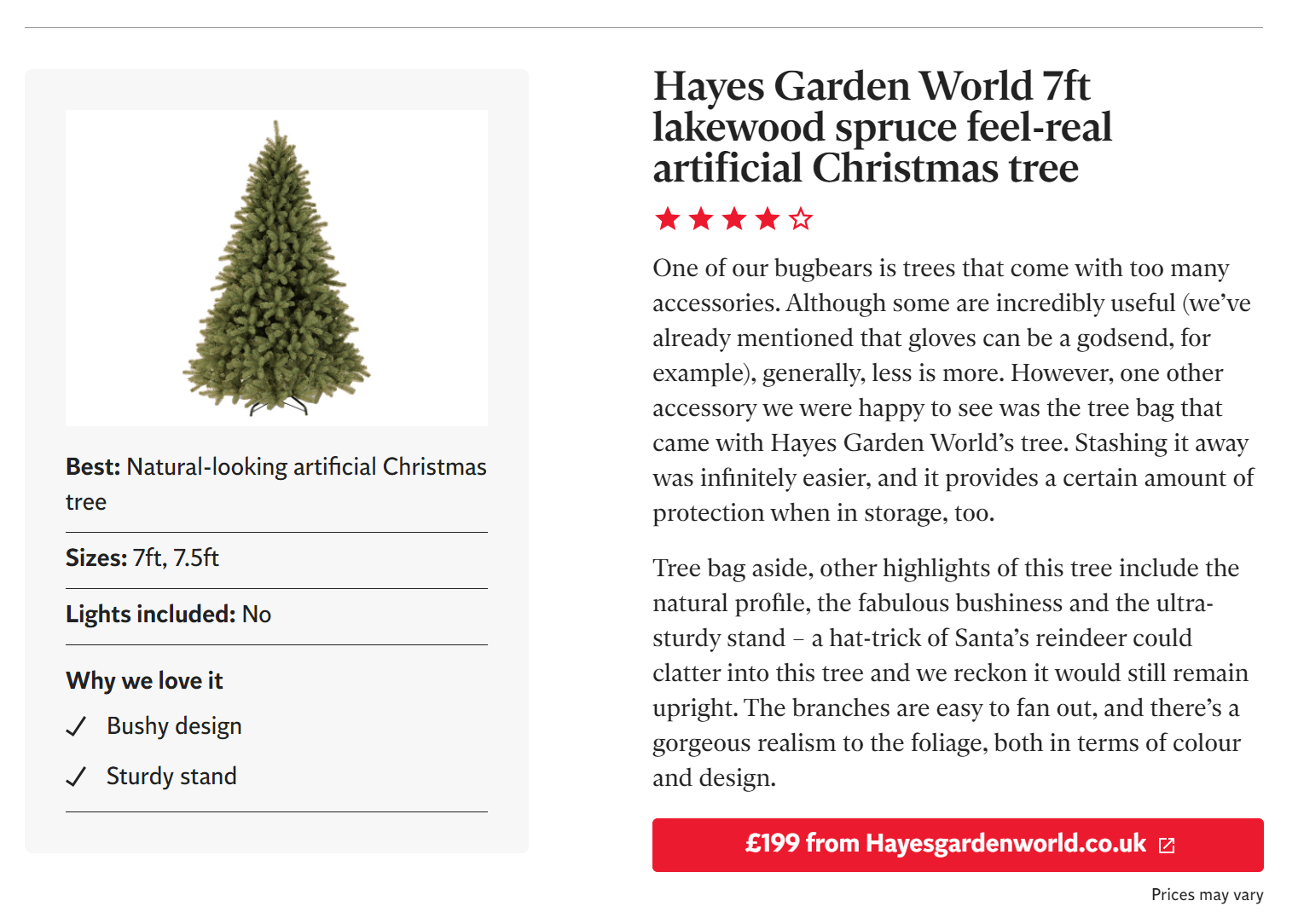
Product placements are an excellent way to get in front of your audience. They also drive high quality links back to your website, thus building valuable E-E-A-T signals. Which, as we know, can help towards improving your website’s SEO performance.
Referrals don’t just come from product placements. You can also drive leads by creating really relevant case studies and data-led pieces, which include a clear call to action at the end that encourages users to visit the website or get in touch if they need more information.
Referral traffic is a great way to supplement your sales and leads too. If you can generate both of these from sources outside of direct SEO, for example through Digital PR, then it gives the campaign a really well-rounded approach. As an added bonus, it can drive extra sales and leads for your client or business too, making it highly valuable as a branding exercise, and for the bottom line.
4. Boosting E-E-A-T Signals
Perhaps one of the most important reasons for having Digital PR in your campaigns is boosting essential E-E-A-T signals. These are a major player when it comes to Google’s ranking factors, and your off-site signals can play a key role in helping Google to understand more about your website. In addition, they help to build trust and credibility among your audience, encouraging conversions and customer retention.
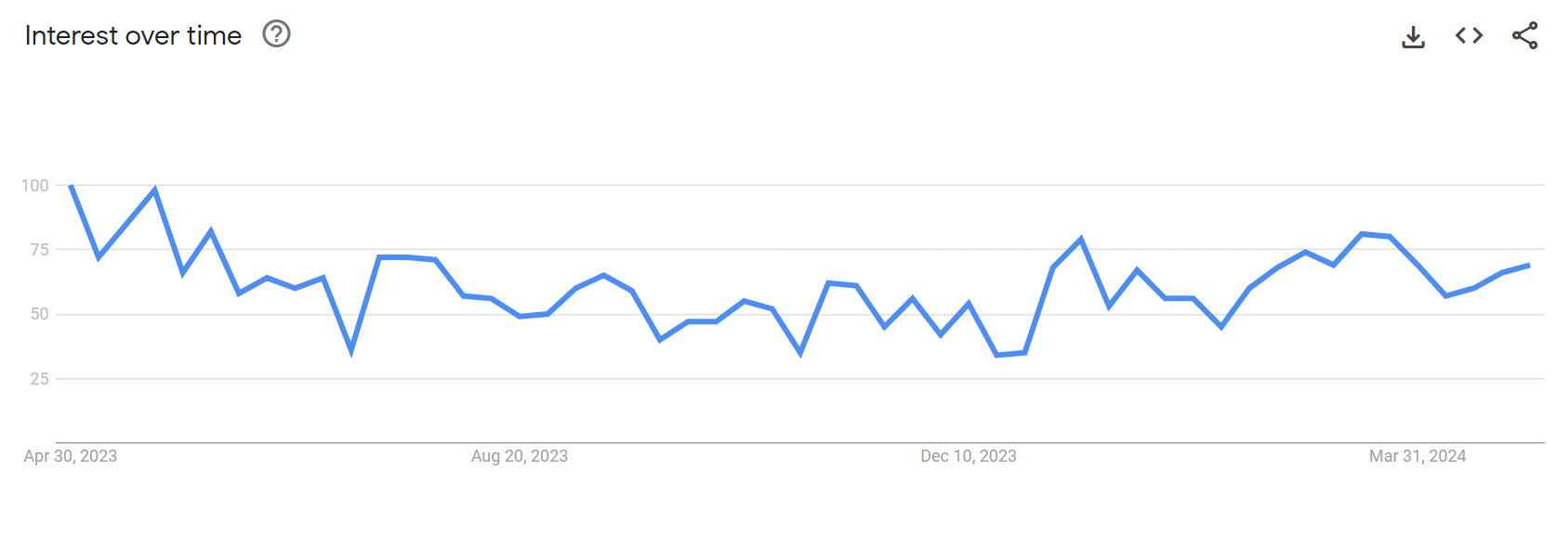
E-E-A-T is perhaps one of the most used acronyms in the digital marketing space. A simple Google search of it will produce the following results…
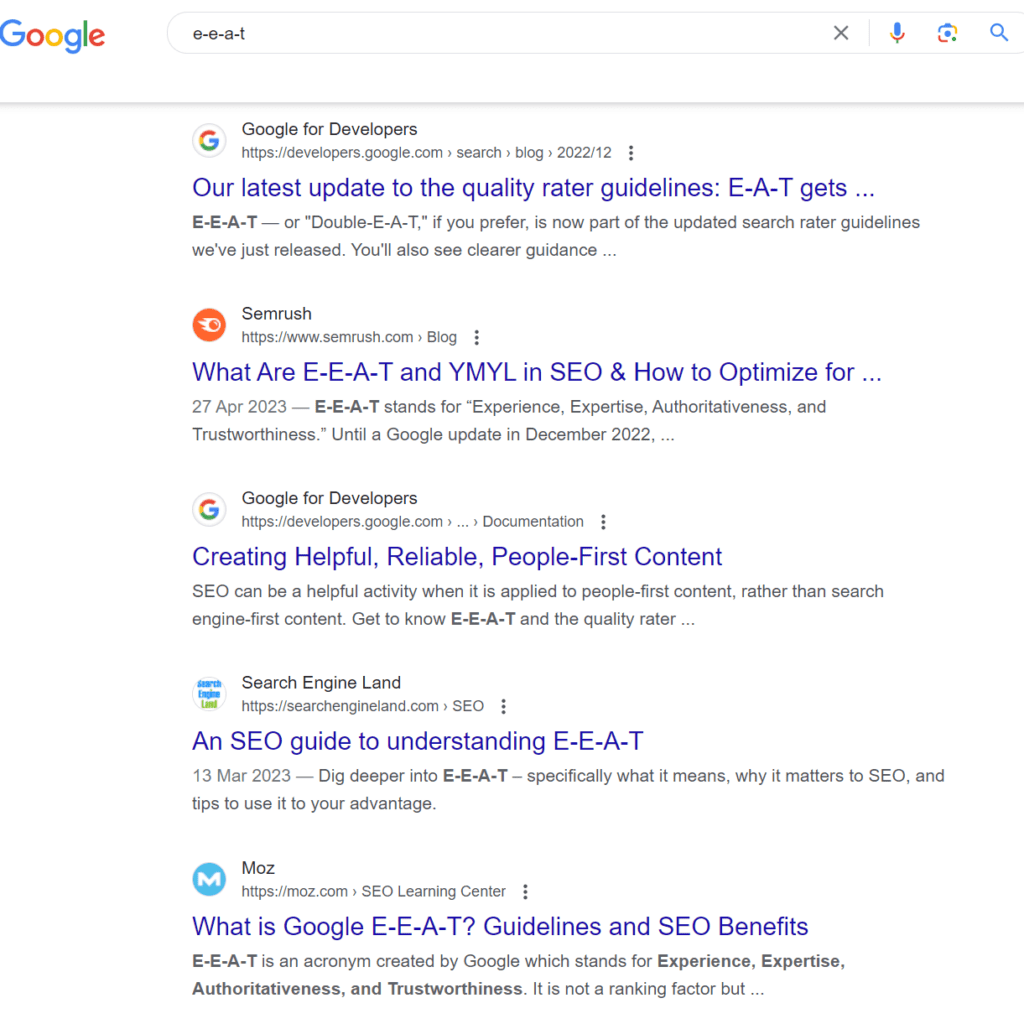
… indicating how much people in the digital space are talking about E-E-A-T – and this is just a snapshot of the discussions that are happening. Since the Google Medic Update everyone has been busy trying to improve their overall Expertise, Authority and Trust signals and Digital PR has been one of the most effective ways to do that.
So how does Digital PR boost E-E-A-T signals? By definition, whatever approach you are taking, whether it’s newsjacking, data analysis or thought leadership you’re going to be showcasing the expertise and relevance of your brand.
Thought leadership: showcasing and utilising your expertise to give valuable information to an audience.
Newsjacking: adding your expert opinion and commentary to a trending topic which also allows you to showcase your expertise.
Data: showcasing your expertise (or your brand data) to demonstrate an outcome, or alternately adding an expert comment to your data findings.
Each of these approaches is demonstrating your expertise and knowledge on a relevant topic on external websites, thus enhancing your E-E-A-T.
High quality links are a good ranking factor for Google but it’s not enough for these links to be good quality, they also need to be relevant. Topical, relevant links from a high domain ranking website (think national publications, regional dailies and publications that are super relevant to your niche) are a great way to help build those key E-E-A-T signals, while also strengthening your website’s link profile.
In addition to building topical links into your website you can also strengthen the E-E-A-T of certain sections of your website by building targeted links into key service and product pages. This can be achieved through a more targeted Digital PR campaign which, in turn, can help to build topical authority across these areas. You’ll also be embedding the authority and trust, and boosting external ranking signals to key areas of your website.
5. To Create Topical Authority
When used correctly, relevant Digital PR has the ability to boost and create topical and semantic authority, which we know is crucial to building a well-structured SEO campaign. Many SEO practitioners work hard to build on-site topical clusters, pillars or semantic posts (depending on what you call it), but they forget to supplement this with strong off-site linking around a specific topic. In doing so you can really showcase your expertise and authority around a particular vertical or topic area, and back up your valuable on-site content pillaring with solid off-site Digital PR links. All of which will give a strong boost to your business reputation in that vertical.
Digital PR campaigns can be structured to drive topical authority by organising the campaign to target specific subsections of the website or specific themes. Thought leadership, data-led analysis and newsjacking techniques can all be adapted to work with certain sectors of the market, and to target relevant audiences and publications on topics that marry closely to your website content. This is a great way to give an extra little boost to an already solid on-site topic cluster and it can help to bolster general external trust signals in the process.
There’s a lot of discussion in the SEO industry around the importance of link relevance and the role that it plays within topical authority. In this article, Paddy Moogan discusses the concept of link relevance vs content relevance for link building. He concludes that the relevance of the content is more important than where you get your link from. This backs up our key message of how link building can further improve your topical authority, and how you can use Digital PR to supplement this.
Whether you’re looking to build reputation, increase referrals, enhance key E-E-A-T signals or to improve topical authority, Digital PR plays an important role in building out and supporting your SEO campaigns. To find out more about how we can help you with this view our SEO and Digital PR pages here.
![[blog]_[6 Digital PR Techniques To Turbo Charge Your SEO Campaigns]_[Blog Picture]](https://cedarwood.digital/wp-content/uploads/2022/12/Untitled-design-47-1-900x506.png)



![[blog]_[A Guide To Digital PR]_[Blog Picture]](https://cedarwood.digital/wp-content/uploads/2022/09/Untitled-design-70-900x506.png)


![[blog]_[Get grafting; Digital PR and why Love Islanders mean links.]_[Blog Picture]](https://cedarwood.digital/wp-content/uploads/2021/07/Untitled-design-71-900x506.png)
![[blog]_[Case Study: How we earnt 121 links for one Digital PR campaign]_[Blog Picture]](https://cedarwood.digital/wp-content/uploads/2021/04/Untitled-design-72-900x506.png)
![[blog]_[Newsjacking, Soap Stars and Great PR]_[Blog Picture]](https://cedarwood.digital/wp-content/uploads/2021/03/Untitled-design-73-900x506.png)
![[blog]_[Backlinks and Brainteasers: a marriage made in SEO]_[Blog Picture]](https://cedarwood.digital/wp-content/uploads/2021/02/Untitled-design-74-900x506.png)




![[blog]_[Improve Email Response Rate: Small Changes That Make A Big Difference]_[Blog Picture]](https://cedarwood.digital/wp-content/uploads/2020/11/Untitled-design-75-900x506.png)
![[blog]_[ 5 simple lead generation ideas ]_[Blog Pictures]](https://cedarwood.digital/wp-content/uploads/2020/11/Untitled-design-14-900x506.png)
![[blog]_[Is Digital PR Valuable? And How Is It Measured?]_[Blog Picture]](https://cedarwood.digital/wp-content/uploads/2020/06/Untitled-design-76-900x506.png)
![[blog]_[Why are links important for SEO, and how can I get them?]_[Blog Picture]](https://cedarwood.digital/wp-content/uploads/2020/03/Untitled-design-57-900x506.png)