[blog]_[Digital PR: 10 Free Data Sources To Help You Land Solid SEO Links]_[Blog Picture]

Digital PR: 10 Free Data Sources To Help You Land Solid SEO Links

We all know that Digital PR plays an important role in any solid SEO strategy. Whether it’s chasing after valuable high-quality links, improving the external reputation of your business, or trying to build credible, expertise-driven connections between your website and other trusted sources, doing it in a sustainable and consistent way is a key pillar of SEO success.

Although there are many ways to do Digital PR effectively (think newsjacking, thought leadership, product placements), data-led campaigns have grown in popularity as journalists look for interesting, data-driven stories to entertain their audience. 

When data-led campaigns started a lot of them were based around surveys. In some cases, these were expensive to commission (upwards of £3,000 per survey) and it took a while to get the data back. Although these are still a popular option among many SEO agencies, the rise of freely available data sources has paved the way for cheaper and quicker turnaround pieces, for example newsjacking with a data-led campaign. Yet they are also equally as effective for targeted news stories, thus creating a great recipe for effective Digital PR. This has led to a big rise in smaller data-led campaigns, which are a favourite among many agencies, including the team here at Cedarwood. 

To help out on your hunt for free data we’ve collated some of the best free data resources available to Digital PR professionals right now. All you need to do is go in and grab your data, find an angle and perfect that pitch. Data-driven Digital PR campaigns are a great way to enhance those all important E-A-T signals, adding real value to your SEO campaigns. So what are you waiting for? Get started by having a read through our list below:

1. Statista

https://www.statista.com/

One of the biggest portals of available data, Statista holds data from over 170 industries across 150+ countries so, if you’re looking for data, this is a great place to start. With a super easy to use interface you just input your search query to find relevant results. For example, if I wanted to know more about the 2022 FIFA World Cup I could input that exact query:
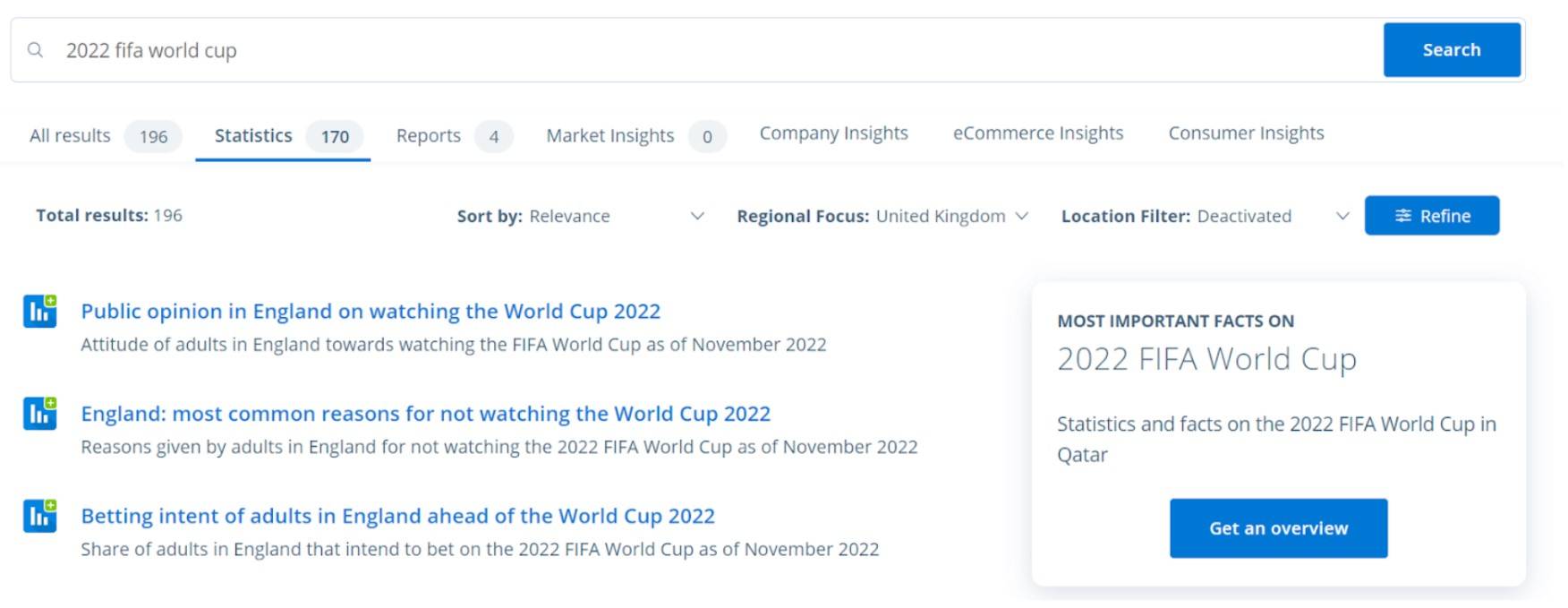
Source: Statista

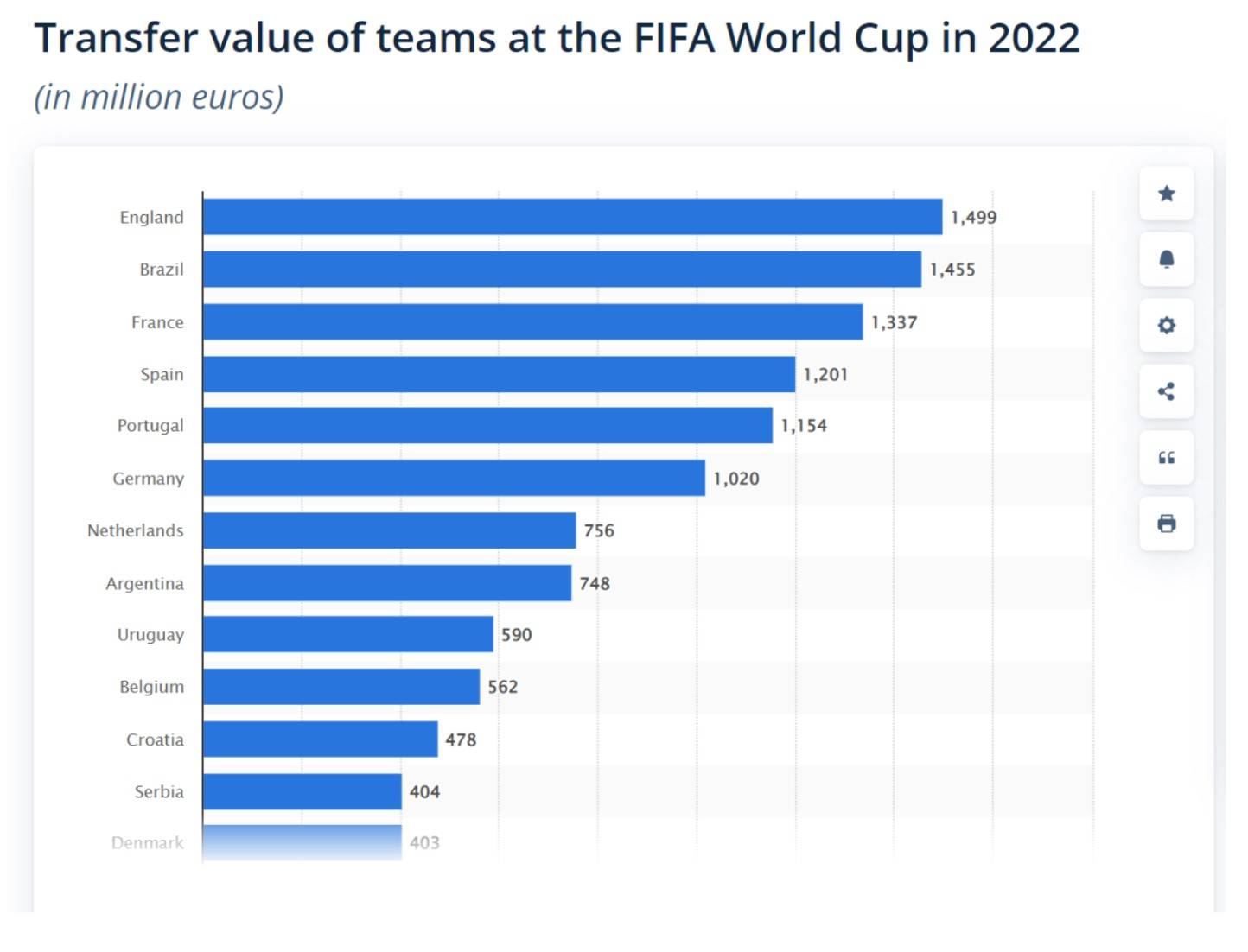
If I wanted more of a summary, I have the option to only select the most important facts, for example, the transfer value of each of the country’s teams in the World Cup. I could then drill down further:
Source: Statista

Utilising data like this is a really valuable way to quickly analyse and pull together a newsworthy story. An example of the above would be looking at how likely a team is to win the World Cup based on their transfer value – a very timely, topical and data-driven piece of content from a very effective free data platform.

2. Google Ads Keyword Planner

https://ads.google.com/intl/en_uk/home/tools/keyword-planner/

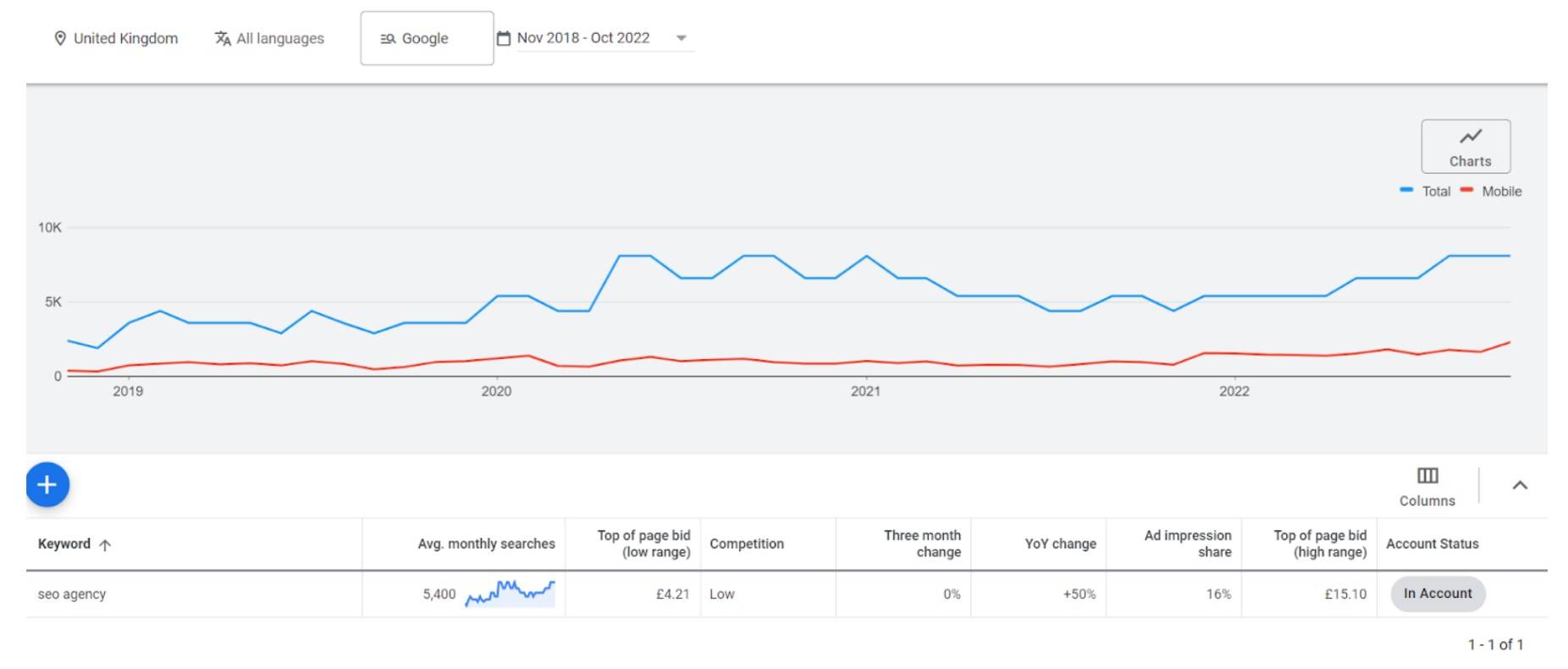
Google Ads Keyword Planner is a highly effective way of gathering data around key trending topics and search volumes, to draw an analysis piece. The tool allows you to view current data (up to the previous month), data for related searches and even historical data for a few years, allowing you to analyse year on year comparisons.
Source: Google Ads Keyword Planner

In the above image we can see the variety of information that Google Ads Keyword Planner makes available to us, including search volume per month for that keyword, level of competition, change YOY etc… We’re also able to split that out by device (mobile or desktop), and drill down by a specific country, region or even city, enabling us to make comparisons at a very granular level. With this level of detail freely available, you can probably already imagine the types of angles and stories that can be developed just from accessing this data.

We recently used data in this way to pull together an effective Digital PR campaign for our client, Mist E Liquid, looking at which date users would give up their new year’s resolutions (based on search data). This landed some great coverage including a link from Yahoo!. If you are looking for a great option for data analysis then the Google Ads Keyword Planner is a good place to start.

3. Google Trends

https://trends.google.com/trends/

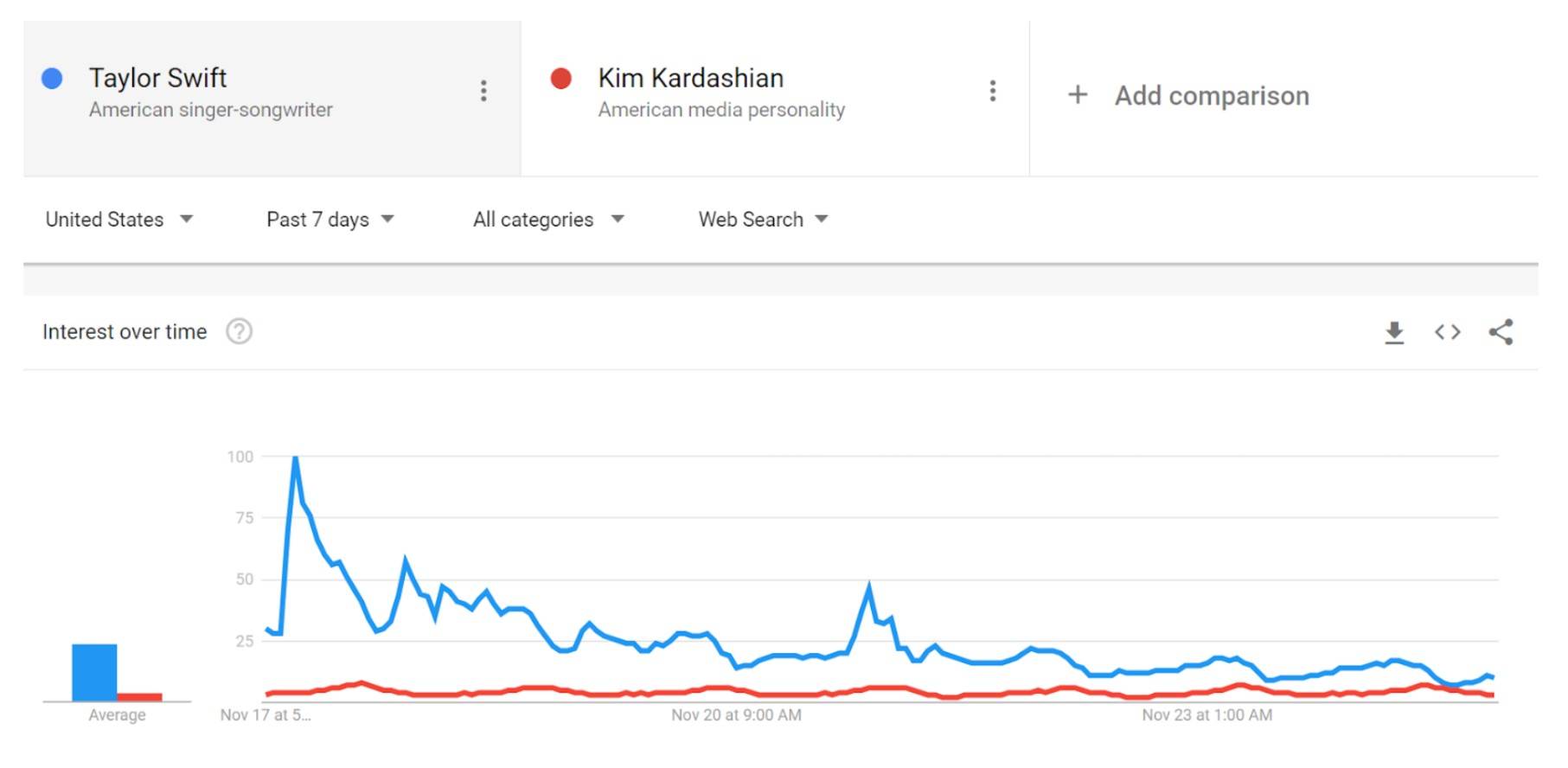
Google Trends is another great tool that Google offers that provides you with the option to undertake free data analysis around trending topics. You can analyse something that is incredibly topical and compare it over time, by location and against other trending topics, to once again draw conclusions for an effective digital PR piece. 

Google Trends allows you to analyse the performance of particular trending topics over time, as well as compared to one another:
Source: Google Trends

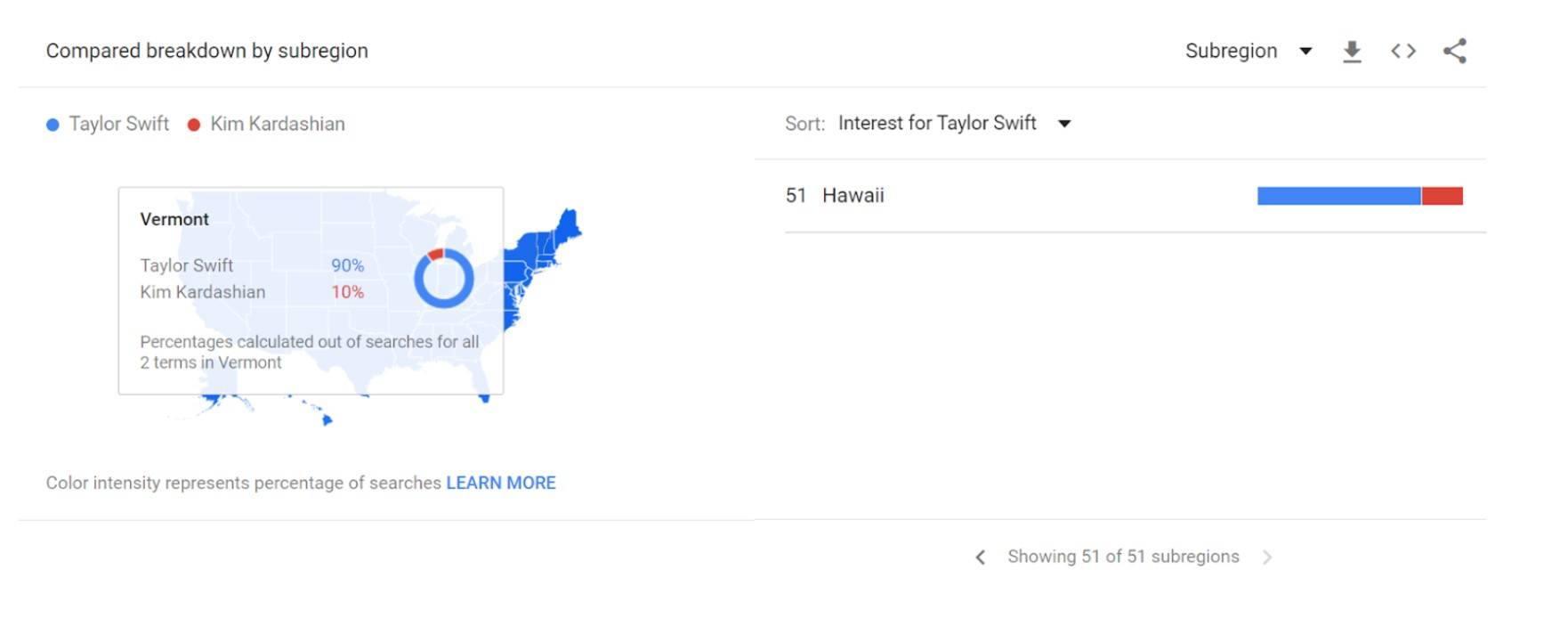
In addition, it has a drill down option where you can compare the performance of those trending topics in specific areas; for example, looking at how trends for Taylor Swift and Kim Kardashian differ based on US States:
Source: Google Trends

Similar to the Google Ads Keyword Planner, Google Trends can be quite granular with its dataset, so it’s down to you to understand which data you are looking for and how you want to evaluate it. If you are looking for up-to-date data on topics that are currently trending, or even just for ideas on which topics are actually trending, then this is a great place to start.

4. NHS Digital

https://digital.nhs.uk/

NHS Digital is an online platform where you can freely access data that the NHS holds, and reports that they frequently publish online. The data they cover ranges from statistics on NHS Stop Smoking Services to workforce statistics, maternity services, GP appointments and so on and so forth. It can be used as a data source for news stories closely relevant to the medical and technology sectors.

The reports are easily digestible and come with two main formats. Initially they give an overview of the key findings from the report, highlighting key pieces of analysis and themes that have come out of it; these are usually broken down into three or four boxes similar to this:
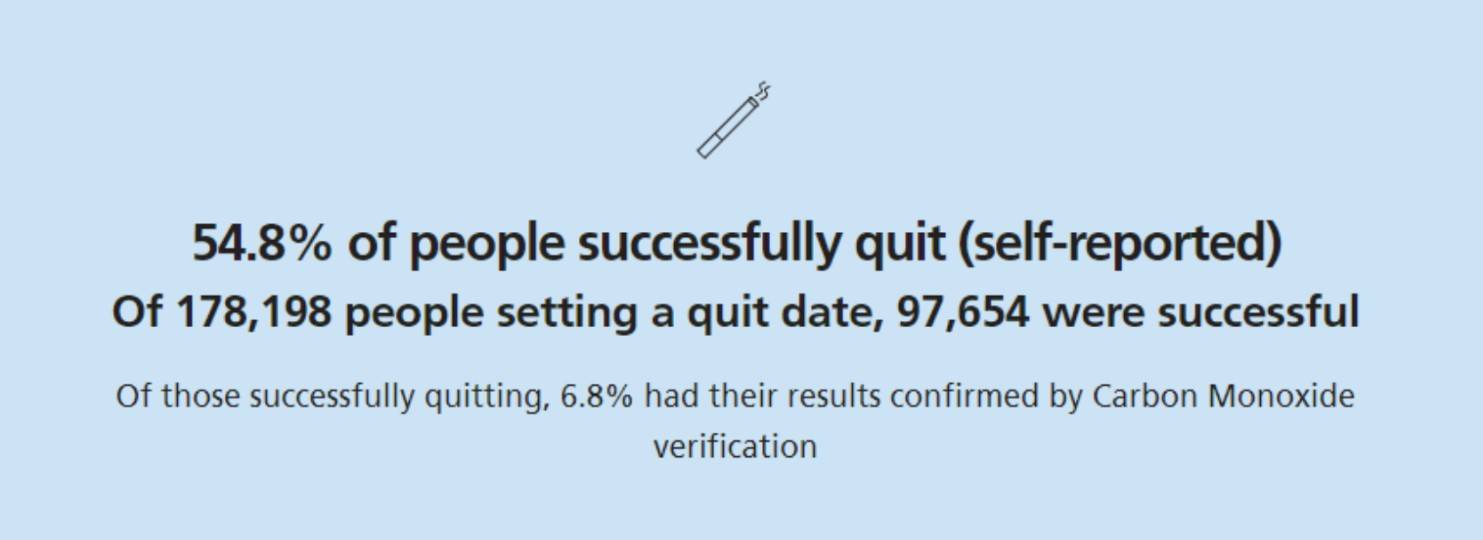
Source: NHS Digital

Following on from the headlines you then have a range of datasets which are broken down into both charts and Excel spreadsheets, to easily digest and manipulate/evaluate the data. This is where you can start to draw comparisons and identify angles which may be newsworthy or relevant for your client.
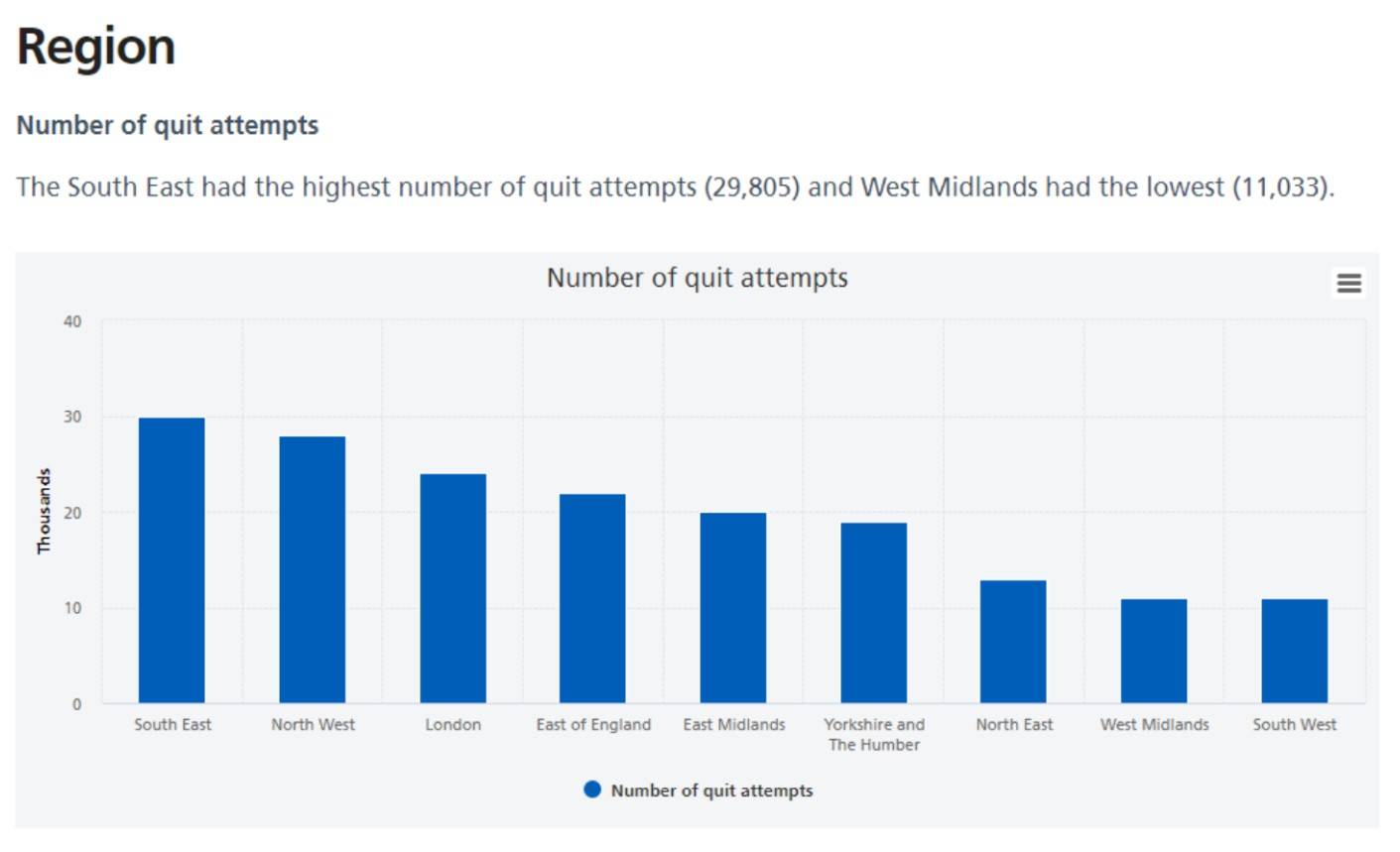
Source: NHS Digital

The data above allows you to draw topical analysis around the report, i.e. in this instance you could look to compare how many people have tried to quit smoking in a specific region vs the population of that region to understand which region of the UK is most likely to quit smoking. It’s a quick and simple piece of analysis that could be seeded to regional media with a local interest. 

NHS data is often very topical and trending. A great example of this is how the recent NHS report into appointments in general practice (October 2022) was picked up and turned into a news story on The Daily Mail. The piece highlighted which of the country’s NHS practices had the least in-person GP appointments as per the report. It was, and still is, a very topical issue that has gained great coverage, and is a good example of how a free data report from NHS Digital can be turned into a successful Digital PR piece. 

5. Office Of National Statistics

https://www.ons.gov.uk/

The ONS or the Office For National Statistics is another hub of free information. You can access a range of data sources, from employment rates and inflation (very topical at the moment!), to GDP and population/census data. In addition to standard reports it also offers several interactive features, such as interactive maps, graphs and diagrams of the economy, and indexes that cover areas like health.

On diving deeper into the websites you can see an extensive level of reporting on each of the aforementioned areas, with graphs and statistics updated on a regular basis. 

Within each section you will benefit from an initial summary which governs the top level figures of each report and summarises them into a neat table. This is often complemented by a short dot point summary that outlines the key takeaways.
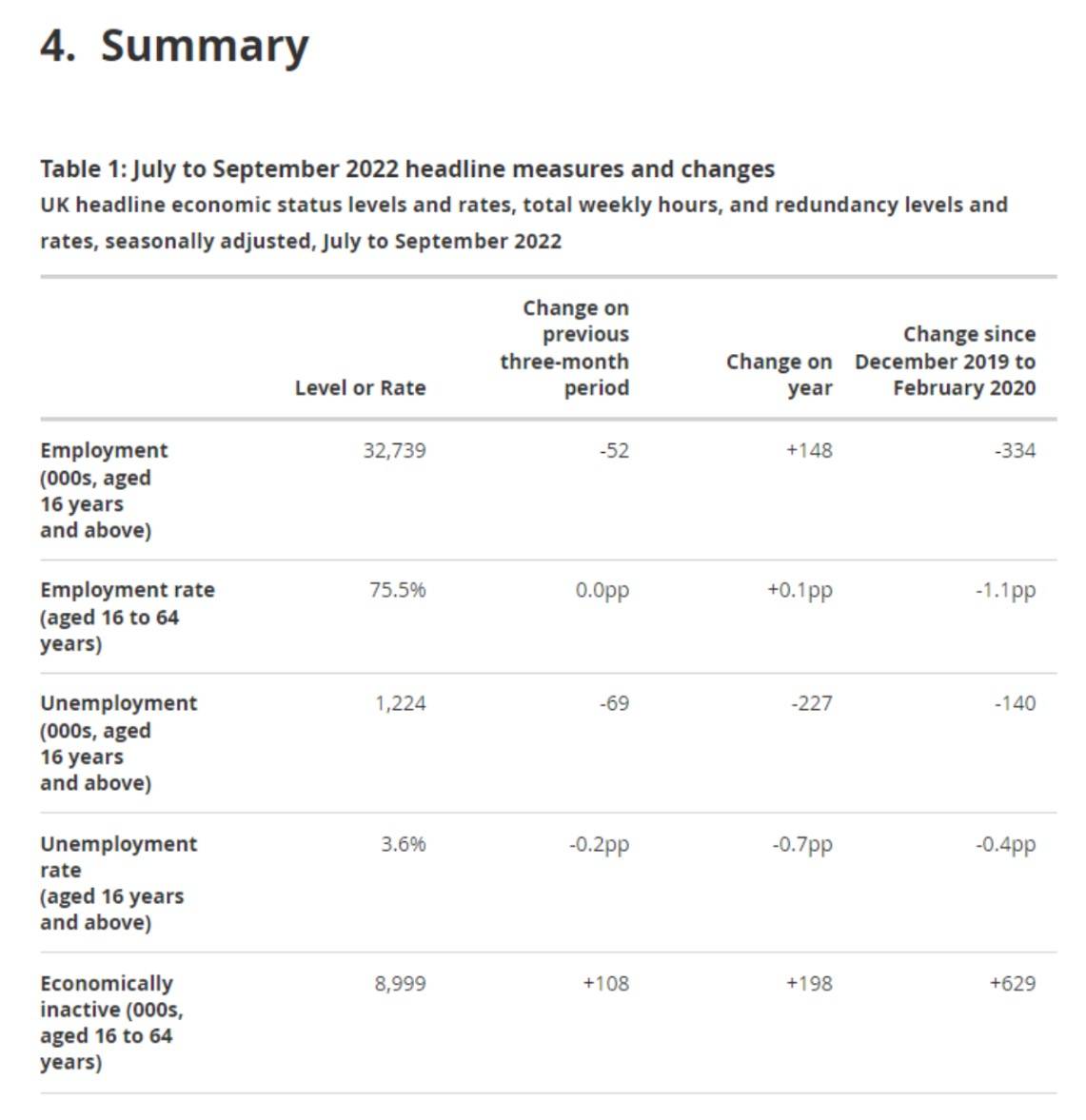
Source: ONS

Some more in-depth graphs usually follow, which evaluate both the three month change and trends over time, so that you can quickly and easily draw data analysis and conclusions.
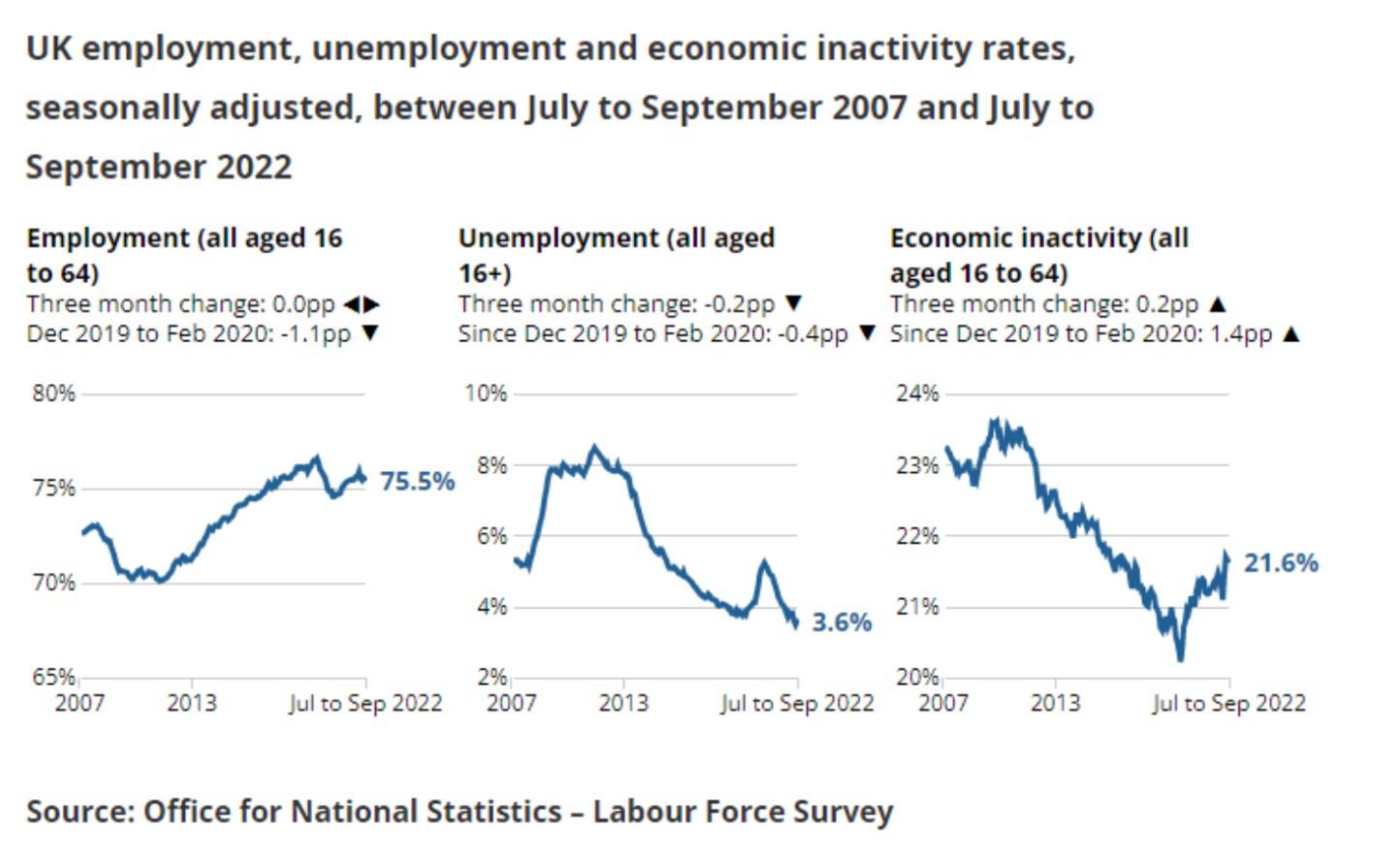
Source: ONS

The ONS publishes a wide range of reports on a regular basis, so it’s always worth keeping on top of any new reports that are coming up. They also have a huge ‘Time Series’ section, which archives any reports that have previously been created; doing a search here (with over 55,000 reports) is likely to bring up something relevant to your query. 

Additionally, the ONS has a release calendar where they feature already published releases and list any upcoming releases. This allows you to plan ahead and check if there are any reports coming up that are relevant to you. You can therefore set some time in your schedule to evaluate and create a great Digital PR story from said reports. 

Centre For Cities

https://www.centreforcities.org

Centre For Cities is a website dedicated to providing a range of data sources broken down by cities and towns across the UK. It’s great if you are looking for data about a specific region or are going for a local angle for a piece of coverage.

The website is incredibly user friendly and interactive. It features data in a number of different ways, including dashboard information that allows you to see a summary overview of how different towns and cities fare on key topics, such as energy bills and cost of living:
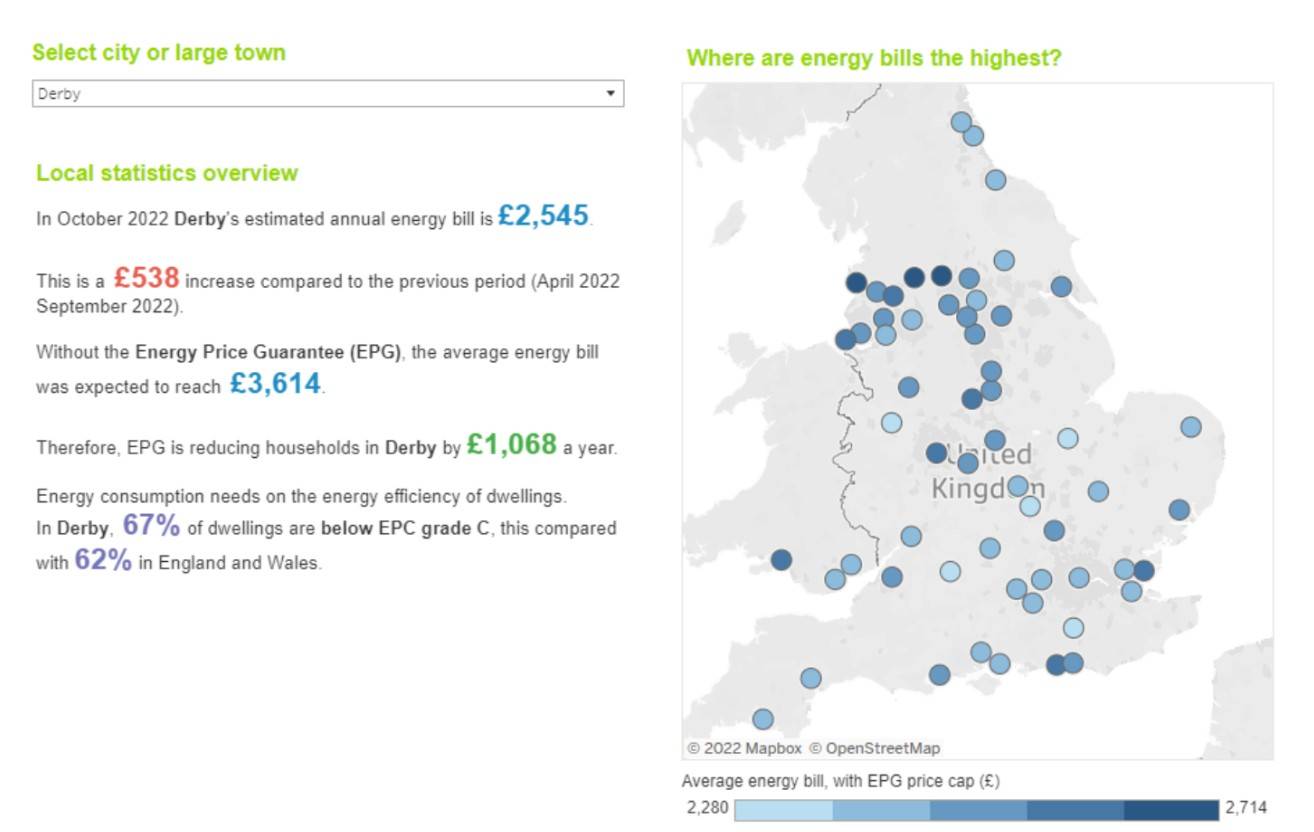
Source: Centre For Cities

There is also the option to break down this information in more detail, giving facts and figures to back up the data and looking at it in a more granular format:
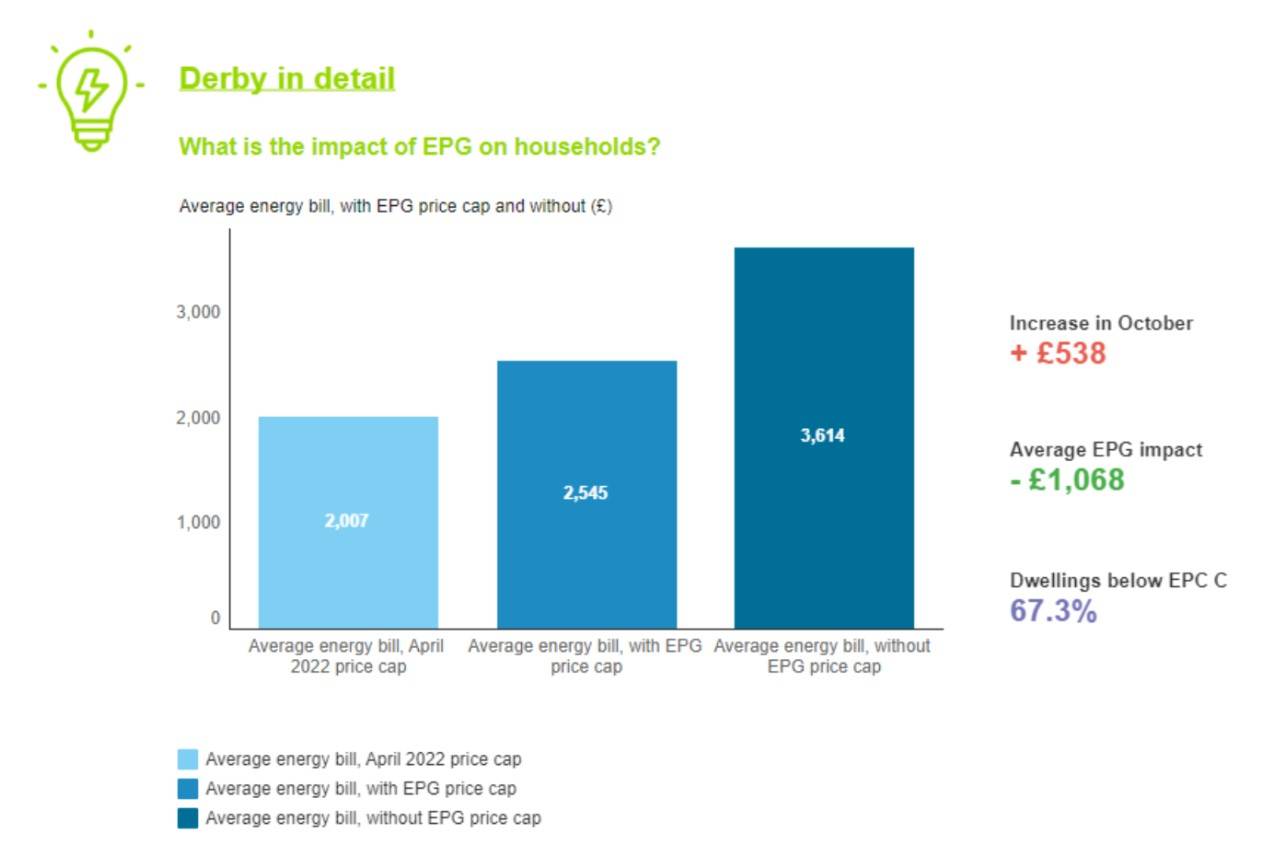
Source: Centre For Cities

The site allows you to draw direct comparisons between different towns and cities so you can see how they are performing alongside each other:
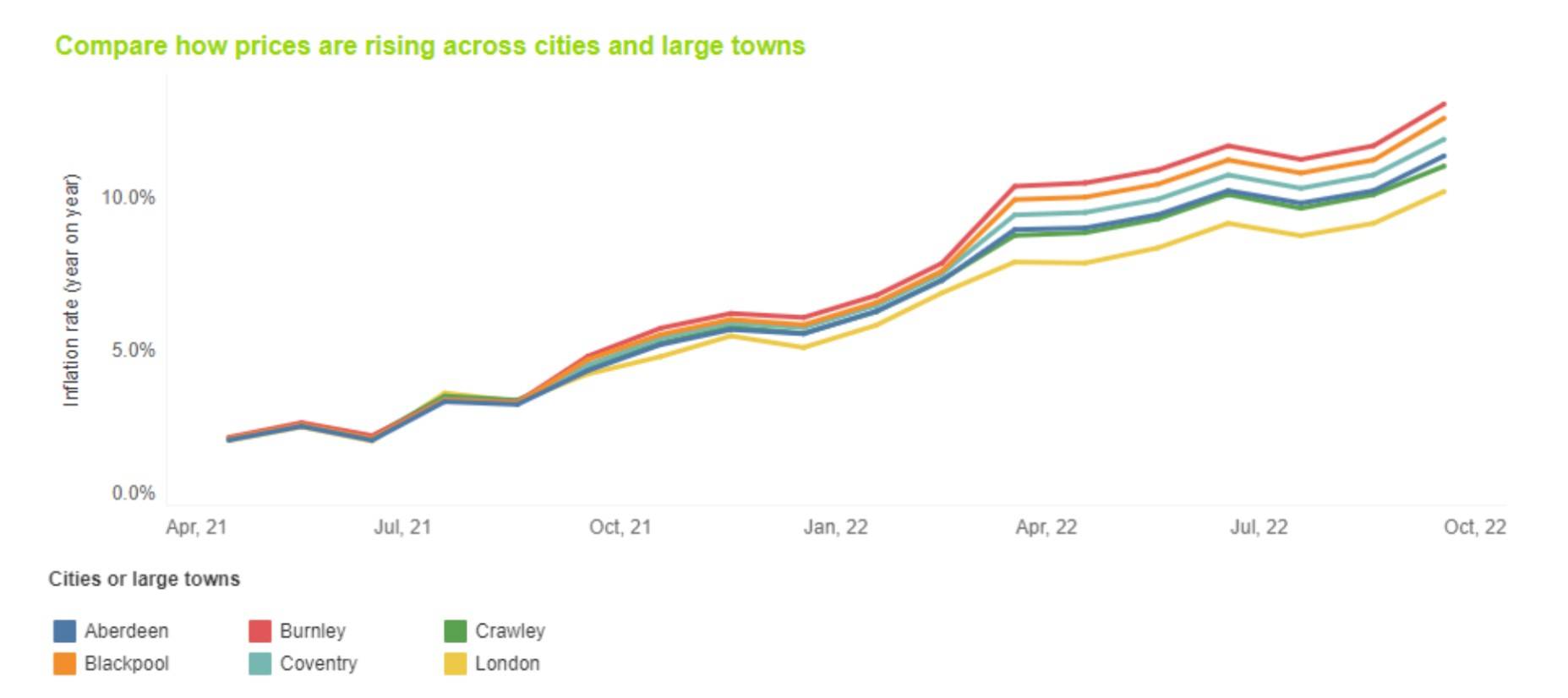
Source: Centre For Cities

This data can be especially valuable if you are looking to evaluate something in a particular town or city, or regionally. The clear visualisation boards can help with data analysis too, so if you are looking to source data on a regional level this is a great place to start.

Google Public Data Sets

https://google.com/publicdata/directory

Google Public Data Sets are publicly available data boards that contain a broad range of information from around the world. Information included in these datasets can be GDP, Word Development Indicators, Agriculture, Domestic Government, Education, Energy, Health, Infrastructure and so much more… 

The interactive data sets allow you to evaluate growth over time and even helps to predict growth factors into the future. In addition, you are able to add and remove countries as you need which allows you to compare countries against each other – another valuable comparison metric.
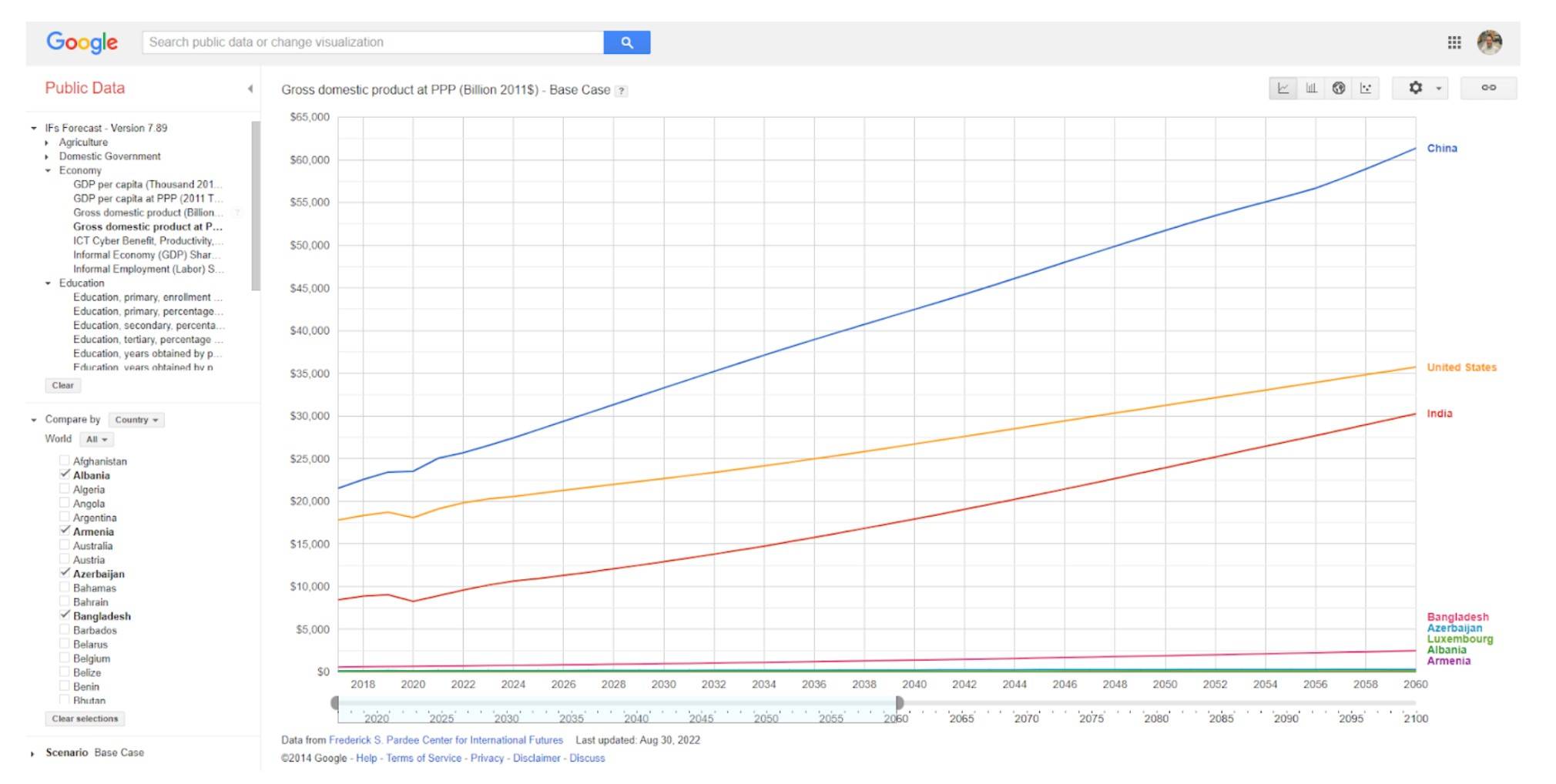
Source: Google Public Data Sets

The Google Public Data Sets launched back in 2018 to provide a search engine strictly for data. Keep this in mind and if there’s something specific that you are looking for, you’ll likely have the ability within this dataset to drill down and find it. It’s also very intuitive, with an easy to use interface, clear description of the data, and even a summary in some sections, so you’ll know if you have an angle on your data or not.

If you know the type of data you are looking for then this is a valuable resource to pull that data together before adding it into your Digital PR strategy.

Data.gov.uk

https://www.data.gov.uk

Data.gov.uk is one of the UK’s largest sources of open data, which has been published by either local authorities, public bodies or the central government. Topics that you can find data on include

  • Business And Economy
  • Government
  • Transport
  • Defence
  • Crime And Justice
  • Health and Education

The information available is very in-depth and can offer good granularity into a sector. For example, if we look at the travel sector we can find over 824 relevant publications, including GB Road Traffic Counts, GM Accessibility Levels, Transport Statistics by region, Metrolink data, Speed Camera data and more. With new publications being added every few days, or even multiple times a day, this information archive is kept well up to date with the latest information. 

The database is quite user friendly and allows you to search by publisher, topic or format, as well as allowing you to sort by the most recent or most relevant topic. You can also do a general search if there is a specific data set that you are looking for. The data sets provided are extensive and, in addition to a standard summary, include a mixture of csv, pdf and zip files containing further information for your data analysis.

If you are looking to undertake a data analysis piece specific to one of the general topics listed above then this is a good data hub and place to start your research. The depth of the data lends itself well to regional analysis if you are looking to expand the reach of your content. 

Eurostat

https://ec.europa.eu/eurostat

If you’re working with European clients then Eurostat will be one of your go-to data platforms. An official website of the European Union, this website is home to wide ranging data about the EU, including inflation rates, GDP growth, house prices, unemployment rates, population data and much more.

The website offers a vast amount of reports and data visualisations that are handy for data analysis. This covers everything from key facts broken down at country level, through to key figures that cover Europe as a whole. Eurostat also has an API section which lets you draw data directly from the source. This is invaluable when you are working with large datasets and can allow you to use a more enterprise approach to data analysis. 

There are interactive dashboards where you can create your own datasets to analyse specific country’s data against the EU and Euro area as a whole. The below example shows where you can interactively check the information you are interested in and the information you are looking to compare together in a dashboard. This allows you to see the country data side by side and can lend itself quite well to effective data analysis.
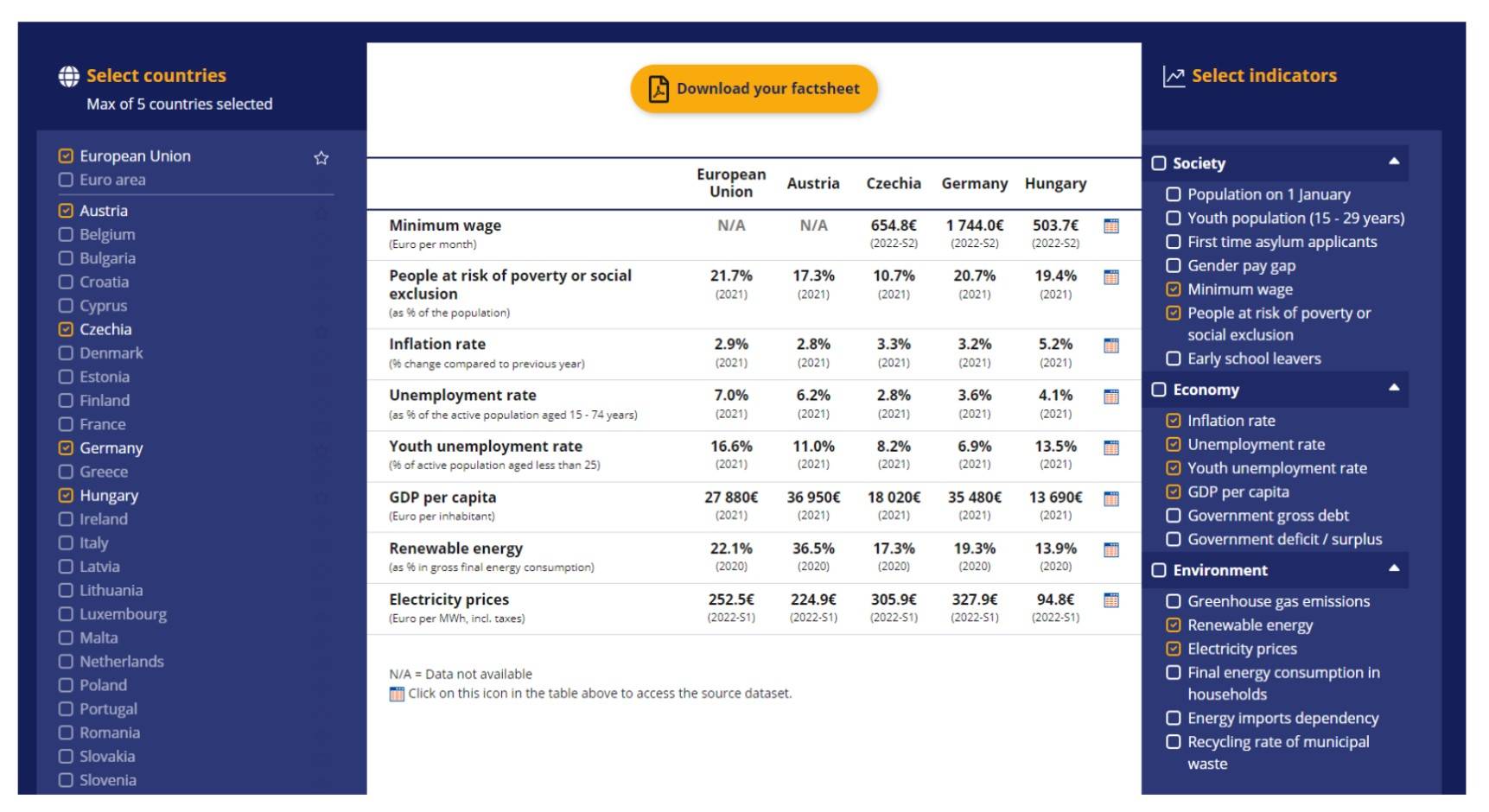
Source: Eurostat

Similar to many other data sources, Eurostat has a release calendar which you can use effectively for proactive newsjacking. It comes in a really easily digestible and aesthetically pleasing format:
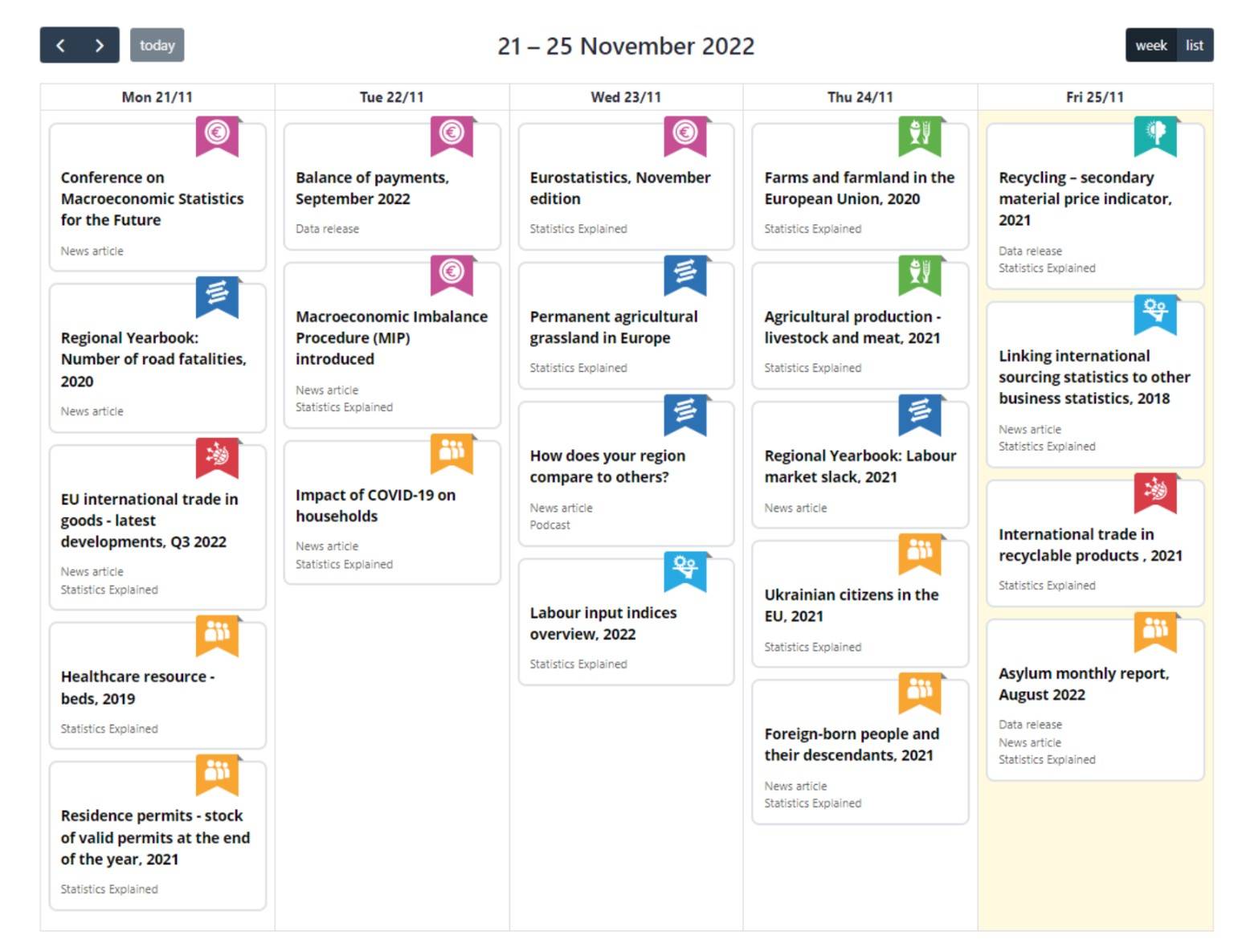
Source: Eurostat

If you want to create stories that involve data from the EU this is an excellent source of information and a great place to start. You can also use the handy calendar function to plan your campaigns in advance when you know key data is being released.

US Bureau Of Data Statistics

https://www.usa.gov/statistics

The US Bureau Of Data Statistics is home to a range of data information sources about the US. It includes census data and information about the economy, demographics and population. It’s a central hub for all information relating to the US and is an official website of the United States government.

In addition to publishing relevant data, the US Bureau Of Data Statistics also provides a list of useful links to other Federal Government data, including the Bureau of Justice Statistics, Bureau of Economic Analysis and the Bureau of Transportation. This allows you to visit the respective sections if you are looking for more granular information about a specific sector. 

There are links through to sections for specific states and local governments too. So if you are looking to analyse data specific to a certain state or local area then utilising the websites provided here is a valuable place to start.

The website also has a maps section, covering topics such as environment data and water resources, current weather, recreation and agricultural information by commodity. If you are planning to analyse any of these in more detail, the website can give you information as granular as crop and plant yield and livestock/animal information. 

If you’re working on some US Digital PR campaigns, then the US Bureau Of Data Statistics can provide you with the data and insight you need for those juicy data-led campaigns.

Now that you have your free data sources you are well on your way to creating some high quality, data-driven Digital PR content. So, what are you waiting for? Start jumping on those trends, analysing great data and producing juicy angles to get your coverage front and centre in the press, delivering those all valuable links back to your client’s (or your own!) website. 

Want to find out more about how you can use free data-led sources for your Digital PR campaigns? Get in touch with our Digital PR team today!

[blog]_[5 Key Reasons Why Digital PR Should Play An Important Role In Your SEO Campaign]_[Blog Picture]

5 Key Reasons Why Digital PR Should Play An Important Role In Your SEO Campaign

Digital PR has become a huge buzzword in the digital marketing industry over the last few years. We’ve increasingly seen companies look to leverage an online presence in the PR industry and gain those all important links back to their websites. For the most part, Digital PR has been seen as a more effective alternative to link building but, in actual fact, it is so much more than that. Away from the traditional “link building” title, Digital PR dials right into the key SEO elements of improving reputation, building relevant links and showcasing expertise across a range of external websites. Alongside all of this, it helps to enhance important E-E-A-T signals too.

If you’re looking to find out more about Digital PR and how it can support your SEO campaigns and, moreover, why it should be a significant factor in doing so, then read below to find out our five key reasons why Digital PR should play an important role in your SEO campaigns:

1. Reputation

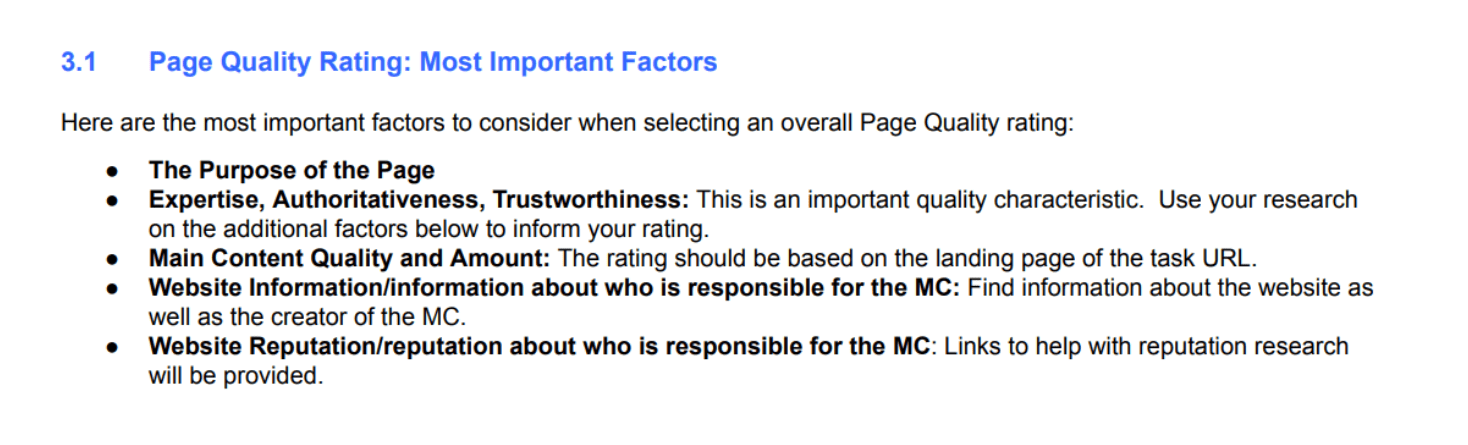
No, I’m not talking about the Taylor Swift album (although I did go to her tour), I’m talking about section 3.1 of Google’s Quality Rater Guidelines, which talks to us about how important reputation is to a page’s quality rating – for reference you can find it here:

Reputation is important. Google and users want to know what your website’s reputation is and the reputation of the person who is responsible for creating the main content. So, where do they go to source this information? Yes, most likely they will start with your website, but chances are they will also go looking around the web to see if they can find out more information about you; that’s where Digital PR comes in. Demonstrating that your website has a good reputation, or giving information about the reputation of the person responsible for your content, is one of the main benefits of a strong Digital PR campaign.

Digital PR has the ability to really build out your reputation by growing your brand presence and expertise on external websites. A solid Digital PR campaign should use a range of techniques (newsjacking, thought leadership, data analysis) to build you a brand presence online. If done well, then it shouldn’t be hard for users or Google to find out about you and your reputation. 

For many brands PR is seen as more of a personal branding exercise, but in the SEO space it’s about much more than that. Yes, it will help to build those high quality links into the website and, yes, it may lead to referral traffic if you get your product or services in front of the right audience, but more than that, it is your personality out there on the web. In short, it’s the way that you present yourself in front of an external audience.

2. Because It IS Important

Having an online PR presence is a great way to drive your brand in a market that is powered by journalists sourcing data online, and by the rise of social media. Heard of HARO? #prrequest and #journorequest? These are all ways that journalists look online for PRs and brands to help them out with their stories. Having a strong Digital PR function allows you to push your brand to these journalists at the exact time they are looking for information, therefore putting you at the front and centre of the conversation. 

According to Cision’s State Of The Market report press releases are still a trusted source of information for around 54% of journalists in the UK. This means that if you are sending them something that is in the public interest there’s a good chance you’ll get it in front of the right audience. In fact, 73% of journalists go online to find press releases, so being able to connect with journalists who are looking for information that you or your client might possess is a very valuable skill.

It’s not just journalists who value Digital PR either. Even in the realms of SEO it is a highly regarded approach that helps to build on the key elements of a successful SEO campaign; namely expertise, authority and trust. Within Google’s Quality Rater Guidelines these three elements are highlighted within the report numerous times, and an effective Digital PR strategy will naturally weave these throughout.

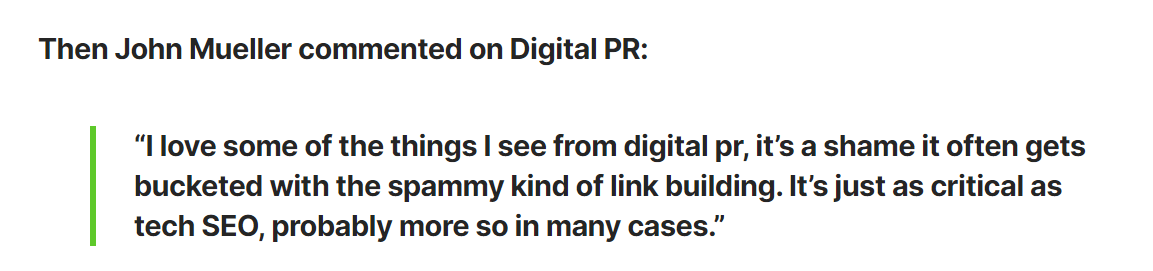
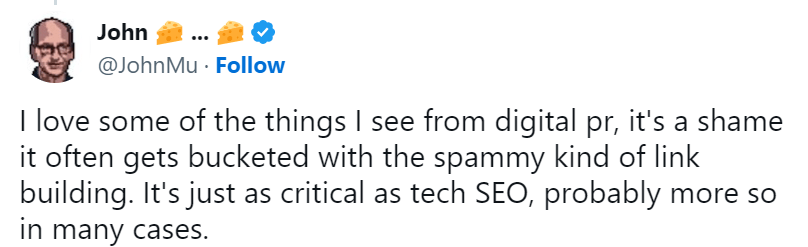
Also, who could forget what John Mueller said about Digital PR? I feel like I’ve seen this quote so many times now, but it really does reinforce the way that Digital PR is viewed across the SEO spectrum, and the power it can wield in terms of driving solid results for a brand:

Digital PR has worked hard to distance itself from spammy link building tactics, as this method requires you to have a genuine piece of expertise-rich content or an article that is in the public interest (which is essential for it to be covered in the first place). That’s one of the main reasons it works so well for SEO; by its very nature it has to have that level of expertise, relevancy and trust, all of which are key signals for a solid SEO campaign. 

3. Referrals

Great Digital PR isn’t just about building high quality links or getting your super relevant expertise covered. It’s about being able to put your product or service in front of the right audience, in order to drive referral traffic and/or leads or sales through to your website. Referrals help to build momentum, drive more traffic through your content and product pages, and help more people to find out about your brand. In turn, this can lead to an increase in positive signals to your website as well as a lot more people talking about your brand and, of course, the ultimate goal: sales!

Digital PR is a really effective way to drive referral traffic to your website, in fact, every type of Digital PR campaign can drive referral traffic if it’s angled in the right way. Product placements are perhaps one of the best examples of where you can drive traffic. Product placements mean getting your products put in front of your target audience to drive referral sales.

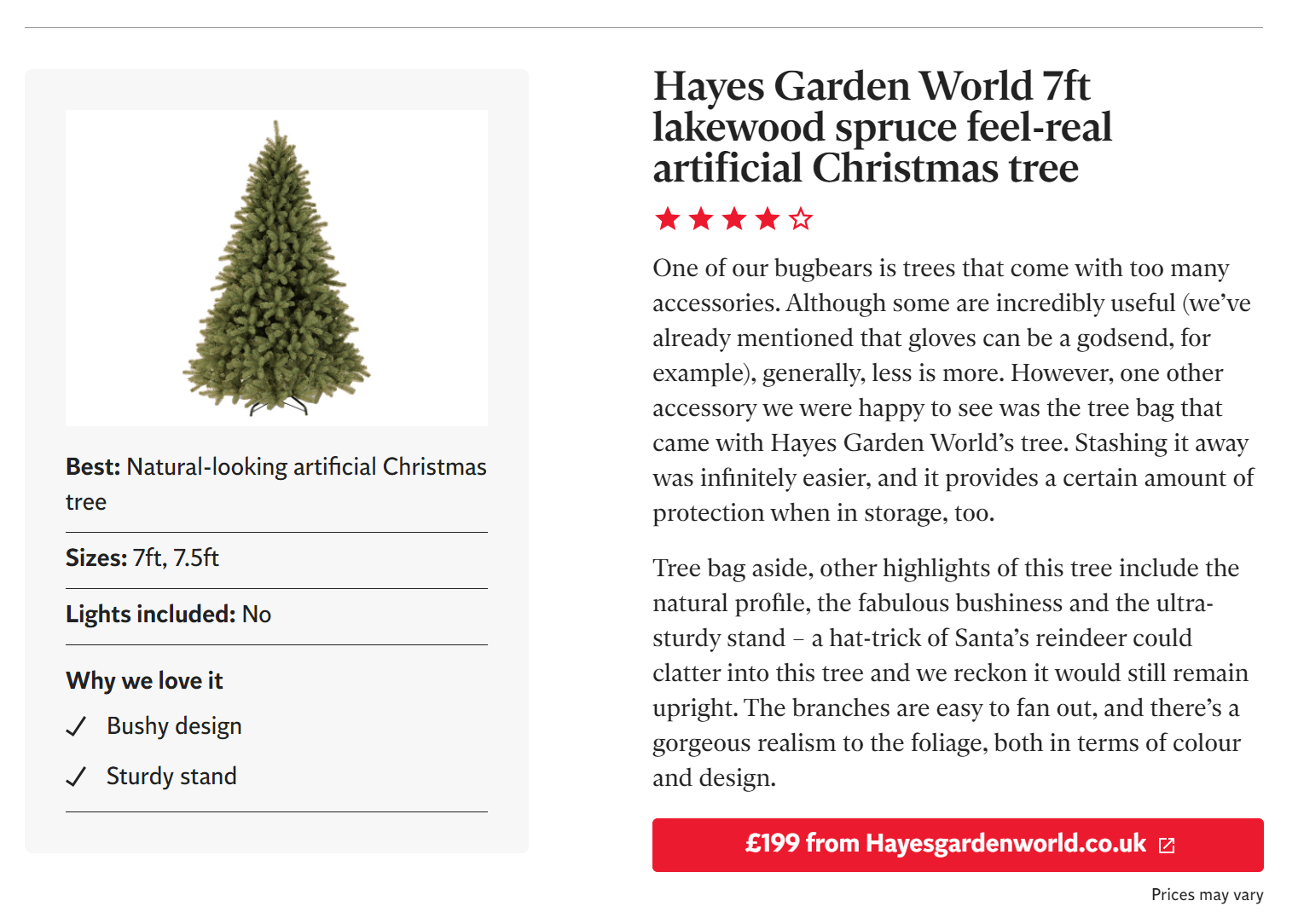
We’ve had a lot of success placing some of our client’s most important products in front of their key target audience, such as this coverage in the Independent:

Product placements are an excellent way to get in front of your audience. They also drive high quality links back to your website, thus building valuable E-E-A-T signals. Which, as we know, can help towards improving your website’s SEO performance. 

Referrals don’t just come from product placements. You can also drive leads by creating really relevant case studies and data-led pieces, which include a clear call to action at the end that encourages users to visit the website or get in touch if they need more information. 

Referral traffic is a great way to supplement your sales and leads too. If you can generate both of these from sources outside of direct SEO, for example through Digital PR, then it gives the campaign a really well-rounded approach. As an added bonus, it can drive extra sales and leads for your client or business too, making it highly valuable as a branding exercise, and for the bottom line.

4. Boosting E-E-A-T Signals

Perhaps one of the most important reasons for having Digital PR in your campaigns is boosting essential E-E-A-T signals. These are a major player when it comes to Google’s ranking factors, and your off-site signals can play a key role in helping Google to understand more about your website. In addition, they help to build trust and credibility among your audience, encouraging conversions and customer retention.

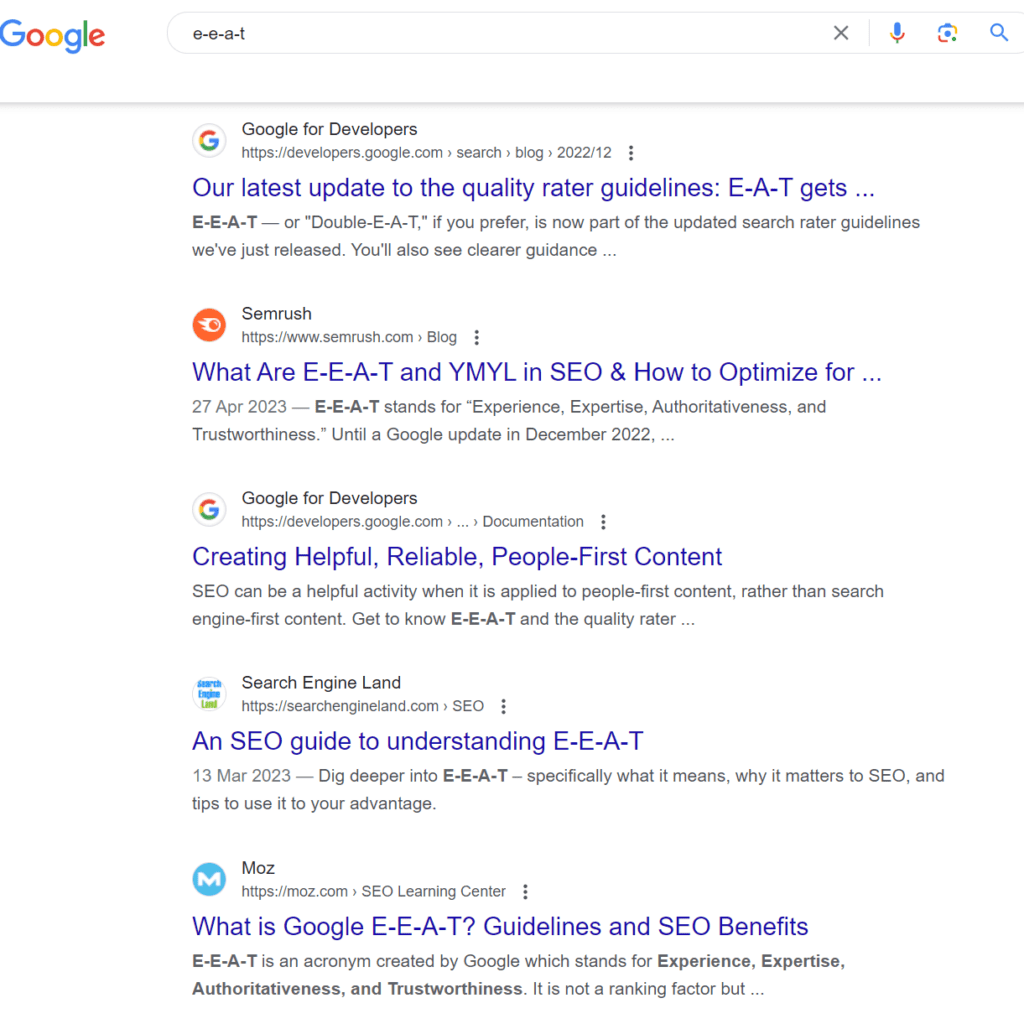
E-E-A-T is perhaps one of the most used acronyms in the digital marketing space. A simple Google search of it will produce the following results…

… indicating how much people in the digital space are talking about E-E-A-T – and this is just a snapshot of the discussions that are happening. Since the Google Medic Update everyone has been busy trying to improve their overall Expertise, Authority and Trust signals and Digital PR has been one of the most effective ways to do that.

So how does Digital PR boost E-E-A-T signals? By definition, whatever approach you are taking, whether it’s newsjacking, data analysis or thought leadership you’re going to be showcasing the expertise and relevance of your brand.

Thought leadership: showcasing and utilising your expertise to give valuable information to an audience. 

Newsjacking: adding your expert opinion and commentary to a trending topic which also allows you to showcase your expertise. 

Data: showcasing your expertise (or your brand data) to demonstrate an outcome, or alternately adding an expert comment to your data findings.

Each of these approaches is demonstrating your expertise and knowledge on a relevant topic on external websites, thus enhancing your E-E-A-T.

High quality links are a good ranking factor for Google but it’s not enough for these links to be good quality, they also need to be relevant. Topical, relevant links from a high domain ranking website (think national publications, regional dailies and publications that are super relevant to your niche) are a great way to help build those key E-E-A-T signals, while also strengthening your website’s link profile.

In addition to building topical links into your website you can also strengthen the E-E-A-T of certain sections of your website by building targeted links into key service and product pages. This can be achieved through a more targeted Digital PR campaign which, in turn, can help to build topical authority across these areas. You’ll also be embedding the authority and trust, and boosting external ranking signals to key areas of your website. 

5. To Create Topical Authority

When used correctly, relevant Digital PR has the ability to boost and create topical and semantic authority, which we know is crucial to building a well-structured SEO campaign. Many SEO practitioners work hard to build on-site topical clusters, pillars or semantic posts (depending on what you call it), but they forget to supplement this with strong off-site linking around a specific topic. In doing so you can really showcase your expertise and authority around a particular vertical or topic area, and back up your valuable on-site content pillaring with solid off-site Digital PR links. All of which will give a strong boost to your business reputation in that vertical.

Digital PR campaigns can be structured to drive topical authority by organising the campaign to target specific subsections of the website or specific themes. Thought leadership, data-led analysis and newsjacking techniques can all be adapted to work with certain sectors of the market, and to target relevant audiences and publications on topics that marry closely to your website content. This is a great way to give an extra little boost to an already solid on-site topic cluster and it can help to bolster general external trust signals in the process.

There’s a lot of discussion in the SEO industry around the importance of link relevance and the role that it plays within topical authority. In this article, Paddy Moogan discusses the concept of link relevance vs content relevance for link building. He concludes that the relevance of the content is more important than where you get your link from. This backs up our key message of how link building can further improve your topical authority, and how you can use Digital PR to supplement this. 

Whether you’re looking to build reputation, increase referrals, enhance key E-E-A-T signals or to improve topical authority, Digital PR plays an important role in building out and supporting your SEO campaigns. To find out more about how we can help you with this view our SEO and Digital PR pages here.

[blog]_[6 Digital PR Techniques To Turbo Charge Your SEO Campaigns]_[Blog Picture]

6 Digital PR Techniques To Turbo Charge Your SEO Campaigns

Digital PR has become a major buzzword in the industry over the last 24 months, and while it’s always played an important role in visibility, traffic and driving brand awareness (and sales!), the value of Digital PR has never been more important than over this time.

As brands start to recognise the value of Digital PR and more companies turn towards using it, the competitive space has become more and more crowded. Journalists have become increasingly inundated with a wide range of press releases, from fake jobs to top 10 lists and huge data-driven campaigns. 

If you’ve wanted to take a leap into Digital PR, chances are you have looked at it for one of two reasons:

a) you want to drive brand awareness in the online space OR

b) you want to use it to help drive great quality links, authority and trust into your website from an SEO perspective. 

If the latter is the main reason that you’re looking at Digital PR activation, then here are 6 great Digital PR techniques which can really help to turbo charge your SEO campaigns and drive your ROI further:

1. Thought Leadership

Thought leadership has been around for years and has long been a staple of PR, both traditional and digital. If you are looking to boost your SEO value from Digital PR then thought leadership is a great place to start. One of the key pillars of SEO performance is E-E-A-T or Experience, Expertise, Authority and Trust, which is created on-site but also off-site through link optimisation and acquisition. It’s a great way to showcase your expertise as you will often put forward an expert from your brand. This can then help those all-important external ranking signals, by allowing them to understand that your brand really holds expertise in this space.

What is Thought Leadership?

Thought leadership is essentially where you tap into the talent within your brand to answer some of the most pressing questions that your users or the external public might have. You take your own expertise, experience or data and put it out into the world to help educate and inform others. Establishing yourself or your company as a thought leader is essentially working to put yourself out there as a well-known resource and expert across a particular vertical which, in turn, can help to educate and inform an audience about you and your brand.

You can do this in a number of ways:

  1. with tools that connect you to journalists who are looking for information, responding to their queries and putting your thought leader forward
  2. on Twitter by responding to hashtag searches which are very popular with journalists 
  3. pro-actively researching a particular topic, perhaps one that’s trending in the news, and outreaching this with a suitable angle to journalists

Each of these approaches is designed to put your expert at the forefront of a particular topic.

Increase reach

Thought leadership doesn’t just have to be linked to one vertical either as you may find that there are a range of verticals your brand can offer expertise in. Founded a business? You can offer business expertise. Got a HR team? They can offer HR expertise. Got a finance department? They can offer financial expertise. You don’t just have to limit your thought leadership to one individual and one vertical; by broadening your reach you can provide more well-rounded expertise signals for your business. 

Increase traffic

Thought leadership is incredibly effective for SEO too. In the latter half of 2022 we worked closely with in-house expert, Angela Slater, at Hayes Garden World to create a range of thought leadership pieces on highly relevant publications. This resulted in a significant increase in traffic and visibility for the brand as well as establishing Angela as a thought leader.

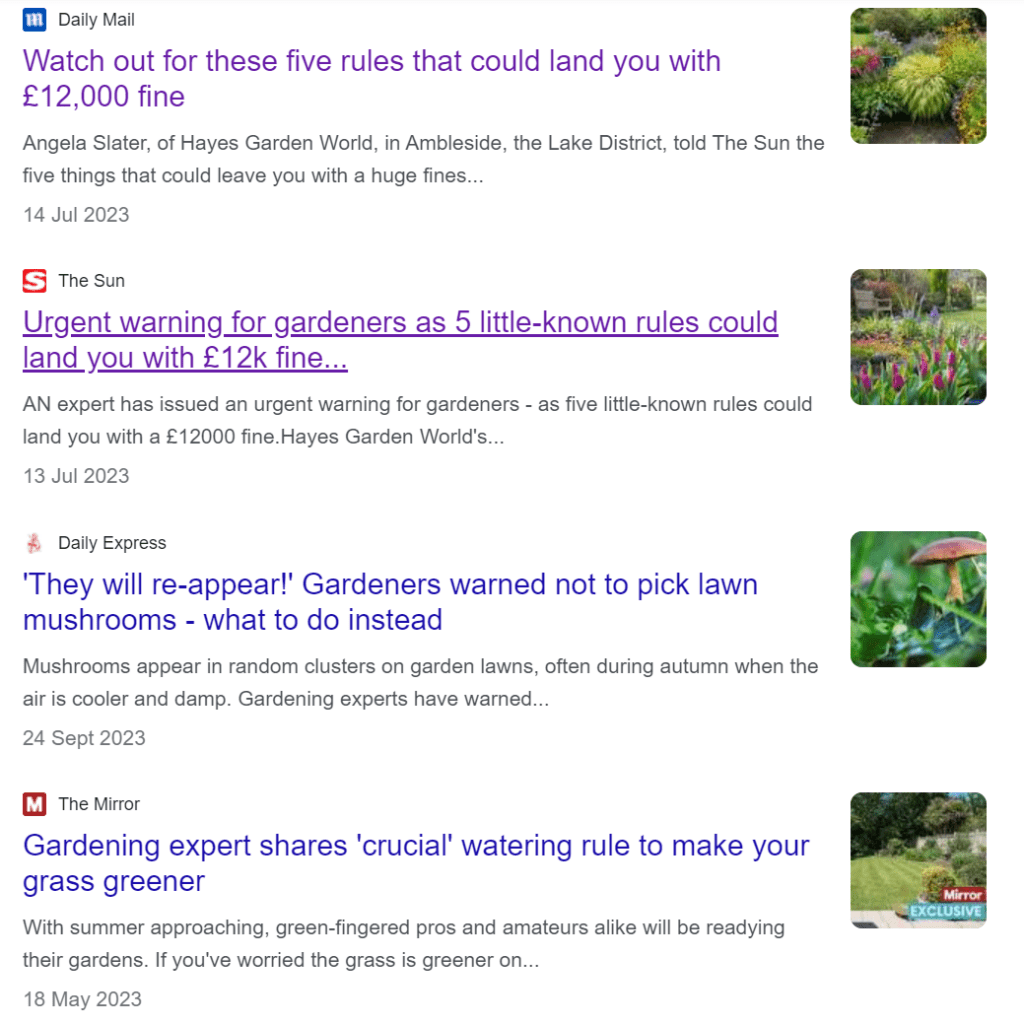
Quick searches of Google demonstrate that she has now contributed to most major publications within the gardening industry as well as some great nationals:

The resulting outcome for Hayes Garden World was a significant jump in visibility, in addition to landing top 5 rankings for major terms including “garden furniture” and “garden furniture sale” – right up there among major nationwide retailers! You can read all about our work with Hayes Garden World in our case study. 

We know that a lot of Google’s Core Algorithm updates recently have looked at E-E-A-T signals so, if you’re looking to really enhance those off-site trust signals, a solid thought leadership campaign is a great place to start.

2. Proactive Newsjacking

Jumping on trends is a really great way to utilise Digital PR to build relevant and effective high-quality links back into your website. We approach newsjacking in two ways: proactive and reactive. We will go through both in this blog, starting with the proactive side of things.

What is Proactive Newsjacking?

Proactive Newsjacking is looking to jump on emerging trends before they happen, to offer data, insights or expertise and be early to the conversation. Essentially, you need to read up on the media to understand when something is going to happen that could be relevant to your client or your business. You can then put yourself straight into the conversation by offering some great information, or a new angle on an existing story, to add value to an emerging trend or storyline.

Proactive newsjacking, when done correctly, can help to drive SEO in more ways than one as it has the potential to drive high quality referral traffic to your website. Proactive newsjacking is, therefore, one of the more powerful Digital PR techniques. By getting to the front of the conversation you are also more likely to attract more media interest with the potential for follow up interviews and comments and, as a result, even more coverage! Timing is critical here, so planning in advance to release your content to journalists at just the right time can often make or break this approach. 

If you’re looking to use this method, we’d usually recommend that you build out a calendar that allows you to plan for these events in advance. A calendar will also ensure you have PLENTY of time to allow for any potential issues, i.e. getting sign off on comments or producing data-led reports. By planning in advance you can not only ensure you get all of your content together in time, you’ll also be able to schedule each push of your content/release at the just right time.

Proactive planning

Timing is absolutely crucial across any newsjacking but with proactive newsjacking, given that people have likely known about it for a while, it’s even more important as there could be many other PRs trying to jump on the same trend. In addition to researching the journalists that are likely to cover the topic and the types of content they’ve written, you can work with tools like BuzzSumo to understand the times they are most likely to publish this content and how quickly they turn around a piece after news has broken. This is useful information that will help to  inform your publishing schedule and your email pushes.

Proactive newsjacking is a great way to get your brand in front of an audience in a planned manner, tying together nicely the visibility of Digital PR with the high quality link acquisition and E-A-T signals of SEO, to drive a great ROI from your campaigns.

3. Reactive Newsjacking

On the other side of the coin we have reactive newsjacking. While this still falls under that holistic “newsjacking” umbrella it takes a very different approach to proactive newsjacking and can often have a very different outcome.

What is Reactive Newsjacking?

Reactive Newsjacking is when you jump on something that has just broken in the news, or that is trending in the news and you bring your brand or client into the conversation by offering a new angle, expert opinion or new data that might not have previously been identified. It’s a great way to showcase your expertise on a given topic and it can get great coverage for your brand by putting you front and centre of the conversation. Reactive newsjacking is also popularly syndicated as it generally talks about a very topical issue and so people are more likely to have a need to cover the topic. 

Reactive newsjacking ties in nicely with your SEO because it brings that combination of super high quality links and really strong E-A-T signals, especially on the expertise and authority side. Additionally, it helps to establish your brand as a thought leader and build that all important brand awareness and recognition. It can also help with semantically themed external links; we know how important relevancy is to SEO, both on-page and off-page, so newsjacking something that’s highly relevant to your brand is a great way to tick this box as well. 

Get ahead

Reactive newsjacking doesn’t have to take a lot of time either – rather it’s about being first to the conversation with a great angle. Using tools like Google Trends and setting up Google Alerts are great ways to ensure you’re at the forefront of the news. We also monitor Twitter hashtags and the BBC Breaking News page, to ensure that we can jump on stories quickly as they happen. Another great way to track this is getting your team to run an open channel, such as on Microsoft Teams, where they can pop trending news that the Digital PR team can pick up on.
You can also have some fun with reactive newsjacking. Just after lockdown ended we ran this reactive newsjacking campaign for Hayes Garden World which we labelled “Lonely Plants Club.” It focused on explaining how houseplants could become lonely after lockdown ended and the steps that owners could take to make life a little easier for them. It was a light hearted piece but incredibly relevant at the time, and obviously super relevant to our garden centre client. The piece landed really well, generating over 23 top tier links across national and industry publications including the Daily Star and Country Living.

The great thing about reactive newsjacking is that it can be such a quick turnaround if you have the right processes in place. Focus on honing in on and improving those processes, and add this technique to your Digital PR and SEO tool belt.

4. Industry Report Analysis

Reports are a really effective way of utilising Digital PR because they help to build one of the most important aspects of a Digital PR campaign: relevancy. We can analyse reports which are really relevant to our clients and industries to clearly show how our expertise and analysis ties closely to the brand.

We know that Google loves relevancy. There’s been a lot written about the topic, most notably this content from Cyrus Shephard on MOZ about the concept of link relevance and Google rankings. In the article he talks through a range of scenarios where link relevance has played an important role, and has some great takeaways on how we can improve overall link relevance. This is crucial to ensuring we have great semantically themed content throughout the article, and using an approach like industry report analysis is a great way to showcase this.

Speak to your client

There are a number of ways that you can approach industry report analysis but, most commonly, speaking to your client and being aware of popular reports within their industry is a great place to start. This could be anything from a state of marketing report, to an NHS Digital report, through to a Government report on pedestrians and cycling. With most of these reports being freely available there is usually a mine of great information that you can fill your news story with too.

Find your angle

Finding juicy angles plays a strong role in getting reports covered and often you don’t have to dig deep if there are some standout or alarming statistics that are in the public interest. Building a story around this and analysing data to further back this up can be a great way to pull together a nice data analysis piece. From an SEO perspective the data side of this analysis offers some really strong expertise and trust signals, as well as providing some great supporting data which can back up any on-site content.

If you’re looking to boost your Digital PR through an industry report analysis then the first step is to find any free industry reports that are available and note down the dates they are published. Jumping on and analysing this quickly will allow you to get to the front of the conversation and help to cement the brand’s position. 

5. Google Search Trends Analysis

In addition to looking at industry reports and trends there are other great tools available that provide mounds of free and interesting data to analyse. Google Ads Keyword Planner and Google Trends are two such tools, and both offer tons of information around search habits relating to specific queries. They can help you identify what is trending, and what isn’t, compared to different times of the year or year on year comparisons.

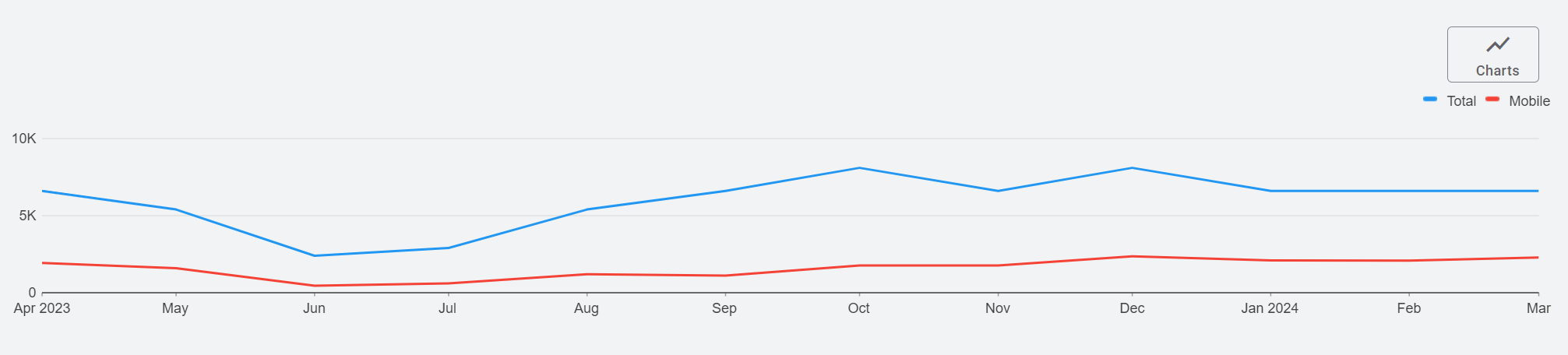
Google Ads Keyword Planner contains a range of data pertaining to individual keyword search trends. It allows you to see how that keyword has performed over time and also breaks it down into mobile and desktop users so you can understand how people are searching differently for specific search terms. Below we can see that the term “seo agency” has grown substantially over the last year, from just under 2.4k searches per month in June to nearly 6.6k searches per month in March – a news story in itself! 

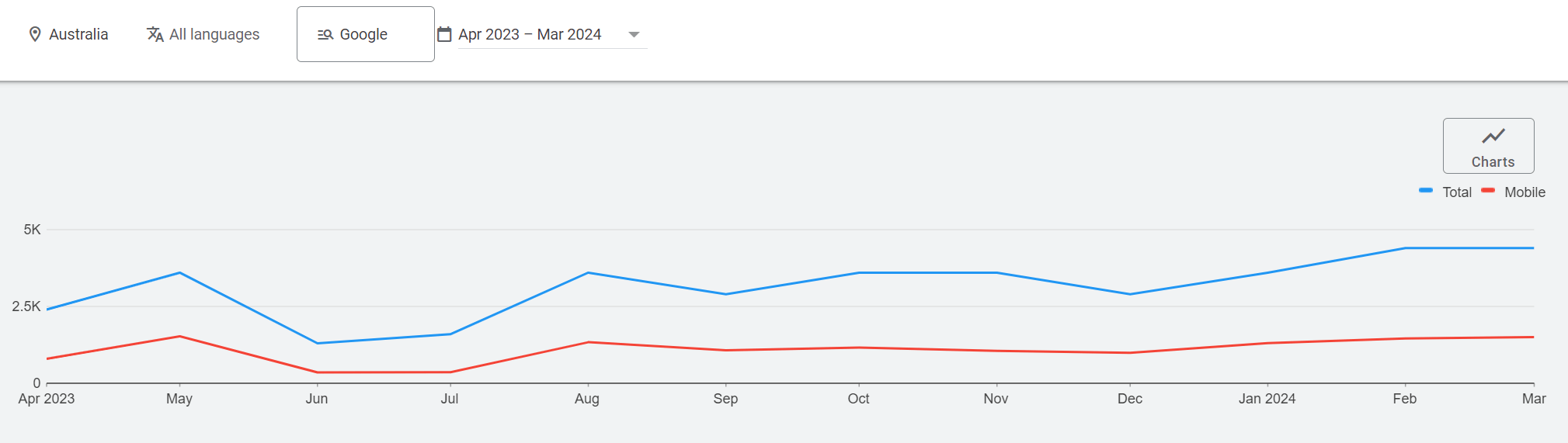
If we were to layer that data with countries that have searched specifically for “seo agency,” we would be able to build a narrative around which countries have seen a spike in demand for seo agencies over the last 12 months. For example, in Australia we can see quite a similar growth trend, but that has continued to grow in recent months:

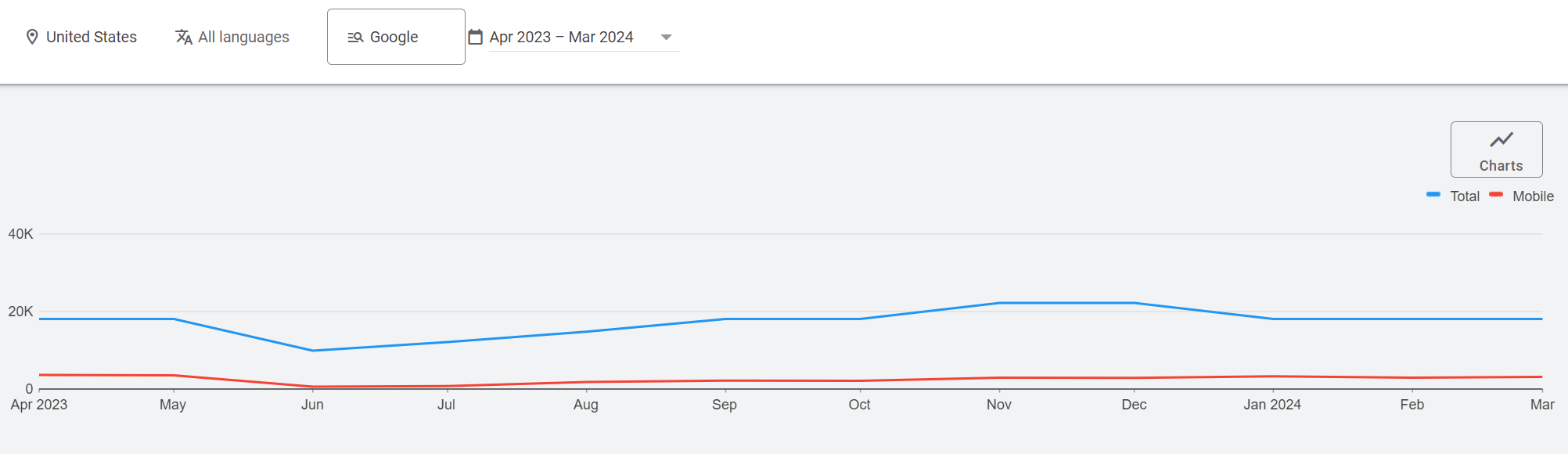
And if we add the USA into the mix we see again a trend similar to the UK:

In isolation, these three pieces of information might not seem to generate a news story, but when pulled together we can analyse that searches for seo agencies in the UK have continued to rise over the last six months in contrast to searches in Australia and the USA. It’s a simple piece of data analysis but one that you can write a piece of content around.

In addition to Google Keyword Planner you can also use the Google Trends tool to analyse data and draw comparisons between different services and products. Google Trends allows you to compare trending keywords against each other and see how a particular keyword has trended over time. An example of this would be using the tool to evaluate how each of our key services ranks against each other as a trending topic:

From this we can evaluate that SEO is by far the most popular service, followed by PPC and then Digital PR. We could then pull each of these services out individually to analyse their performance over the last 12 months. 

Each of these examples shows very simple and quick data analysis. Yet with the right data and the right angle, you can turn this into a great piece of Digital PR content that is super relevant to your brand and likely to land those all important high quality relevant links.

6. Product Placements & Round-Ups

Rounding off the top 6 we have product placements and round-ups – an absolute stalwart for the ecommerce sector. Although this point is last it is most definitely not least! Product placements can be a really powerful way of getting your product in front of the right audience and driving crucial referral sales through to your website. At the same time they have the opportunity to build some really high quality links from incredibly relevant domains, i.e. domains that your target audience happens to be on.

There are a number of different approaches you can take to product placements, from looking at the Top x lists for specific products (these always tend to rank well) to working closely with journalists who you know are going to be looking to cover a particular product or product range. In most cases they are just looking for a hi-res image of your products, and so having this type of image to hand is incredibly helpful; we often keep them all in a Google Drive so they are ready to pull out at a moment’s notice. It’s also valuable to have visuals over your stock levels to ensure you aren’t promoting a product which is unavailable or low in stock.

In addition, the product review style of the content is only helping to add to the authority and trust of the overall product. These are key elements of E-E-A-T which feed heavily into Google’s Page Quality Rater Guidelines. 

Getting your products out there in front of your audience is a great way to gain visibility among the right market and to gain high quality links back to the website, all while enhancing key SEO signals. Driving in referral traffic sales is just the icing on the cake!

Digital PR has continued to play an increasingly important role in the growth of SEO campaigns – after all, who can forget when John Mueller said this?

So, if you are looking to take your SEO strategies to the next level then a solid, relevant, expertise-led Digital PR campaign is bound to put you on the right track! 

[blog]_[Case Study: How we earnt 121 links for one Digital PR campaign]_[Blog Picture]

Case Study: How we earnt 121 links for one Digital PR campaign

Overview

The client: Patient Claim Line 

The campaign: Survey data uncovers how NHS delays are affecting Brits 

The results:

  • 127 pieces of coverage    
  • 121 links    
  • Average DR 56.67

Background and objectives

Patient Claim Line is the UK’s highest-rated medical negligence Solicitors, who currently deal with one in 10 of all medical negligence claims in England and Wales.

They needed a PR campaign to earn them coverage in UK publications, in turn generating links to their website to improve it’s authority. We were particularly focused on gaining links from new domains to broaden their link profile and improve their overall SEO.

In terms of the content of the campaign, we had four main aims:

  1. Create content related to the medical negligence field which the client can back up with their legal expertise
  2. Collect new and informative data that could used by journalists, and is relevant and therefore usable for months to come
  3. Ensure that the content is helpful to the British public and is sensitive to the current climate and difficult times within the medical sphere
  4. Make sure that the content can be reworked to have a number of different angles, and therefore can appeal to medical, national and regional publications

Strategy

After brainstorming and researching current topics related to medical negligence, we decided to delve into a subject that had gained some media discussion but was lacking hard statistics –   the effect of NHS delays on the British public over the past twelve months. 

To source new and reliable data, we worked with a survey provider to collect information on how patients feel like the pandemic has impacted or delayed their NHS treatment.

We analysed the data from a national perspective, as well as split regionally to see which areas of the UK were impacted more than others.

A survey report was created detailing all of the findings including regional splits, and also offered legal advice from Patient Claim Line’s experts on patient rights if their treatment has been delayed. This informative guide was published on Patient Claim Line’s website as a useful hub for journalists to refer back to. 

That’s the beauty of this content – it will be of use to journalists for months to come because it isn’t too time sensitive.

The content

We found some brilliant statistics that we knew journalists would love, including: 

  • Half of Brits have had their medical treatment delayed by the NHS since the pandemic started and 45% have seen their condition get worse as a result.
  • Almost a third of the population have opted to delay their own medical treatment since the pandemic started
  • Half of those who delayed their own treatment have also seen their condition worsen
  • 53% delayed their treatment due to fears of catching COVID, followed by 52% who don’t want to put a strain on the NHS
  • 78% of the UK appreciate the NHS more than they did before the pandemic


We created multiple press releases with different angles to target journalists in a variety of fields. We also coupled the data with expert comments from Patient Claim Line to make the content more helpful to the reader if they’ve been affected by NHS delays.

The results

The results were fantastic.

We achieved 127 pieces of coverage from predominantly new domains for the client. 121 of the pieces of coverage included a link back to the website, and these links were from sites with an average DR of 56.67 (compared to the client’s current DR of 27).

Some examples of the variety of coverage include:

The content was extremely relevant to the Patient Claim Line, helpful to the reader and even brought in leads through the website of those looking to make a medical negligence claim. We smashed all of our objectives, and the client was thrilled.

Check out another one of our client case studies in our blog ‘Backlinks and Brainteasers: a marriage made in SEO’ or find out more about linkbuiling on our Digital PR services page.