download

Google I/O 2026: What The Latest Search & Shopping Updates Mean For SEO

Introduction

This year’s Google I/O 2026 made one thing very clear: Google Search is continuing its shift away from a traditional “10 blue links” experience and towards a far more AI-led, conversational and predictive ecosystem.

For businesses, marketers and SEO professionals, this isn’t just another algorithm update cycle. It’s a structural change in how visibility works online.

Across the keynote announcements and search-focused sessions, Google doubled down on AI-generated search experiences, multimodal discovery, agentic search behaviour and deeper integrations between search, shopping and Gemini. The result is a search landscape where being visible increasingly depends on trust, authority, brand signals and machine-readable expertise rather than simply ranking a webpage.

Below, we break down the key announcements from Google I/O 2026 and what they mean for SEO, digital PR, ecommerce and search visibility moving forward.


The End Of The Traditional “10 Blue Links”

One of the clearest themes from Google I/O was that Google Search is no longer designed around a simple list of website links.

Instead, search is increasingly becoming an AI-curated interface where users receive summarised answers, recommendations and actions directly within the SERP.

Google demonstrated:

  • More advanced AI Overviews
  • Conversational follow-up queries
  • Context-aware search journeys
  • Multimodal search experiences
  • AI-generated shopping recommendations
  • Deeper integration with Gemini

This means users are spending more time interacting with Google itself rather than clicking through to websites.

For SEO, this changes the core objective.

Historically, success was heavily tied to ranking position and click-through rate. Now, visibility is increasingly influenced by whether Google trusts your brand enough to cite, reference or surface your information within AI-generated answers.

What This Means For SEO

Businesses now need to optimise for:

  • Citation visibility
  • Brand authority
  • Entity recognition
  • Trust and reputation signals
  • Topical expertise
  • Structured information retrieval
  • Content that can be easily summarised and referenced by AI systems

The future of SEO is becoming increasingly tied to machine trust rather than simply keyword matching.


AI Overviews Are Expanding Further

Google confirmed that AI Overviews are continuing to expand globally and are becoming a much more central part of the search experience.

These AI-generated summaries are now appearing across a wider range of informational, commercial and comparison-style queries.

Google also demonstrated:

  • More detailed generated answers
  • Follow-up conversational interactions
  • Comparison and recommendation functionality
  • AI-assisted decision making
  • Deeper query refinement journeys

This creates both opportunities and risks for brands.

The Key Challenge: Reduced Organic Clicks

As AI Overviews become more comprehensive, users may no longer need to click through to a website to get basic information.

This is especially important for:

  • Informational publishers
  • Affiliate websites
  • Comparison content
  • Commodity-style blog content
  • FAQ-led content strategies

Businesses relying heavily on informational search traffic may see continued declines in traditional organic CTR.

The Opportunity

While clicks may reduce, authority becomes more valuable.

Brands repeatedly cited within AI Overviews are likely to benefit from:

  • Increased brand awareness
  • Higher perceived trust
  • Stronger entity recognition
  • Improved future retrieval likelihood
  • Better branded search demand

This creates what many are now calling a “citation economy” within search.


Search Is Becoming More Conversational

Google showcased major advancements in conversational search experiences powered by Gemini.

Users can now:

  • Ask more complex follow-up questions
  • Continue search journeys naturally
  • Refine recommendations in real time
  • Use conversational prompts rather than isolated keywords

For example, instead of searching:

“best running shoes”

Users may now ask:

“What are the best running shoes for marathon training if I overpronate and run four times a week?”

This fundamentally changes search behaviour.

What This Means For Content Strategy

SEO content now needs to better satisfy nuanced, contextual intent rather than isolated keywords.

That means creating content that:

  • Demonstrates real expertise
  • Answers layered questions
  • Covers topics comprehensively
  • Includes contextual depth
  • Shows real-world experience
  • Uses clear semantic relationships

Thin, highly templated SEO content becomes increasingly vulnerable in this environment.


Multimodal Search Is Accelerating

Another major theme from Google I/O was multimodal search.

Google demonstrated search experiences combining:

  • Text
  • Voice
  • Images
  • Video
  • Live camera input
  • Contextual memory

Through Gemini integrations, users can increasingly interact with Google in more natural ways.

Examples included:

  • Pointing a camera at products for recommendations
  • Asking questions about live surroundings
  • Combining voice and visual search
  • Receiving contextual shopping suggestions

What This Means For Brands

Brands now need to think beyond traditional webpage optimisation.

Visibility increasingly depends on:

  • Image optimisation
  • Video discoverability
  • Product feed quality
  • Structured data
  • Visual search readiness
  • Cross-platform entity consistency

Search is becoming a multi-format ecosystem rather than a purely text-based one.


Ecommerce & Shopping Received Major AI Updates

Google also announced significant AI-driven shopping enhancements.

These included:

  • AI-generated product recommendations
  • Personalised shopping journeys
  • Smarter product comparisons
  • Virtual try-on improvements
  • More contextual shopping assistance
  • AI-assisted product discovery

Google is increasingly acting as a recommendation engine rather than just a product search engine.

What Ecommerce Brands Need To Focus On

To remain competitive, ecommerce businesses will likely need stronger:

  • Product data feeds
  • Merchant Centre optimisation
  • Product imagery
  • Reviews and reputation signals
  • Structured product information
  • First-party brand authority
  • Digital PR and brand mentions

Product visibility is becoming increasingly tied to trust and brand confidence.


Gemini Is Becoming Central To The Search Experience

One of the biggest takeaways from Google I/O is that Gemini is no longer separate from search.

It is becoming deeply integrated into how Google retrieves, interprets and presents information.

This means Google is increasingly evaluating:

  • Which brands it trusts
  • Which sources appear authoritative
  • Which entities demonstrate expertise
  • Which websites consistently provide reliable information

This reinforces the growing importance of E-E-A-T.


E-E-A-T Is Becoming Even More Important

Google didn’t explicitly position every announcement around E-E-A-T, but many of the changes strongly reinforce its growing importance.

As AI systems summarise and recommend content directly, Google becomes more reliant on trust evaluation systems to determine:

  • Which information is accurate
  • Which sources are reputable
  • Which brands demonstrate authority
  • Which publishers are safe to surface

Key Signals Likely To Matter More

Businesses should increasingly focus on:

Strong Brand Reputation

Brands with recognised authority are more likely to be surfaced in AI-generated experiences.

Expert-Led Content

Demonstrating genuine expertise and experience becomes critical.

Third-Party Validation

Digital PR, mentions, citations and external references continue to grow in importance.

Structured Transparency

Clear authorship, editorial standards, references and provenance all help reinforce trust.

Entity Consistency

Google increasingly needs confidence in who your business is and what topics it should be associated with.


AI Search Will Reward Trusted Entities, Not Just Optimised Pages

One of the biggest strategic shifts from Google I/O is that SEO is becoming increasingly entity-driven.

Historically, SEO focused heavily on optimising pages.

Now, Google is increasingly trying to determine:

  • Which businesses are trusted
  • Which entities are authoritative
  • Which brands deserve visibility
  • Which organisations consistently demonstrate expertise

This means SEO can no longer operate in isolation.

Future visibility increasingly relies on:

  • SEO
  • Digital PR
  • Brand marketing
  • Reputation management
  • Thought leadership
  • First-party audience building
  • Community trust
  • Expert credibility

What Businesses Should Do Next

1. Invest In Brand Authority

Brand recognition and trust are becoming increasingly influential in AI-led search experiences.

2. Create Content With Genuine Expertise

Thin AI-generated content without depth or expertise will likely struggle long term.

3. Improve Structured Data & Technical SEO

Google’s AI systems rely heavily on structured understanding of content and entities.

4. Focus On Topical Depth

Building deep expertise within a niche is increasingly important.

5. Strengthen Digital PR & Off-Page Signals

External validation continues to play a major role in trust evaluation.

6. Prepare For Lower CTRs

Organic traffic reporting and SEO measurement models may need to evolve beyond simple clicks.

7. Think Beyond Google Rankings

Visibility increasingly exists across:

  • AI Overviews
  • Gemini
  • Conversational search
  • Shopping experiences
  • Visual search
  • Recommendation engines

Final Thoughts

Google I/O 2026 reinforced that search is rapidly evolving into an AI-first ecosystem.

The traditional SEO playbook of keyword targeting, scaled content production and ranking position optimisation is becoming less effective on its own.

Instead, Google is moving towards a model where visibility is increasingly awarded to brands and entities it believes it can trust.

That means the future of SEO will likely revolve around:

  • Authority
  • Reputation
  • Expertise
  • Brand recognition
  • Entity understanding
  • Citation visibility
  • Trust validation

For businesses willing to adapt, the opportunities remain huge.

But success in modern search will increasingly depend on building a genuinely trusted brand rather than simply optimising webpages.

[blog]_[Cedarwood Digital Wins Big at the European Search Awards 2025! 🏆]_[Blog Picture]

Cedarwood Digital Wins Big at the European Search Awards 2025! 🏆

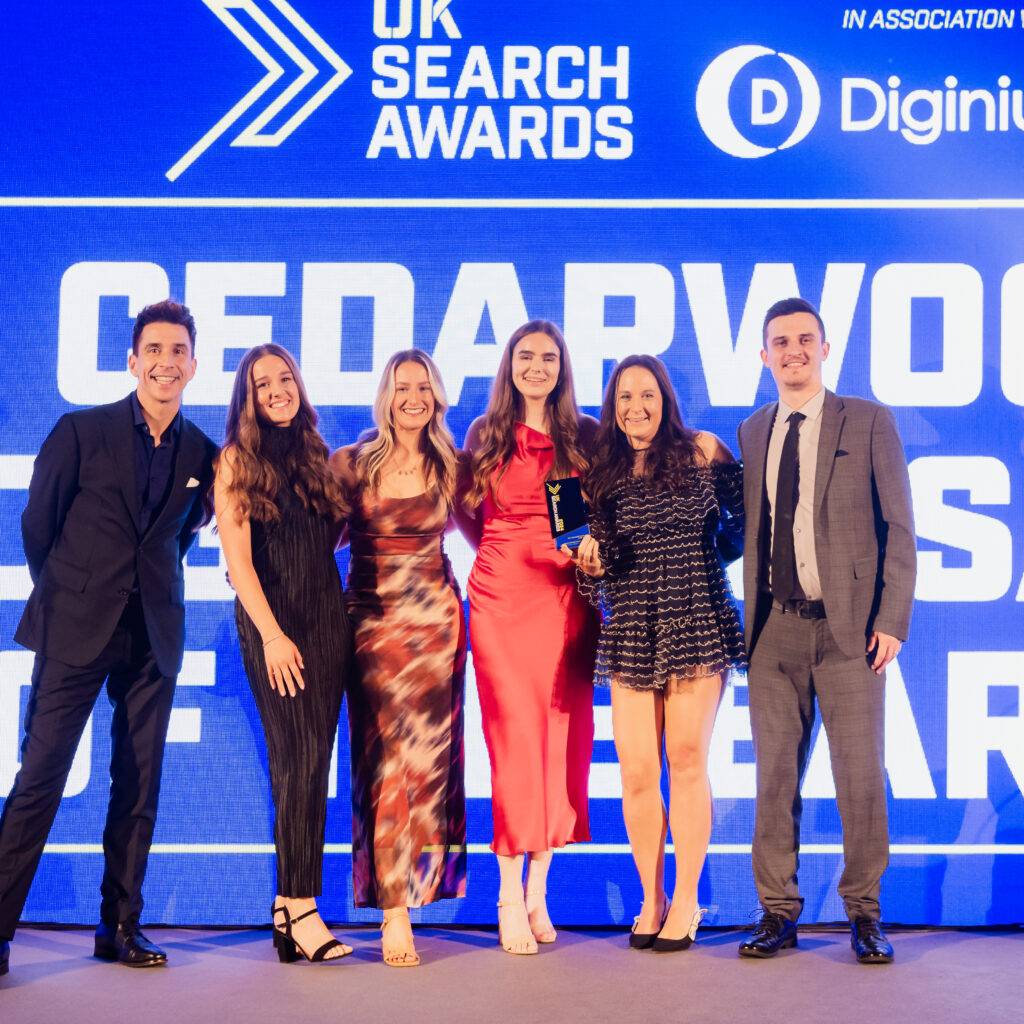
We’re absolutely thrilled to share that Cedarwood Digital has taken home five trophies from this year’s European Search Awards – including all three Agency of the Year categories!

🥇 Best Small SEO Agency

🥇 Best Small PPC Agency

🥇 Best Small Integrated Agency

Winning these three awards is a huge honour – not only do they recognise our team’s dedication across SEO, PPC and integrated campaigns, but they also position Cedarwood as one of the top-performing agencies in Europe. That’s a huge milestone for us, and one we’re incredibly proud to achieve.

Award-Winning Campaign Work

In addition to agency accolades, we were also recognised for the outstanding results of our client campaigns, winning:

  • Best Use of Search (FMCG)
  • Best Use of Search (iGaming)

These awards celebrate the strategic, creative and data-led work we deliver for our clients day in, day out. It’s amazing to see that effort recognised on a European stage.

A Standout Year For Growth & Community

2024/2025 has been a standout year for Cedarwood Digital. Not only have we seen incredible growth as an agency, but we’ve also focused on giving back to the community and helping shape the future of digital marketing talent.

This year alone, we:

  • Launched Manchester DM, a brand-new digital marketing meetup focused on sharing knowledge and growing the northern digital community.
  • Partnered with colleges to help students upskill and explore careers in SEO, PPC and beyond.
  • Delivered talks, training and insights at a range of conferences and events across the UK.

It’s been a year of ambition, collaboration and meaningful impact – and we couldn’t be prouder.

Thank You

A massive thank you to Don’t Panic Events for organising such a brilliant event and to the judges who dedicated so much time reviewing entries – your hard work doesn’t go unnoticed.

And of course, to our team, clients and community – thank you for being part of the journey. Here’s to continuing to push boundaries, drive performance and make 2025 our best year yet.

Cheers to what’s next! 🥂

[blog]_[ PPC talks ]_[Blog Pictures]

PPC Talks – Head Of Paid Social Anna’s Talk With Digital Superchats

On the 14th of January, our Head of Paid Media & Operations, Anna Simpson, spoke at Digital Superchats #15 – Paid Media Strategy & Performance Edition. 

Her talk was titled “Making Performance Max Work For Your Business Goals” and broke down the complexities of Performance Max, offering an actionable framework to help in-house marketers and paid media professionals align these campaigns with clear business objectives. The focus was on practical strategies that empower teams to guide PMax’s automated learning to outcomes that matter. Also covered was how to structure campaigns, optimise assets, and set metrics that map directly to business priorities, thereby giving you the tools to make PMax work for your brand’s specific path. Lastly, Anna covered how to align PMax with today’s goals, exploring what is next for automation in paid media and how to prepare for Google’s evolving ecosystem, setting the stage for a more strategic and impactful use of PMax. 

Key takeaways include: 

  • How to gain a straightforward, no-nonsense understanding of Performance Max and how it operates across Google’s ecosystem.
  • Understanding how to set up Performance Max campaigns that align closely with specific business objectives, ensuring automation supports your unique goals. 
  • Learning actionable techniques for optimising campaign structure, assets, and targeting to guide Performance Max’s automation towards meaningful results, from driving revenue to increasing brand visibility. 

Want to attend future Digital Superchats? Check out their On Demand Events here.

If you are interested in any other Cedarwood news or marketing tips, check out our blog page here and have a read!

[blog]_[ ppc talks]_[Blog Pictures]

PPC Talks – Head Of Paid Social Anna’s Talk With The Go! Network

On the 30th of January, our Head of Paid Media & Operations, Anna Simpson, spoke at a virtual workshop about challenging the biggest PPC myths and unlocking smarter strategies for PPC success, courtesy of The Go! Network

Anna’s talking points included: 

  • Why do some brands believe they can manage PPC without external expertise, and what’s the reality? 
  • What’s the best approach to aligning PPC efforts with overall business goals?
  • How do you determine the right budget for PPC campaigns, especially for smaller businesses?
  •  

  •  

If you fancy a listen to these expert insights, practical takeaways, and real-world case studies, check out the workshop here

Also, if you are interested in any other Cedarwood news or marketing tips, check out our blog page here and have a read!

[blog]_[Cedarwood Wins SIX UK Search Awards]_[Blog Picture]

Cedarwood Wins SIX UK Search Awards

We are over the moon to announce that we won SIX UK Search Awards at the event last Wednesday – a great way to finish off a record year in 2024! 🎉

On the night we took home:

🏆 Best Small PPC Agency
🏆 Best Small Integrated Agency
🏆 Best SEO Agency (Silver)
🏆 Best Use Of Search (Healthcare) – Patient Claim Line
🏆 Best Low Budget PPC Campaign – Salt Of The Earth
🏆 Best Use Of Search B2C (PPC) – Salt Of The Earth

2024 has been a great year for us as we continue to grow from strength to strength, improving partnerships with our existing clients while growing each of our departments in turn so it’s great to have been recognised in particular for the agency awards which are testament to this.

It was a great evening all round and we are already looking forward to 2025!

[blog]_[Director Amanda On The Main Stage At Brighton SEO]_[Blog Picture]

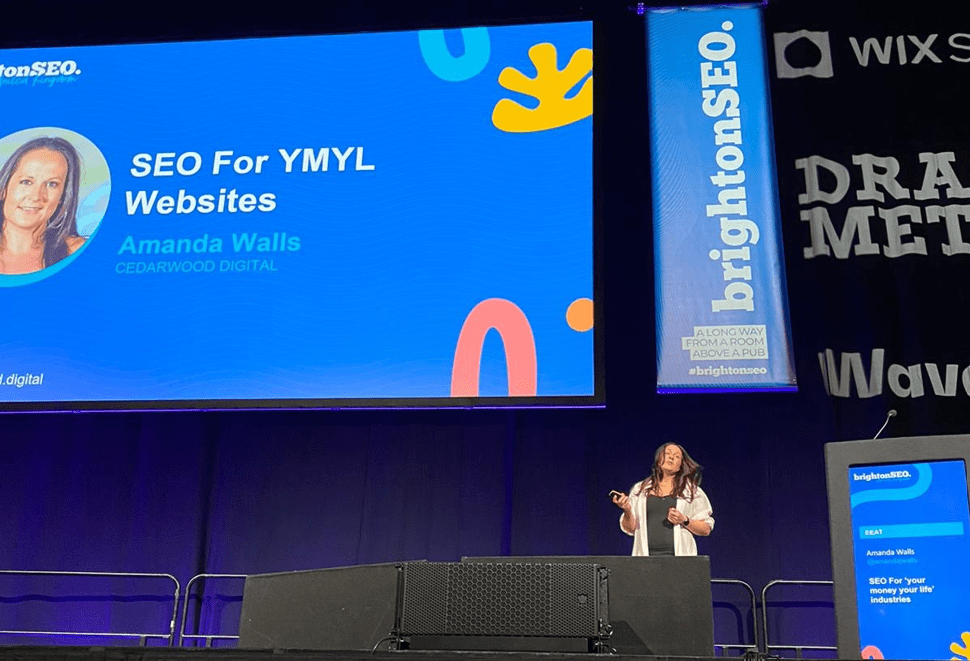
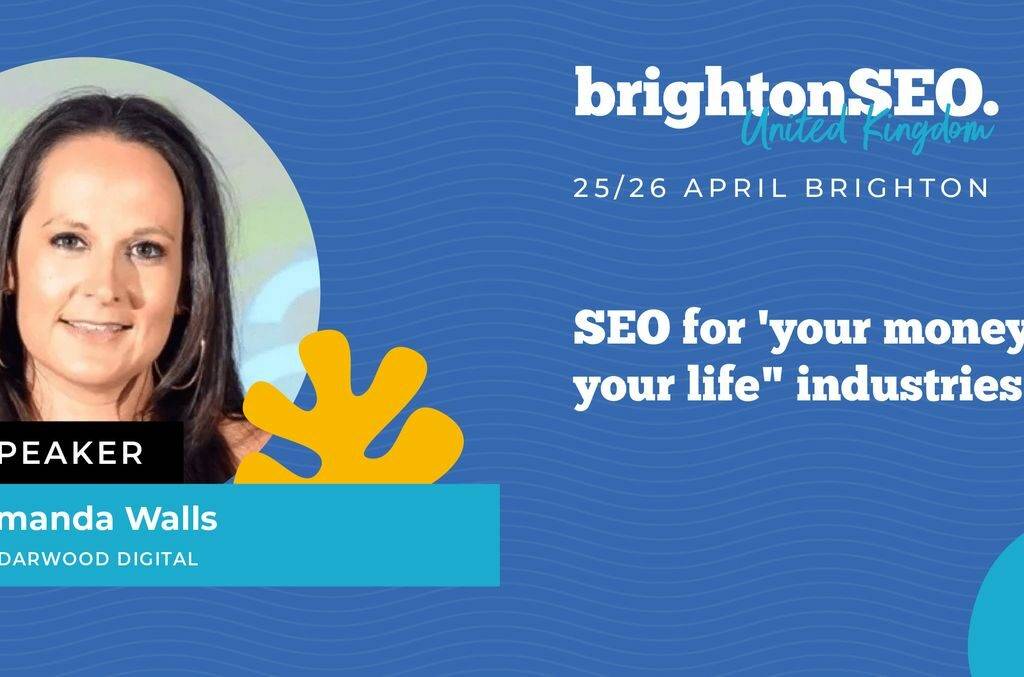
Director Amanda On The Main Stage At Brighton SEO

Having attended Brighton SEO for over a decade now, I can safely say that it’s one of the best, if not the best SEO conference in the world, so I was absolutely delighted when asked to speak on the main stage this year covering the topic “SEO For YMYL Websites”

For those of you that don’t know what YMYL is, it stands for “Your Money Your Life” and it’s a term that was coined by Google to cover websites that can have an impact on someone’s money or life. At Cedarwood, we specialise in working with companies like this and with years of experience building links in particularly tricky industries i.e. gaming, vaping, medical, legal so it was great to be able to share some knowledge about this with the community.
So what were some of the key takeaways from the talk?

  • User intent is key – matching user intent plays a huge role in the YMYL space and it’s really important that we are keeping this in mind. This ties in really well with the idea of creating a “satisfying amount of content” – that is the right amount of content for a user, not a certain number of words, to answer the questions/queries they might have and allow them to make an informed decision
  • Reputation is important –  in particular your external reputation. Google yourself – see what people are saying about you and make sure that you work to build your reputation with effective Digital PR – this will go a long way to helping what people have to say about you and also what Google are seeing being said about you
  • Showcase your trust signals – whether it’s through industry accreditations or simply by telling people why they should trust you, showcasing this on your website and on external websites plays an important role on building those all important E-E-A-T signals
  • And on the topic of E-E-A-T, making sure that it shines through in everything that you do. Google have openly stated that for YMYL websites they place a heavier weight on E-E-A-T signals so it’s important that those are showcased at every opportunity
  • Finally, making sure that the look and feel of your content matches the expertise of it – there’s no point having great content only for it to look “amateurish” – take time to consider the way content is displayed and that it matches the expertise you are showcasing.

I had a great time in Brighton, got to meet some fantastic people and hear from some thought leaders across the industry.

You can find a link to my full slide deck here: https://www.slideshare.net/slideshow/amanda-walls-brighton-seo-seo-for-ymyl-websites-9pptx/267570020

Until October!
[case studies[ [northern digital awards 2024] [case study templates]

Cedarwood Digital Nominated For 6 Northern Digital Awards

We are so happy to share that we have been nominated for six Northern Digital Awards 2024 nominations. As we approach the end of our best year yet at Cedarwood, it is so great to see our hard work recognised.

We have been nominated for:


⭐ Best Digital Marketing Campaign – Finance
⭐ Best Digital Marketing Campaign – B2C
⭐ Best SEO Campaign
⭐ Search Agency Of The Year
⭐ Integrated Search Agency Of The Year
⭐ Best Small Digital Agency Of The Year
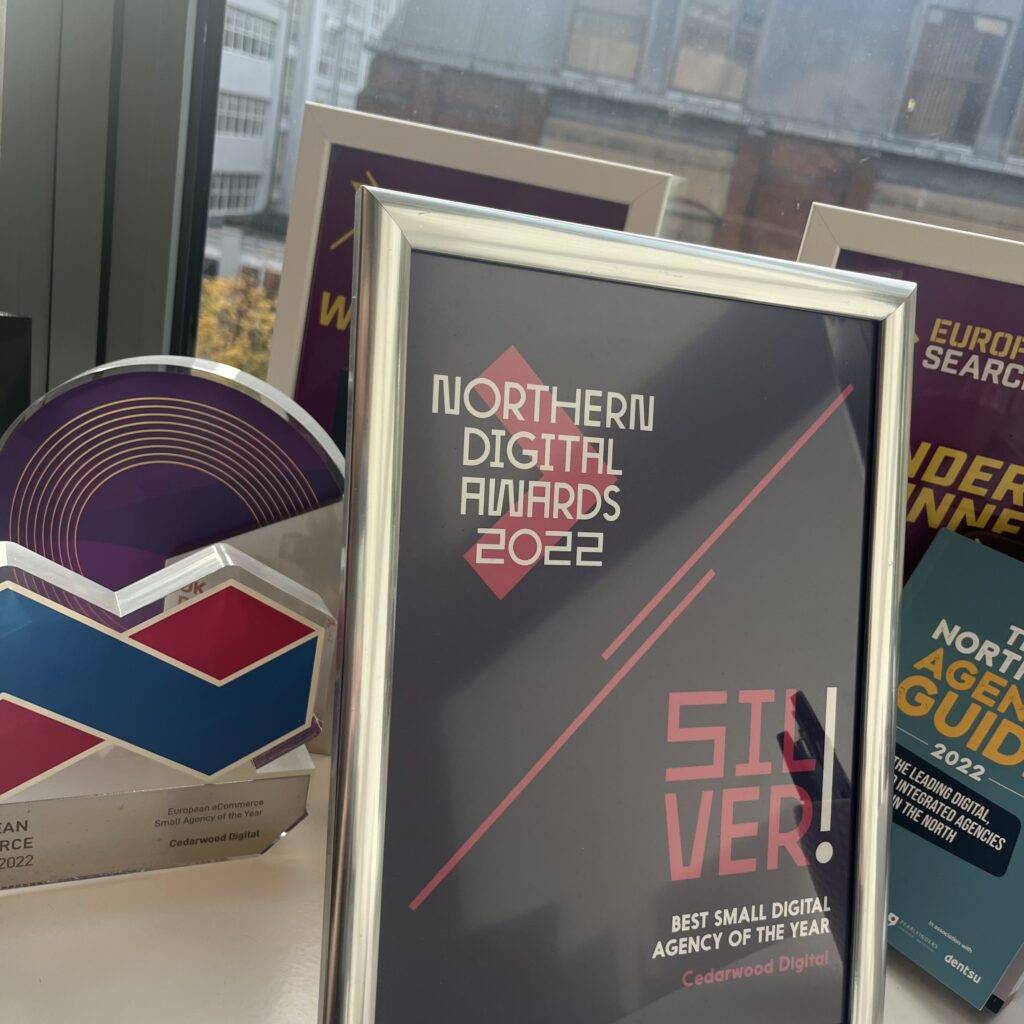
In 2022 we were awarded Silver for Best Small Digital Agency Of The Year and look forward to hopefully taking home another award in 2024! 🏆

Congratulations to the other nominees and a huge well done to our team at Cedarwood Digital. 👏

We look forward to seeing everyone at the ceremony on the 25th of January. You can see the full shortlist here: https://northerndigitalawards.com/2024-shortlist/

[blog]_[[blog]_[Director Amanda On The Main Stage At Brighton SEO]_[Blog Picture]]_[Blog Picture]

PPC Landing Page Best Practices: Tips for Better Conversion Rates

With PPC (Pay-Per-Click) advertising, every click carries a cost. It is imperative to convert those hard-earned visitors into customers to maximise the return on investment (ROI) of your ad spend. In this blog post, we will explore essential strategies for conversion rate optimisation (CRO) in the context of PPC advertising. We will cover overall optimisation techniques, desktop-specific tactics, and mobile-specific approaches. By implementing these recommendations, you can enhance user experience, increase trust, and amplify the impact of your PPC campaigns.


Overall Optimisation:

💡Ease of Navigation: Simplify your website’s navigation structure and ensure that visitors can easily find what they’re looking for without having to click through to different pages and get lost in the website.


💡Streamlined Conversion Funnel: Optimise the conversion process by reducing friction and eliminating unnecessary steps. Make it easy for visitors to convert by simplifying forms, minimising data entry requirements, and providing clear instructions.


💡Trust Signals from Third-Party Reviewers: Incorporate testimonials, ratings, and reviews from reputable third-party sources. Positive feedback and social proof enhance trust in your brand, ultimately influencing purchase decisions.


💡Unique Selling Propositions (USPs): Clearly communicate your company’s unique value propositions to visitors. Highlight what sets your business apart from the competition and why customers should choose your products or services.


💡Address Pain Points: Identify common pain points or challenges faced by your target audience and emphasise how your offerings provide effective solutions. Focus on addressing customer needs to increase the likelihood of conversion.


💡Landing Page Relevance: Ensure your landing pages directly related to the keywords and messaging used in your PPC ads. Consistency between your ad and landing page creates a seamless user experience, increasing the likelihood of conversion. Users should find what they expect to see, fostering trust and minimising bounce rates. 


💡Speed and Performance: Mobile users expect fast-loading pages. Optimise your mobile landing pages to load quickly, keeping visitors engaged and reducing the chances of abandonment.


Desktop Optimisation:

💻Design-Driven Content: Desktop users often desire more comprehensive information before making a purchasing decision. Create visually appealing landing pages that incorporate detailed content, including product features, benefits, and customer testimonials.


💻Clear CTAs: Use visually appealing, attention-grabbing Call-to-Action (CTA) buttons that stand out from the surrounding content. Ensure that they are strategically placed to drive conversions and guide users towards desired actions.


💻A/B Testing: Continuously test different elements, such as headlines, images, colours, and CTAs, on your desktop landing pages. This iterative approach helps identify the most effective combinations that yield the highest conversion rates.


Mobile Optimisation:

📱Responsive Design: Ensure your landing pages are fully optimised for mobile devices, providing a seamless browsing experience. Responsive design guarantees that your PPC ads drive mobile users to mobile-friendly landing pages, reducing friction and improving conversion rates.


📱Thumb-Friendly CTAs: Optimise mobile CTAs by aligning them with users’ natural thumb placement. Placing important buttons within easy reach improves user experience and encourages conversions.


📱Visible Contact Information: Make sure that essential information like phone numbers and contact details are clearly visible on mobile devices. This enables users to quickly reach out and establishes trust and accessibility.


📱Minimise Scrolling and Text: Mobile users have limited screen space and attention spans. Reduce the amount of scrolling required and keep the text concise, ensuring key information and CTAs are visible without excessive scrolling.


📱Prominent CTAs: Place CTAs near the top of the mobile screen to capture users’ attention without the need for excessive scrolling. Make them highly visible and intuitive for quick and effortless conversions.


Conclusion:

PPC advertising requires a strategic approach to ensure that your investment translates into tangible business results. Conversion rate optimisation is an ongoing process that requires continuous monitoring, testing, and refinement. By implementing these conversion rate optimisation strategies, you can increase the effectiveness of your PPC campaigns, boost user engagement, and ultimately improve ROI. Remember to tailor your optimisations to both desktop and mobile users, leveraging the unique advantages and challenges each platform presents. Stay proactive, continuously monitor performance, and refine your campaigns based on user behaviour to unlock the full potential of your PPC advertising efforts.

[blog]_[   Challenging Digital KPI Metrics in PPC Advertising: Moving Beyond Vanity Metrics]_[Blog Pictures]

Challenging Digital KPI Metrics in PPC Advertising: Moving Beyond Vanity Metrics

In PPC, it’s easy to get swept up in the numbers that look good in a dashboard but don’t actually mean much for the business. You might see a jump in leads or form fills, but when you check in with the sales team, nothing’s really changed. That’s because some KPIs sound impressive on the surface but don’t link to revenue in a meaningful way.

Here are a couple of the usual suspects, and how I talk about them with clients.

Where Vanity Metrics Fall Short

More Doesn’t Always Mean Better

A high number of leads might look positive, but if most of those people were never likely to buy, it’s just noise. Sales teams end up wasting time chasing poor-fit prospects, and marketing spend is spread thin with little to show for it. Quality matters far more than volume.

Not All Interest Is Equal

Not every form completion carries the same weight. Someone downloading a free guide isn’t in the same position as someone booking a demo or requesting a quote. Treating them as equal “leads” only gives you misleading data and skews your campaigns.

How To Approach This With Clients

Be Clear About the Limitations

When working with clients, it is crucial to educate them about the limitations of vanity metrics and the importance of focusing on metrics that align with the business’s bottom line. Explain that not all leads are created equal and emphasise the need to assess the quality and conversion potential of leads to drive actual revenue. 

Focus on Sales-Qualified Leads

Instead of fixating on increasing the overall number of leads, shift the emphasis to identifying and nurturing sales-qualified leads (SQLs). An SQL is a lead that has been vetted and determined to have a higher likelihood of converting into a paying customer/client. By focusing on increasing the percentage of SQLs within the lead pool, businesses can drive more effective marketing campaigns and maximise their return on investment (ROI).

Think Cost-Effectiveness, Not Just Volume

Highlight the cost-effectiveness of focusing on increasing the percentage of SQLs instead of simply aiming for higher lead numbers. Share examples to demonstrate how an increase in SQLs from, say, 20% to 40%, can result in a higher conversion rate and a more significant impact on the bottom line. This approach ensures that marketing efforts are optimised to generate revenue, rather than being diluted by a high volume of unqualified leads which can overload the internal teams. This becomes even more important when growing an account – as costs increase you want to ensure that the budget is being spent as effectively as possible to drive the best ROI. 

Why This Benefits Both Client & Agency

  • Agencies stand out by focusing on results that actually matter.
  • Clients value the honesty and know you’re not just padding out reports.

  • Conversations are more productive when both sides are looking at the same goals.

  • Stronger results naturally lead to longer-term working relationships.

Metrics like total leads and form completions aren’t completely irrelevant, but on their own they don’t tell you very much. The real test of PPC is whether those leads are qualified and likely to become customers. That’s what drives growth, and that’s where marketing proves its value.

At the end of the day, it isn’t about how many leads you can show in a spreadsheet. It’s about whether those leads are actually helping the business grow.

Remember, in digital marketing, true success lies not in the number of leads generated but in the quality of leads and their conversion potential.