[blog]_[5 Key Elements of An SEO Strategy]_[Blog Picture]

5 Key Elements of An SEO Strategy

So you’re pulling together an SEO strategy, either for a client or for your own website, and you’re not quite sure where to start? With SEO being an ever-evolving field there are so many different elements that go into a successful strategy and it’s important to remember that not one size fits all. When it comes to SEO you really need to tailor a strategy that matches the needs and goals of the website and the framework in which it exists. Even more than this, SEO is a team effort, and while having a good SEO agency plays a key role, the in-house team, customer services and even external reviews go a long way in ensuring that you hit those all-important quality rater guidelines. 

Google has a Page Quality Rater Guidelines to give guidance around what Google’s quality raters are looking for when evaluating a website. Although Google never tells us the factors they most value when ranking a website, this is definitely a great place to start. The guidelines can help to identify ways to improve and strengthen how your website is seen, as well as the user experience it provides. When taking this into account alongside guidance from recent algorithm updates, we can create a solid strategy which keeps the concept of quality content, great user experience and purpose, and a strong website reputation at the core. 

So, if you are looking to pull together an SEO strategy with all of this in mind, here are the top 5 elements that you should look to include, to ensure that your SEO strategy has the best possible chance of performing: 

1. Relevancy

Relevancy is key and perhaps one of the most important elements across both your on-site and off-site SEO strategy. Relevancy comes in a number of different formats, from ensuring that your on-site content matches user intent and purpose, to ensuring that any quality links you’re building back into the website are relevant to your brand. These links will, after all, add a lot more value and have the added bonus of potentially bringing in relevant referral traffic at the same time. 

Relevancy plays an important role in both on-site and off-site SEO. From an on-site perspective, it helps to ensure that your content is right for the user. This means that it answers their intent and purpose and gives them the right type of information they need to make an informed decision about your product and service. From an off-site perspective, building high quality relevant links into your website helps Google to understand that you are an expert in that particular space.

There has been a lot of discussion around how important relevancy is to links. As we push more towards semantic search, it’s not enough to just have great quality links, they have to be relevant to your brand, product or service i.e. they need to belong there. This should form the foundation of any solid SEO or Digital PR strategy. 

2. Reputation

The reputation of your website and the creator of the content on your website are two of Google’s most important factors for page quality rating. This is especially true of building a reputation externally where other websites are saying good things about you, hosting your expertise or linking back to your website in an authoritative manner.

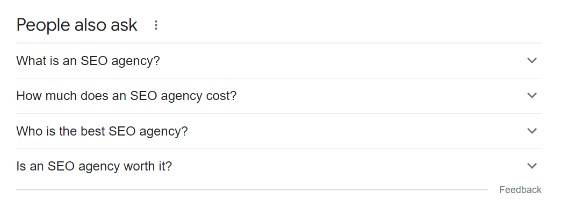
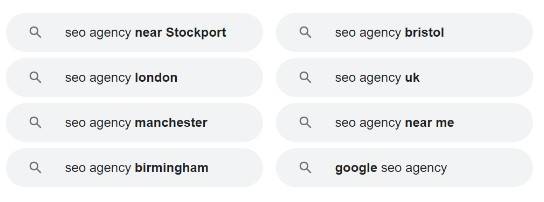
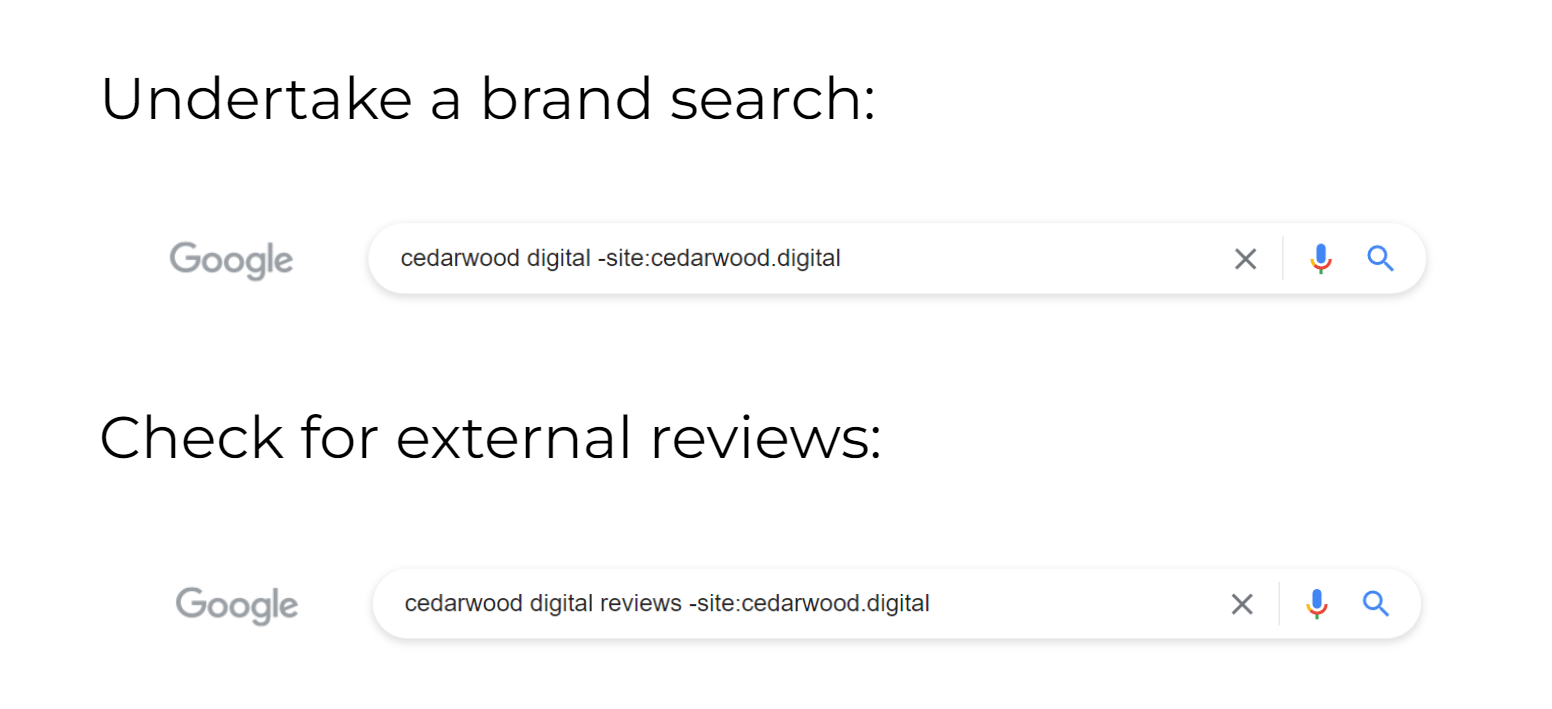
I recently spoke at Brighton SEO about how to do a quick reputation check. Two of the simplest ways to do this are quick Google searches removing your own website to understand how other websites are talking about and linking to your brand online:

By undertaking these quick searches you can get a really clear understanding of any potential concerns around your reputation. It also gives you a good idea of any external websites where you might want to look to improve your reputation, including third party review sites, social platforms, or industry leading blogs/publications within your niche. 

Reputation is built on-site and off-site. From an on-site perspective, building out author profiles and justifying your content and the expertise of your authors, with a mixture of authoritative external and internal links, is very important. As too is any information around what makes them an expert.

From an off-site perspective, a strong Digital PR campaign can play a crucial role in helping to build your expertise in the wider market. A nice mixture of thought leadership, expertise-driven newsjacking and data-led campaigns can really help to push key E-A-T signals across your website. This will highlight your reputation and expertise to your audience and to Google. 

A lot of brands focus heavily on their on-site reputation rather than considering off-site reputation and how Google (and other brands) might see it. By keeping an eye on how your reputation is viewed externally you can be more aware of any external review sites or news publications that might be speaking about you. In addition, you’ll gain an understanding of how your audience may see your brand when they encounter it for the first time.

3. Experience, Expertise, Authority & Trust

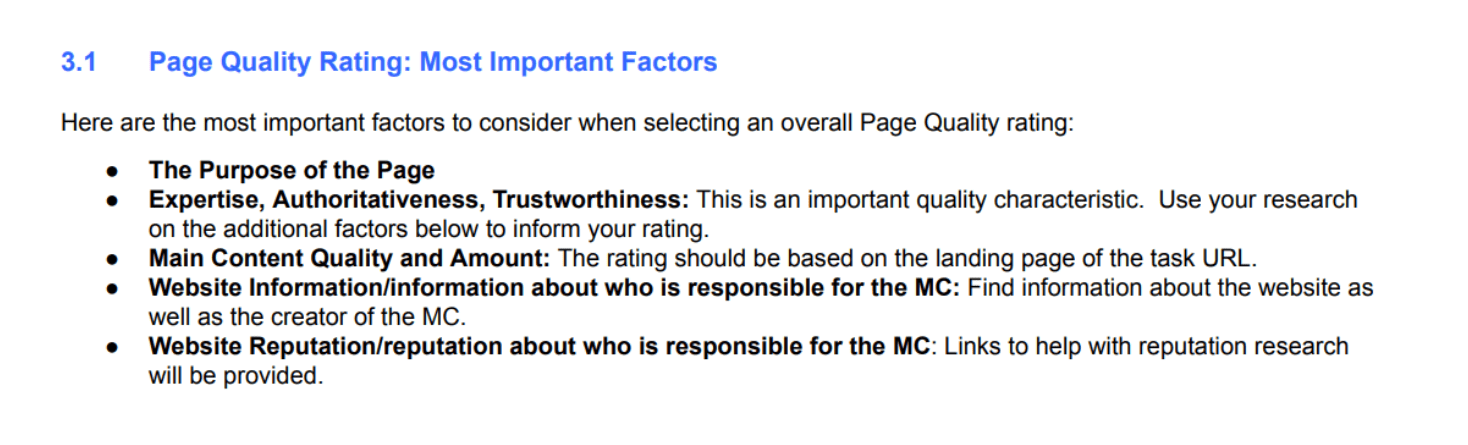
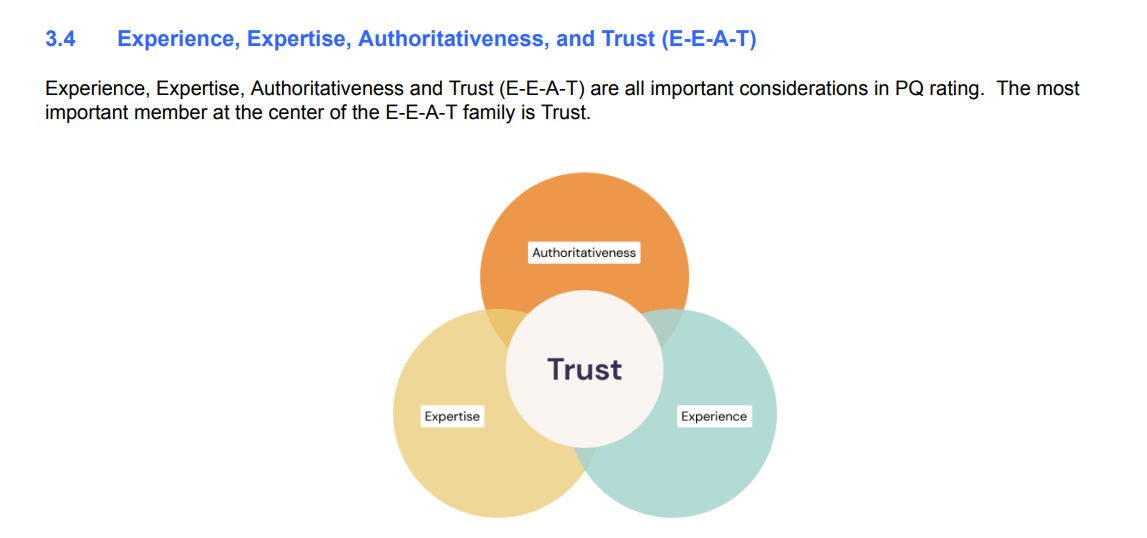
Over the last few months I’ve spoken at length at a number of conferences about the concept of E-E-A-T and how important it is with regards to Google’s Quality Rater Guidelines. We can see this expressed within the guidelines in section 3.4, which discusses E-E-A-T specifically:

Source: Google’s Quality Rater Guidelines

Although the concept of E-E-A-T isn’t anything new for SEO agencies, the way that it is understood and adapted into use has changed over the last few years as we have come to better understand the depth of E-E-A-T signals and how these can be implemented across a website. The aim now is to ensure we provide a great user experience and really focus on not only answering the user’s purpose and intent, but also demonstrating that our websites are trustworthy and authoritative enough to be experts on the subject matter.

E-E-A-T isn’t just about on-site content or building high quality authoritative links, it’s about drawing it all together to ensure that the website as a whole is seen to carry this level of expertise, authority and trust. Internal linking and building semantic themes, creating high quality, relevant external links, creating strong on-site content and ensuring the website is easily accessed and crawled, all play their own role in supporting E-E-A-T. It’s important to get each piece of the puzzle working correctly to give that great overall experience. 

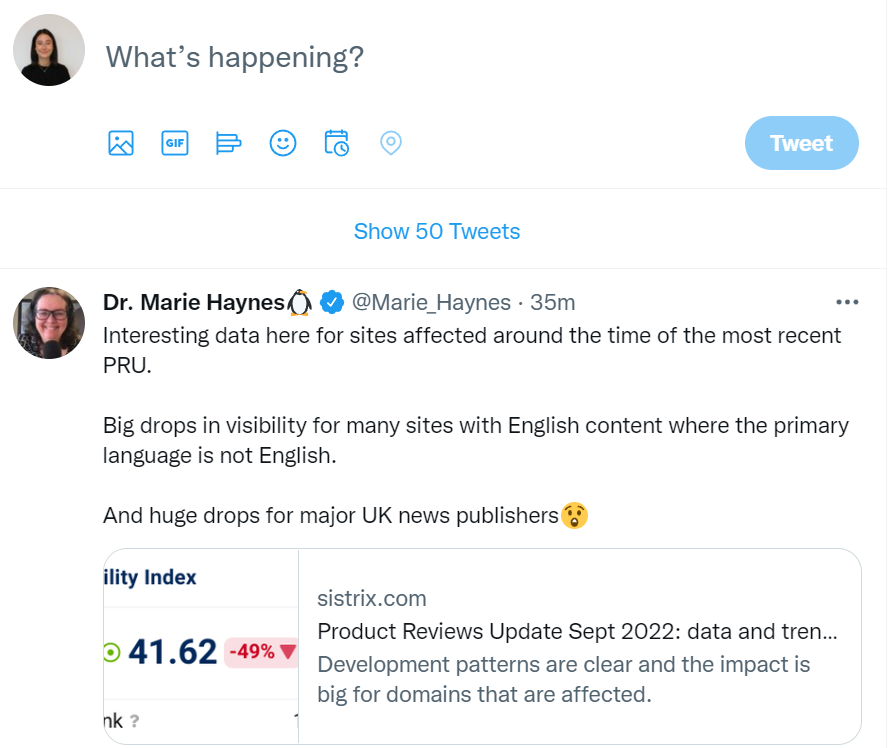
In the last few months we’ve had more Google algorithm updates than I can remember, but there has been one consistent theme throughout them. Whether it’s aiming to drive more “Helpful Content” or looking to improve “Product Reviews” we can see that each of these updates is tied together by this underlying theme of ensuring a website has strong E-E-A-T signals; the algorithms are just set up to test it in different ways.

So if you haven’t got to grips with the concept of E-E-A-T, or perhaps you’re missing a few pieces of the puzzle, now is a great time to pull all of this together. If, in particular, external linking is one area you want to improve you can read here more about the value of external link building in E-E-A-T

4. Crawl, Indexation & Internal Linking

In SEO we often get caught up talking about links of the external variety but frequently forget or overlook links of the internal variety. In the majority of new clients we take on, the one thing I find above all else that needs improvement is the internal linking across the website. 

Internal linking isn’t just about connecting your content together and building semantic themes (although it does a great job of this) – it’s mainly about using it to signpost to Google which of the pages on your website are most valuable, almost like drawing a map.

Google’s John Mueller reaffirmed in a recent Google Hangout that internal linking can be one of the most important aspects of SEO as it helps to signal the importance of your pages to both Google and the user. It should be used in a strategic way to think about what is most important to you and how you can signal that through effective internal linking. It’s also a great way to really build pillars around your key pages and highlight your expertise by linking related articles, key blog posts and data pieces. These can all back-up and reassure your audience of your expertise, authority and trust in these sectors.

However, we don’t just use internal linking to help signpost Google and pull together our content in pillars and semantic themes, it also plays an important role in ensuring that Google can effectively crawl and index your website. Internal links are one of the main ways that the Googlebot moves through your website, so giving it a clean and sure path through, especially to all of your key pages, plays an important role in SEO success. 

Strong internal linking also helps Google to effectively index your website. If your website isn’t within Google’s index then chances are it won’t rank for anything; it needs to be in the index in the first place to be able to rank! You may have come across errors in Google Search Console where Google has crawled but not indexed your pages yet, and often through choice. This can be incredibly frustrating for webmasters as often there is not the easiest of fixes available. Having strong internal linking can help signpost to Google how valuable new and existing pages are. Additionally, it points Google in the direction of any new pages to ensure that these are quickly and effectively indexed, giving them the best possible chance to perform.

5. Great Content

Save the best until last? Solid content is a very important part of your SEO strategy and it’s important that any content you create is aimed first and foremost at your user – answer their questions, meet their purpose, deliver their expectations. By adhering to each of these elements you are able to ensure that you are delivering great content that satisfies the user’s query.

It’s important to add that great content doesn’t equal lots of content or content that gets added to a website everyday. Rather, it looks at the query contextually; is there enough content to answer the user’s question and does it do this effectively (i.e. does it get straight to the point)?  Is the content laid out in such a way that the user can easily understand what is going on and does it help to make it digestible? Are you addressing your content in a conversational manner with questions and answers? 

It’s also important to evaluate whether your main pages need supporting content; so looking at how you semantically link content together on the page to ensure that the user can be fully informed. If you have blog articles or news articles that relate to your main content pages, ensure that you link them closely or pop a related articles section at the end of your page. This helps you to “pillar” your content and create effective content cluster groups, showcasing your knowledge, expertise, data and analysis around a given topic and adding value to that topic’s main page.

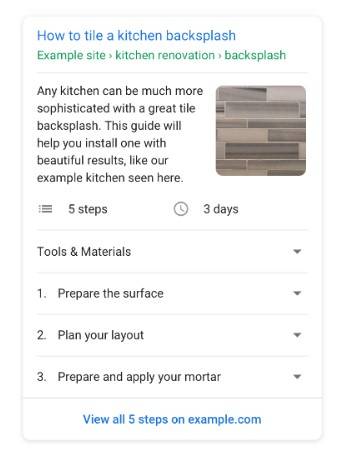
Google is a search engine. By nature its purpose is to answer a user’s question or query. So, implementing different styles of content, such as lists or FAQs, can really help Google to understand that you have content which addresses these queries. You can enhance your content further by the implementation of Schema mark-up, which is designed through code to highlight key features of the content, this in turn can also help you to exhibit SERP features when presenting on Google. 

There’s definitely a lot more to a traditional SEO strategy than just technical, content and links. If you’re looking to put more depth into your strategy, or perhaps your website is in a YMYL industry where you need to place additional focus on your key E-E-A-T signals, find out more about our SEO service today!

[blog]_[Top Tips for SEO Beginners]_[Blog Picture]

Top Tips for SEO Beginners

So, you’ve landed your first role specialising in search engine optimisation (SEO), or you want to further develop your business’ digital marketing efforts by targeting organic search, and have spent some time learning the basics of SEO. Once you’ve formalised your grip on the basics, it’s important to understand how to get ahead and keep up with this ever-changing but exciting marketing channel. 

To help with that journey, we’ve compiled our top pieces of advice on getting the most out of your strategies and how you can keep up with this ever-evolving sector. 

These tips are based on my own experience as an SEO professional and the things I found most useful when entering the industry as a beginner.

1. Optimise content for the user first 

One of the most important things to consider when making content optimisations or reviewing a site is the overall usability and user experience.

Google is constantly evolving and adapting to make search engine result pages (SERPs) the best possible by including quality content that real-life users actually want to view. For example, Google recently announced the Helpful Content Update which will target sites that have content ‘made for search engines.’ It is thought that sites with poor quality content or overly optimised copy will be penalised and could lose their rankings in the SERPs. This highlights the importance of creating readable content designed for a user rather than creating copy to try and ‘trick’ a search engine into ranking your site highly. 

Old-school tactics (or, simply, bad SEO!) were more focused on trying to ‘trick’ search engines into ranking their landing pages higher. Tactics, such as keyword stuffing, and having thin content creates a poor user experience and it is, as you can imagine, not something that search engines are fond of either. It is of course important to include the keywords that you want to rank for, however, these should only be used in a natural way where it makes sense within the context.

2. Create Quality Content

Essentially, to create quality content, you have to know what the user is searching for and which information they will value most. This means relevant and factually correct content that isn’t a carbon copy of another website or one that is noticeably optimised for search engines. This type of SEO focuses on the concept of expertise, authority and trust, or E-A-T. You can help users to trust your sites by displaying your expertise in your industry, and providing accurate and original information that answers a searcher’s query fully. 

A great piece of written content will answer the user-query and beyond; not only will this prevent the user from clicking off the page to find any additional information, but if they find all of the information they need they may click on your site first in the future.

3. Build relevant links

Link building is an important factor in increasing your site’s authority and improving your domain ratings. The more relevant the links are to your site, the better signals it sends to search engines. 

Backlinks, or links pointing from an external website to your site, can send great signals to a search engine depending on the quantity of quality links from relevant external sources. Relevancy is very important here. When an external source links to your site, the source should be a publication or brand that aligns well with your industry or speciality and is of a similar nature. Not only will this send quality customers or leads to your website, but these relevant links showcase what your site is about and help to display your expertise within a certain sector. 

Would you rather have 1,000 poor quality, irrelevant sites linking to your pages or 10 relevant sites with a high domain rating? 

10 relevant sites with a high domain rating linking to your website would be a strong indicator to Google, or any search engine, that you could be considered an industry leader and that your expertise is valued. Combined with a strong SEO strategy, this puts you in a good position to rank higher, receive more quality traffic and achieve more conversions or goals. 

This also goes for internal linking on your website. When linking internally, only provide links to relevant pages. For example, if a page on a Veterinary website focuses on dog breeds, they could include internal links to another page on their site about the diets of certain dog breeds. 

4. Keep up to date with the latest SEO news

One of the best pieces of advice I was given when I started in the industry was to set up a dedicated Twitter account and follow a variety of thought leaders within the SEO-world. From the likes of SEO-expert Dr. Marie Haynes to Google’s Danny Sullivan, the digital marketing communities on Twitter can be an insightful and easy way of keeping up to date with the latest tactics or changes, including Google algorithm updates.

As well as Twitter, there are heaps of informative podcasts and subscription newsletters with discussions on the future of digital marketing and analysing best practices. There are also amazing learning resources on YouTube, including video series from Google Search Central, which help to gain a wider understanding of what search engines are looking for when it comes to organic search.

By consistently updating yourself on the newest tactics or the latest news, you’re developing a well-rounded knowledge base of SEO and its workings. This puts you in a great position to discuss changes with clients if you work for an agency or to explain strategy decisions to board members. 

5. Always measure your results

Without measuring your results, it can be difficult to know which of your optimisations are succeeding and which ones just aren’t working (it happens and that’s okay). Identifying any drops in performance after a recent optimisation can signal that a search engine bot has reassessed the page or site and believes that the page is no longer valuable for a specific query. If you’re able to monitor and identify these issues early, you have a better chance of trialling a different approach to regain rankings or lost traffic. 

I would recommend tracking your targeted keywords in a dedicated tool such as AHRefs, SEMrush or SEO monitor to identify any increases or declines over time. This can also help you to identify any potential ranking fluctuations that could be due to a Google algorithm update. If you then spot any patterns or losses in the position of your keywords, you can likely locate the cause and take action.

6. Keep Learning

Outside of best practices when doing actual optimisations and audits, it’s important to be aware of the wider SEO world to best understand it. This marketing channel is constantly evolving with new algorithm updates and changes happening all the time. It’s therefore crucial that you stay ahead, or alongside, the curve to really make the most of your optimisation efforts. The above tips are definitely a great way to monitor this!

Browse our SEO services if you’re looking for more advice and direction for your SEO strategy or check out more from our Manchester-based SEO services.
[blog]_[A Guide To Digital PR]_[Blog Picture]

A Guide To Digital PR

If you’ve landed on this blog, chances are that you have heard all about Digital PR. It’s been an industry buzzword for a few years now & has really taken off in this time; even though many agencies, including ourselves, have been doing this for over 5 years!

Digital PR has been used in conjunction with SEO to help grow visibility for websites in a very holistic manner. While these two elements were previously siloed amongst marketing campaigns, more recently, agencies have started combining the two to provided added, targeted benefits for both their SEO and Digital PR campaigns. By combining the two elements, you are able to use the data-research side of SEO with the creative PR side of Digital PR to drive consistent campaigns. This not only drives high quality links into your website and grows brand awareness, but also supports growth in your overall SEO rankings and, therefore, traffic to your website and subsequent sales/conversions.

So What Is Digital PR?

Digital PR is essentially a strategy or plan which takes the principles of traditional PR & applies it in an online environment to online content & placements. Think of it as promoting a product or service but in the digital space and with the added incentive of creating high quality, relevant links for SEO. In turn, you also get the added bonus of the optimisation that comes with that. 

Digital PR has been around for as long as PR has, but has only really come to the forefront in recent years. This is mainly due to the value that it can add to SEO campaigns and the real world returns that PR of this style can generate. PR has never been more measurable from an ROI perspective as it is in Digital PR format. This makes it an appealing option for businesses who are looking to grow sales/leads in addition to just growing standard visibility. 

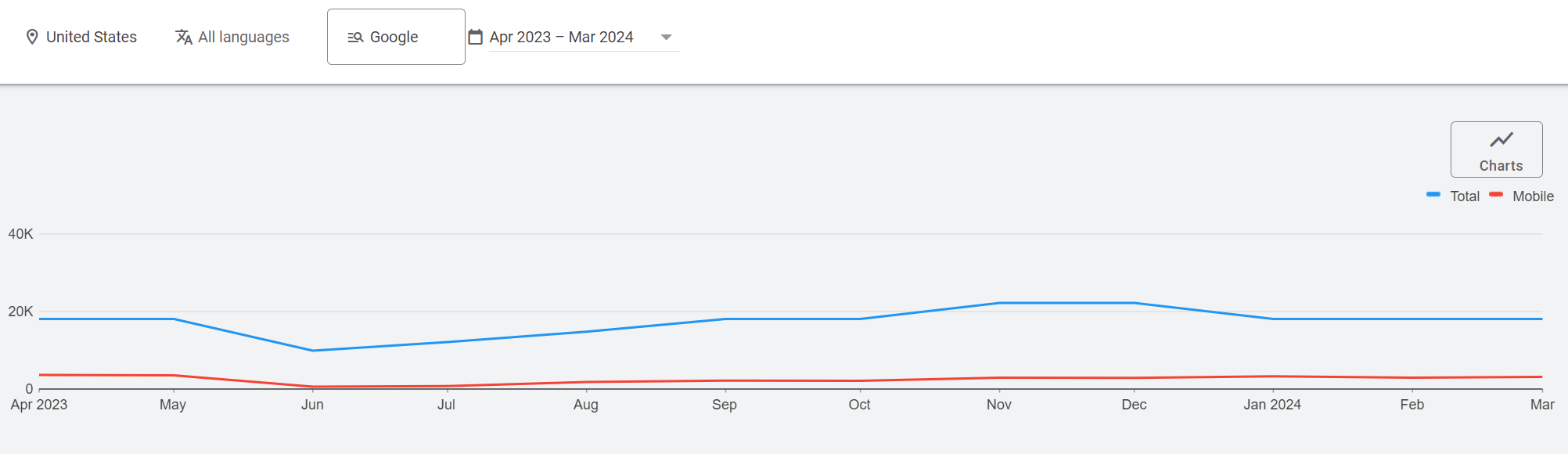
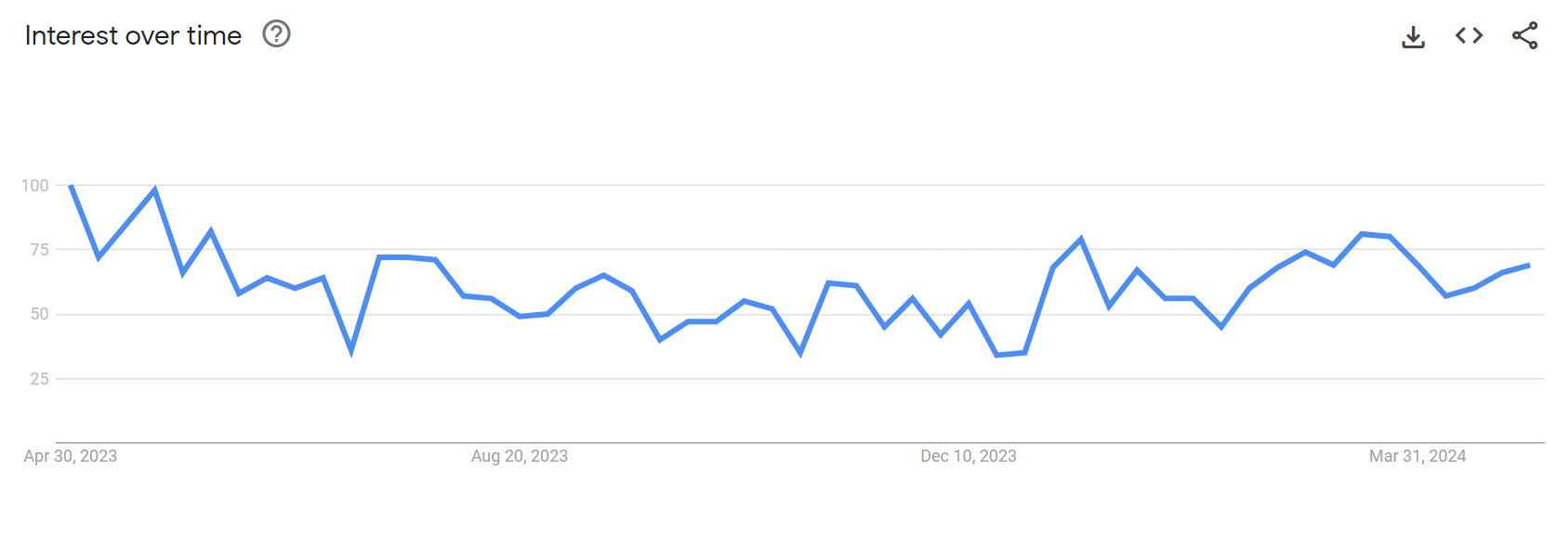
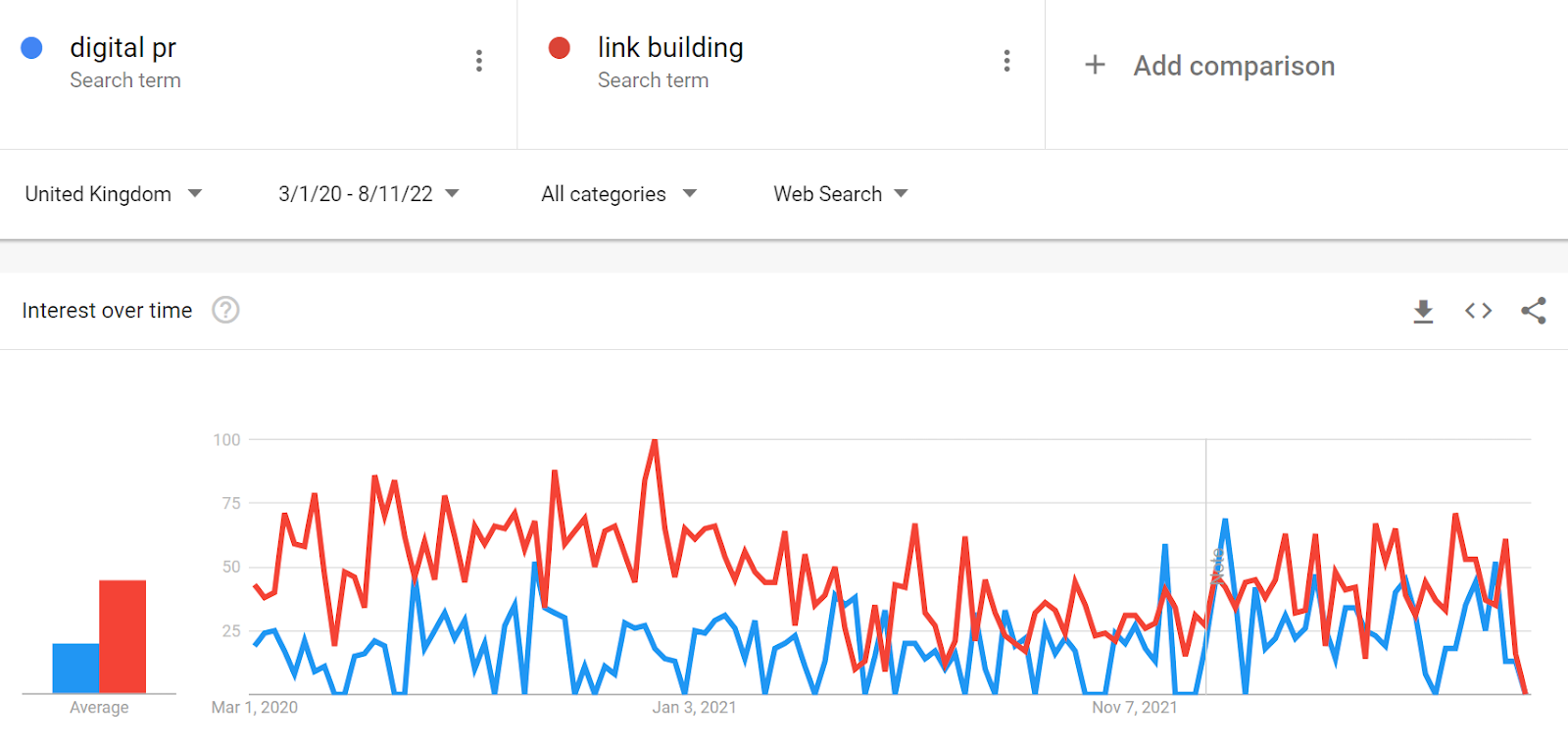
When we look over time we can see that “link building” in its raw format has always been a popular option for companies looking to improve their “website authority” or “Domain Rank” for SEO. In the last few years, however, we can see that Digital PR has started to meet link building as an equal. This has mainly been due to the rise in popularity of the term as a buzzword, but also the approach being seen as a more effective, sustainable and achievable method of link acquisition.

Graphical user interface, application

Description automatically generated

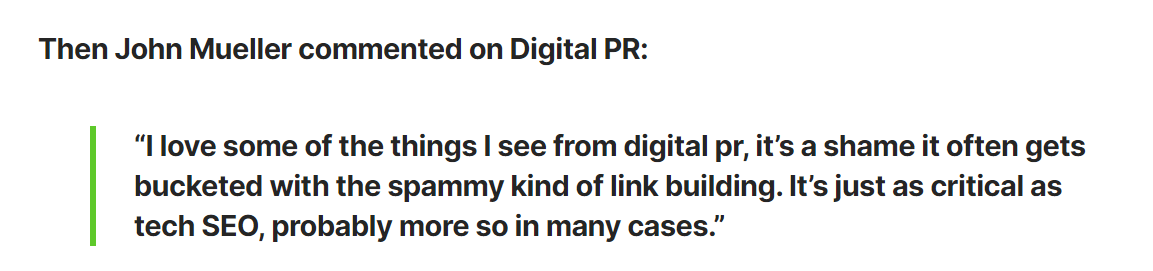
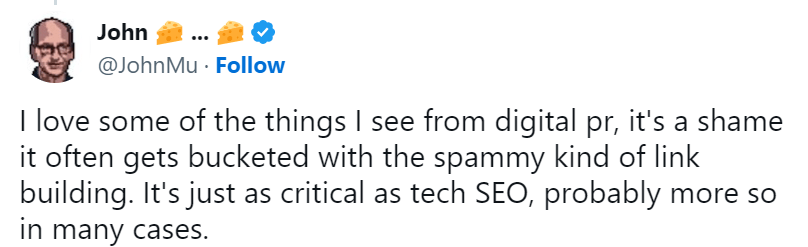
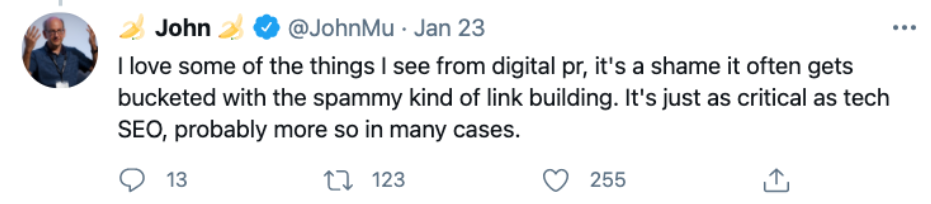
We’ve even seen John Mueller, Google Webmaster Trends Analyst, weigh in on it through his Twitter account, offering his view that he loves some of the things that he sees from Digital PR: “It’s just as critical as tech SEO, probably more so in many cases.” Who are we to argue?!

Text

Description automatically generated

Although we’ve compared Digital PR and Link Building together above to review trends over time, it’s important to note that the two can be very different. Digital PR is a more holistic offering. It’s designed to not only improve SEO value and drive leads to your website, but also to enhance your visibility and start to create buzz around your brand, just as traditional PR does.

What Are Some Common Digital PR Techniques?

Digital PR, like any element of digital marketing, is done in a number of different ways depending on the agency that you work with and the results that you are looking to achieve. For example, Digital PR for an ecommerce company looking to drive sales of a specific product would look very different to a company looking to launch a new product, or a company who is looking to improve their overall awareness and traffic within a specific niche. 

That said, there are a couple of techniques that can work across a number of different situations, they just need to be applied in different ways. Some of the most common Digital PR techniques that we use here at Cedarwood include:

Newsjacking

Newsjacking isn’t a new concept to PRs; it’s essentially the process of finding a newsworthy topic and putting your client at the front of the conversation. As Digital PR has continued to grow, so has the popularity of both Proactive and Reactive Newsjacking as a way of landing great quality coverage for a client while also showcasing that client’s expertise. 

There are generally two different types of newsjacking: proactive and reactive. Both work in a slightly different way. Traditionally, proactive newsjacking would involve researching events in advance such as the launch of a new product, event or movie, or the launch of a new report, perhaps from NHS Digital or the ONS or a particular themed day or month coming up. This gives time to plan, gain the right comments and angle, and outreach in time to land coverage for clients.

Reactive newsjacking, on the other hand, involves monitoring the media to identify opportunities where we can potentially jump in with expert commentary or advice. To be reactive you need to have a great media monitoring set up and you need to be able to get into the conversation quickly with a fresh angle. You also need to have a quick turnaround on comments. We often recommend speaking to clients or your internal PR team in advance to prep them where tight turnaround might be required. Ideally, try to develop a process for this early on so you don’t miss out on key opportunities. For media monitoring, there are a lot of tools out there but some of the most popular are social media platforms, such as Twitter and TikTok, BBC Breaking News, Hashtags and daily newspapers.

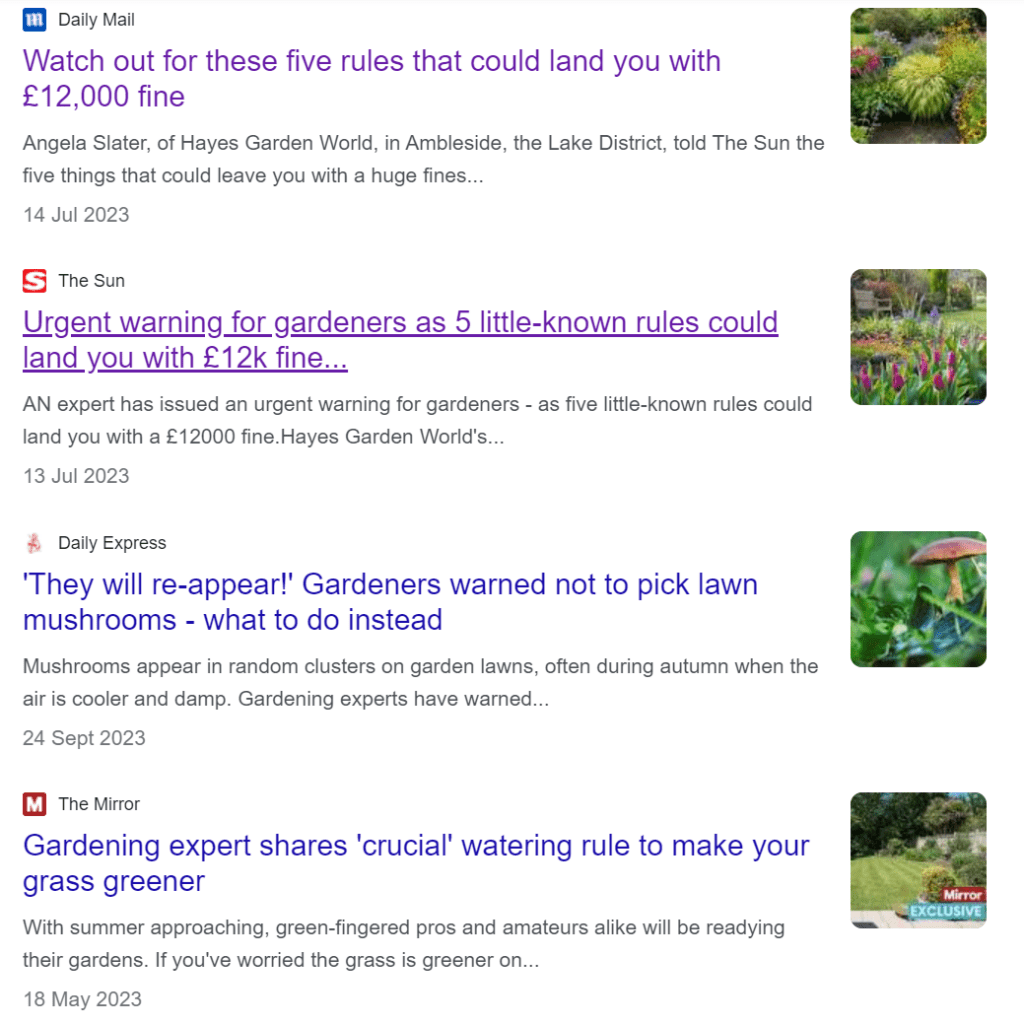
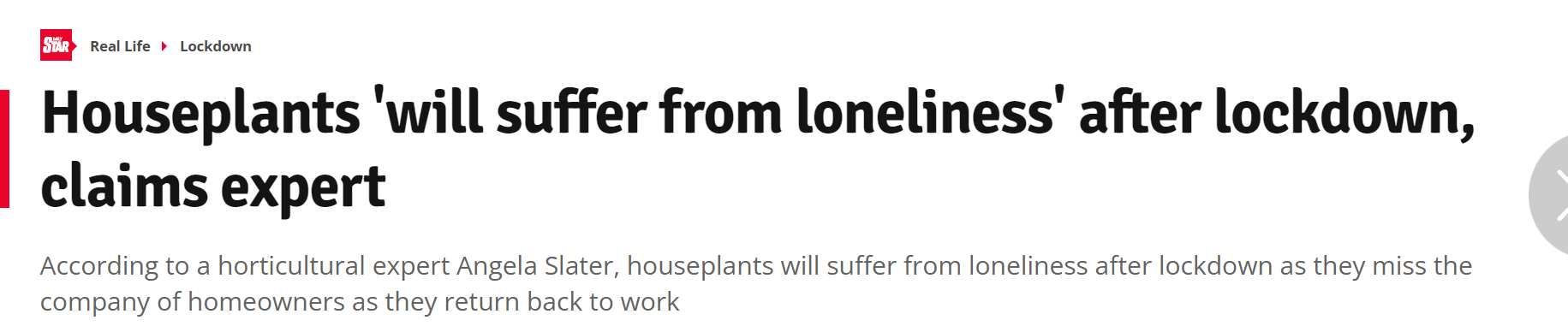
Newsjacking is a very popular Digital PR approach here at Cedarwood as it not only generates high quality expertise-driven links it’s also fast-paced and often fun. We love to get stuck in putting our clients in the centre of the conversation. Over the years we have created some fun newsjacking campaigns, from talking about how plants would handle lockdown ending to recreating Harry & Meghan’s Oprah garden scene. As well as tackling more serious topics such as highlighting the signs and symptoms of Cervical Cancer for Cervical Cancer Awareness Month. 

Done effectively, Newsjacking is a quick and effective way to gain your clients coverage and to gain those all-valuable links back to the website.

Data-Led Campaigns

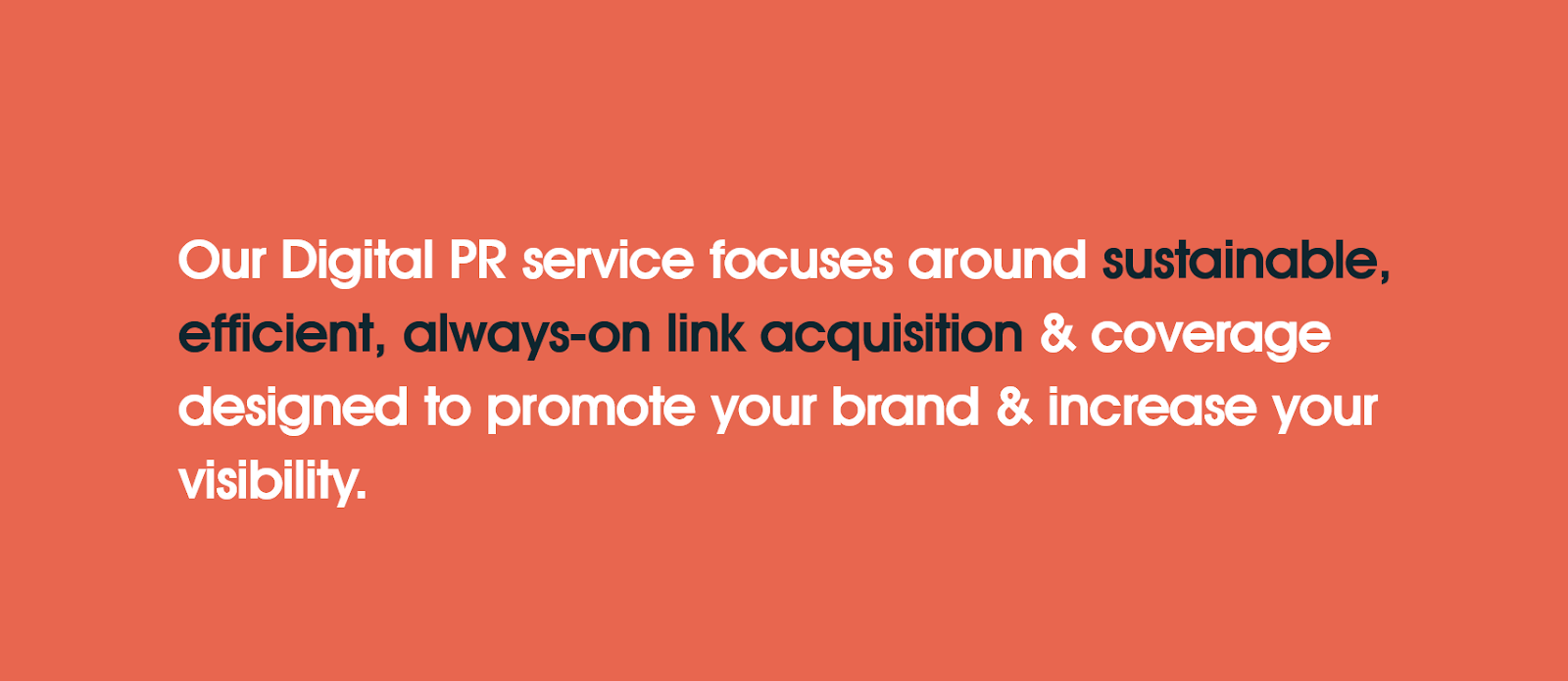
At Cedarwood we’re a fan of always-on link acquisition, in fact in one slide we could summarise our approach to Digital PR as follows:

Graphical user interface, text, email

Description automatically generated

That’s where data-led campaigns come in. Small, frequent data-driven campaigns are a great way to land links, highlight your client’s expertise and create a stable environment of always-on Digital PR. The days of high risk, high reward campaigns are often behind us, as we find journalists increasingly inundated with the larger style of campaigns. They now seem to prefer a smaller, more expertise-driven approach to Digital PR through data.

The great news when it comes to data-led campaigns is that there’s a tonne of free resources out there that you can utilise. In fact we’re currently pulling together a separate blog on all of the free data sources you can utilise, so watch this space. For now, we’ve listed some of the key ones below:NHS Digital

Once you have your data, undertake analysis to understand the angle. Remember a new, fresh angle backed up by expertise is your best friend when it comes to landing data-led campaigns. It’s therefore always good to have some ideas in mind prior to your data analysis, so you know what you are looking for. 

If you aren’t able to gather the data freely then there are a number of paid for options, especially if you have something specific that you are looking for. Google Surveys and other survey providers can offer good options here. In many instances, it might be that you only need to ask just one question, in which case it can often be quite affordable too. Data-led campaigns don’t have to break the bank to be successful.

Here are a couple of examples of recent data-led campaigns that we’ve turned around quickly and outreached to gain some great placements and Digital PR for our clients.

Patient Claim Line: COVID-19 Survey

Cash Lady: Cheapest Roast Dinners 

MIST: Pets & Smoking Habits

Thought Leadership

Thought Leadership is a great approach for modern Digital PR as it tends to combine a number of elements which are hugely beneficial for SEO – predominantly expertise and link acquisition all rolled into one!

Thought leadership is also a great way to extoll the virtues and expertise of your brand to a wider market, and really join the conversation on topics which matter to both you and your brand. Thought leadership is one of the elements that underpins a strong always-on Digital PR strategy and something that we love to do to build the expertise of our brands.

Speaking on his Twitter account John Mueller, Webmaster Trends Analyst at Google, speaks directly about how one very relevant link can be significantly more important than a whole chunk of links built into a website. It’s very much about quality over quantity. In many cases, Digital PR firms steer away from thought leadership as they see it as a lot of work for maybe just one or two links. Yet, in many cases, these one or two links can be more valuable than an entire creative campaign if they drive the relevancy and expertise that Google is looking for. 

“Or there could be one really good link from one website out there that is, for us, a really important sign that we should treat this website as something that is relevant because it has that one link. I don’t know, maybe from like a big news site’s home page, for example. So the total number essentially is completely irrelevant.”

John Mueller

So while many agencies and in-house teams are set on creating link goals or link targets based on the number of links achieved, to deliver real impact you need to focus on the relevancy and quality of individual links, rather than just trying to build links as a whole to the website.

Is Link Building Dead?

The way in which link building is done has come a long way in the last 10 years. Unfortunately, I still hear stories of agencies paying for links and more often than you would think. This is against Google’s guidelines. While it might work for a short period of time, after a while Google’s algorithm will catch this, and your website could be at risk of either a manual penalty or an algorithmic penalty from the Google Penguin update.

For those of you that are unfamiliar with Google Penguin or what it is, Google Penguin is an update designed to penalise websites that have undertaken dodgy link practices. There was a significant update many years ago now called Penguin 2.0 and it caught out a lot of Webmasters who had been purchasing links. For many of these it took years before they were able to get their websites back onto a good standing. 

So link building is definitely not dead, but the industry as a whole is still seeing a lot of paid for link acquisition. It wouldn’t surprise me if there is a new variation of the Penguin update (which now runs in real time) to tackle this. 

Digital PR is a great way to drive links into your website for link acquisition purposes, but it also helps to build on key E-A-T signals & drive relevance for your brand. Again, link acquisition definitely isn’t dead, but SEOs are having to adapt the way that they build links to really reach best practice.

Does Digital PR Actually Work?

Absolutely, hands down Digital PR is one of the most important elements of any SEO campaign. It’s also a great way to drive your overall brand relevancy and the visibility of your website. Digital PR is arguably one of the most important elements of any SEO campaign. It helps to build relevancy and expertise across your website, in addition to growing some great visibility for your clients. 

Good Digital PR can help to build your traffic & visibility over time & correlates with SEO visibility & performance by helping to improve the overall authority within the website.

Below is an example of a client that we have done Digital PR for, for a number of years:

Chart, line chart

Description automatically generated

As you can see, the number of high quality links that we have created correlates closely with organic visibility & performance. When done well, Digital PR can have a direct impact on your SEO performance.

How Do I Find Relevant Topics?

Relevancy is an important element of any Digital PR campaign. Ensuring that your Digital PR campaigns match the relevancy and recency of your clients is very important to ensuring that you get the maximum impact from them. 

One of the ways that we look to drive relevancy for our clients is by creating a mind map to really understand the core themes of our client. We can then build out content and topical resources around this. 

Here’s an example of one that we did for a client in financial services. It shows how we are able to map everything to central themes to ensure that we keep relevancy at the heart of our campaigns.

Diagram

Description automatically generated

It’s not just enough to find relevant topics though. You also have to find topics which are trending and topical, i.e. topics that journalists want to cover. There are a number of tools that you can use for this, from Google Trends through to BuzzSumo. These really help you to identify what is trending and, most importantly, anything that has already been covered to ensure that your content is topical and relevant.

How Can I Make Journalists Love My Content?

One of the main ways that we understand what journalists are looking for is through the concept of “Why Does The Reader Care?” At the end of the day journalists are looking for clicks on their articles, so we need to make sure our content is juicy, relevant and backed up by great data and a clear methodology. Get journalists to love your content by giving them what they want and giving it to them in a format that they can use without having to make too many changes. This can include:

  • Attaching any imagery that they might require
  • Clearly stating your methodology or linking to the methodology if required 
  • Ensuring that you have a clear bio of the company or person that has created the article
  • Including any relevant links internally within the press release
  • Making sure the press release has a clear hook for the journalist (and readers)
  • Answering any questions that the journalist has previously asked.

Journalists are busy creatures so ensuring that you include all of the relevant information within your press releases is a great way to ensure that they’re best placed to cover your content. Additionally, make yourself available to them in case they have any quick questions. Don’t be afraid to jump on a quick call and point them in the right direction. 

Journalists love content which gets clicks and which really engages the user, mainly human interest pieces. So when you’re creating your mind maps, stories or even brainstorming, creating ideas which have a strong human interest point is a great place to start. Always think about who might be reading the article and what they might want to know. Make sure that you have that great hook, a great angle and, most importantly, that you bring something new to the table. 

Looking for more information on how to create a press release? Check out our guide to press releases which will help to point you in the right direction!

How Do I Measure Digital PR?

Measurement is essential to any effective performance marketing channel and Digital PR is no different. Being able to measure and justify the investment in this channel is key to growing clients and proving value and strong ROAS. So, how do we go about measuring how successful our Digital PR campaigns have been and what value this particular channel adds?

Measuring Digital PR can be done in a number of different ways with a range of different tools. Before you start measuring, take the time to work out what you are trying to achieve; it shouldn’t just be just a certain number of links. Think about the business goals and how you can map those down to online goals accordingly. I’ve always thought of it like this:

Business Goals – Online Goals – KPIs

By ensuring that you always have the business goals as the top marker, you know that you are delivering that all-important value and ROAS. Now that you have your business goals where do you start with measurement? Well this can be done in a number of different ways but I’ve listed the two most common metrics that we use below:

Link Scoring

We know that not all links are equal, so setting a simple link target wouldn’t quite cut the mustard when it comes to understanding the value we are delivering for a client. That’s why we use a concept of “Link Scoring” to understand how important and valuable our work can be. 

Our link scoring matrix takes the type and relevancy of the link and combines it with key metrics such as Domain Authority and Rank to produce a “link score.” Each month we set a target based on this link score and tie it back to our KPIs. This ensures that any Digital PR work we undertake is focused on our client goals and keeps relevancy, expertise and value at the core at all times.

Visibility Metrics

Key visibility metrics, such as overall traffic value, help us tie our Digital PR service closely to website impact and SEO results. By looking at a metric like traffic value we can combine a keyword’s position with its estimated traffic level to understand how much valuable traffic we are bringing to the website.

By measuring in this way we are ensuring that higher rankings for keywords are actually bringing in traffic. We don’t want to fall into the trap of getting keywords to position one that bring no traffic or value for the client. By tying these metrics back to our Digital PR campaigns we can prove value and ROAS for our client’s investment.

Summary

Digital PR is a hugely effective tool and a big part of the modern digital marketing mix. With experts from Google singing its praises and highlighting how important it is within the marketing mix, we can be sure that effective Digital PR will play an important role in digital strategies for many years to come. 


Want to find out more about how Digital PR can help your agency or business? Get in touch.

[blog]_[Using ValueTrack Parameters To Improve Your Display Campaigns]_[Blog Picture]

Using ValueTrack Parameters To Improve Your Display Campaigns

Display Advertising is, in my opinion, one of the most under-utilised forms of effective advertising offered in performance marketing. The main reason I feel people don’t really use it effectively is because, of all the paid search options available, it is often the hardest to optimise and also the hardest to attribute.

Unlike traditional advertising such as Search or Shopping, Display generally has a much longer path to conversion. It can take many more touchpoints than the standard options which, in many cases, can just take one or two. The second and probably biggest challenge with Display Advertising is that, unlike Shopping or Search, it is an interest-based form of advertising rather than an intent-based format. This means that instead of benefitting from putting your ad in front of someone at the time they are looking for it, you are instead trying to find that audience through a range of targeting options, such as age/demographic, interests and affinity audiences.

With this in mind, you often find that Display doesn’t convert as well as traditional channels. The Conversion Rate tends to be lower and the user much further outside the funnel so, for many advertisers, it falls by the wayside as an effective channel option. This is a shame, as Display can be a great way to reach a broader audience for your product and bring them into your funnel, even if it doesn’t directly convert. It can actually be a powerful tool when used effectively.

Given the broad nature of interest-based targeting, to utilise Display Advertising effectively we need to be as granular as possible and use a strong, data-driven approach in our targeting methods. In addition to having a really good understanding of our audience and where we want the ads to be placed, we also need to understand which ads are working well for us and which placements are leading to conversions. That’s where, when using ValueTrack Parameters effectively, you can really improve the performance of your Display campaigns.

What Are ValueTrack Parameters?

According to Google who created them, ValueTrack Parameters are “a type of URL parameter that you can add to your ads’ landing page URLs. These parameters collect information about the source of your ad clicks.” Essentially, they are parameters which you apply to your ads that allow you to collate data about the click (location, type of ad etc…) and feed that back into your advertising interface to allow you to make more data-driven decisions. 

By utilising ValueTrack Parameters you are able to gain more information about your audience and their behaviour than you would traditionally through the advertising interface. This can allow you to make more data-driven decisions and more effectively place your display ads in areas where you are likely to get the best return. 

There are a whole range of parameters that you can use across the full range of advertising channels (Display, Search, Shopping, Video). They include parameters to measure devices, placements, positions, user data and location. These have all been designed to give you additional insight and data to really maximise the value of your campaigns. 

Are There Specific ValueTrack Parameters I Should Use For Display?

If you’re looking to optimise your Display Campaigns then there are a number of ValueTrack Parameters that we would recommend using. These will help to add additional data and detail to your campaigns, allowing you to really maximise their optimisation:

{PLACEMENT}

The Placement ValueTrack Parameter gives you access to the domain name of the specific website where your ad was published. This can be an incredibly effective way of mapping specific conversions back to specific placements, and allowing you to be more granular with the way that you place your content.

By using the placement parameter it allows you to really understand which placements are delivering you high quality leads and which ones aren’t. Additionally, this then allows you to block out placements which aren’t driving value and increase bids on those which are. The Google Display Network covers around 90% of the web which means a standard display campaign will appear on thousands and thousands of websites. By utilising the placement parameter you can really help to isolate high performance placements and maximise these for a better ROAS.

{DEVICEMODEL}

The Devicemodel parameter allows you to evaluate what make and model of device users are on when they click on your ads and come through to your website. This, again, can give really valuable information around how you target your campaigns and, specifically, how you create your ads. 

With this data you can evaluate if a particular user group (i.e. on a particular make or model of device) is interacting poorly with either your ads or your website when they arrive. As a result, it could indicate an issue with the way they are viewing your ads, or even indicate that they are missing specific information from them due to the way the ad displays on their screen or device. This particular parameter can help to cut out a lot of wastage and can also push advertisers to ensure that their ads are suitable for a wide range of devices and models. So, if you are finding a drop off in your ads, or when users come through to the website, this is one method of investigation which can provide very useful data.

{CREATIVE}

The Creative parameter is a great way of identifying which of your specific creatives are driving valuable conversions to your website. When combined with the {placement} parameter it gives you an invaluable insight into which creative on which placement is actually driving your leads. This allows you to really maximise visibility in areas where you know there is a high potential for conversion. 

With Display campaigns you will often trial and run a number of different creative options and it’s often hard to discern which of these is generating the best return. By implementing the creative parameter and combining it with others you can get a full data mix to understand what’s really driving ROAS for your business. This is one of the most effective ways to get display campaigns delivering a strong ROAS as opposed to just improving your visibility.

How Do I Set Up ValueTrack Parameters On My Campaigns?

If you like what you’ve read above and this is something you are looking to get involved with, Google offers a handy guide which can help you get started with setting up the parameters on your campaigns. If you’re looking to get started quickly then here’s a snippet from the Google guidelines below which indicates the quick steps to set up the parameters:

Graphical user interface, text

Description automatically generated

The key here is in choosing the right parameters and understanding how you want to digest that data. I’d recommend setting it out in a spreadsheet first, understanding exactly what you want to measure, which campaigns you are going to test it on and how you are going to measure the data. Then apply the parameters to a subset of data to test initially.

Once the test has been undertaken (and it may be valuable to do this within a Google Ads Experiment) you can then roll this out across more campaigns to get a larger pool of data to work with.

Conclusion

If you are looking to take your display campaigns to the next level, or perhaps you’ve stepped away from them because you don’t feel that they are generating the ROAS that you deserve, then it’s worth considering how ValueTrack parameters could help. They could really bring that display campaign back in a very targeted approach and allow you to cut a lot of wastage.

By applying some simple parameters you can better understand your audience and the data available, allowing you to really maximise your campaigns.

Want to find out more about how to maximise your return from display advertising? Get in touch!

[blog]_[Forecasting PPC Growth With Help From Google Data Studio]_[Blog Picture]

Forecasting PPC Growth With Help From Google Data Studio

PPC, as one of the more measurable ways of digital marketing, provides a great platform for people to understand exactly how much they are going to spend. Within reason, and by utilising data, it gives them an understanding of the type of return they can expect, as well as any growth opportunities. This makes it highly appealing to people who are looking for a directly measurable approach

As someone who studied Specialist Mathematics, I’m not afraid of some number crunching, or longer more complicated equations. However, after ploughing through endless spreadsheets I was convinced there must have been an easier way to do this – enter Google Data Studio. Now don’t get me wrong, there’s still quite a bit of maths involved here, but, the data visualisation beauty of Google Data Studio means that trying to explain it to clients just became a whole lot easier. By combining the equations & letting Google do the working out for you, you can not only leverage the data that’s available, you can also present it in a way which is pleasing to all key stakeholders.

Now I’m aware there are many different ways to do this & there are also a number of tools within the market that do this for you. So, today I will share with you how I approach PPC forecasting when it comes to growth &, also, starting to understand the type of return you can expect on both ad spend and leads when launching campaigns.

I want to caveat that there are two different ways to tackle this & today I will only be looking at growth forecasting – that is forecasting when you have pre-existing data that you can work with. If you are looking to forecast from scratch then that is a whole different ballgame (& a whole different blog)! For the purpose of today we will be focusing on utilising data that you already have to predict growth.


Forecasting – Search Growth

If you have an existing Search Campaign & you’re looking to grow your business & drive new leads, chances are that you will have undertaken some growth forecasting. This can come in a number of different formats, from Google’s own tools, Excel spreadsheets or through in-house technologies. For the example below I’m going to show you how we can do that with Google Data Studio (with the help of Google’s “Opportunity Lost” template).

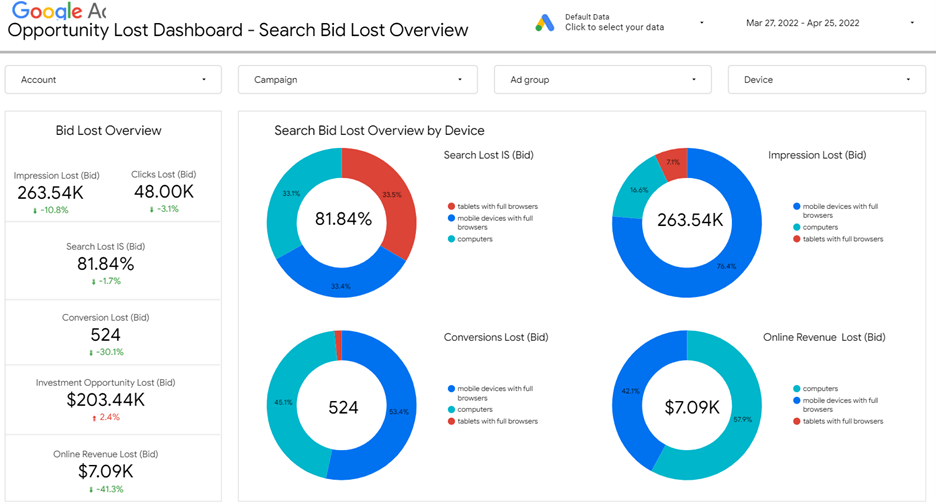
You can download Google’s “Opportunity Lost” template within the Data Studio templates &, once you have it, you will see that it’s a 13 slide template enabling you to see where the opportunity is within your Google Search & Display campaigns. (Note: I haven’t yet found one for Shopping but I am in the process of looking to create one).

For the purpose of this blog we are going to be focusing on Slide 3 (Search Bid Lost Overview) & Slide 5 (Display Bid Lost Overview). Let’s start with Slide 3 (Search Bid Lost Overview).

When you first load up the presentation it will look something like this:

Now, while this dashboard in itself is incredibly useful & contains a lot of valuable information, when it came to forecasting I wanted to neaten it up to make for a more digestible board, which I could quickly & easily pull out in client presentations. Also, in the example below, as the client didn’t have an Ecommerce arm I removed all reference to Revenue, preferring to focus on the three main areas:

  • Impressions Lost
  • Impression Share Lost
  • Conversions Lost

By focusing on the above I was able to simplify the dashboard & also tailor it so that I could break it down by different dimensions, including “Day Of The Week” & “Device” to help with my optimisations.

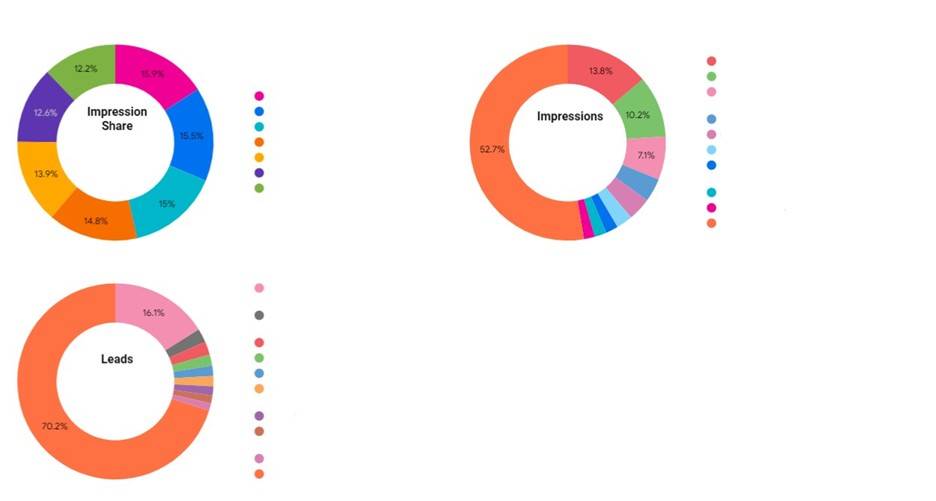
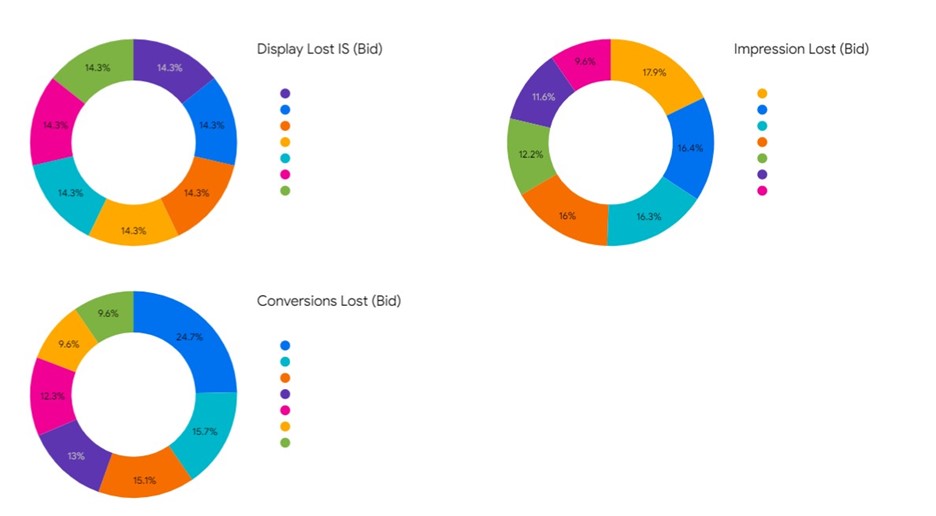
So, after a little work I adapted the Data Studio to look like the below (please note I’ve removed the client data hence the white gaps):

The beauty of this style of diagram is that not only does it give us absolute figures (in the middle) where we can understand what that growth looks like, it also allows us to segment by a dimension to help us identify where the real growth comes from. In the example above I segmented the Impression Share column by “Day Of The Week” so I could understand on which days I needed to bid more & in the Impressions & Leads columns I segmented by “Campaign” so I could understand which Campaigns had the biggest room to grow & improve. You can also segment by Device & other dimensions to really understand where your opportunity is & to drive the growth in the most efficient manner.

To do the above you simply need to change the “Dimension” section of the Google Data Studio report to “Day of week” or “Campaign” or “Device” depending on what you are trying to analyse.

Now, in terms of the calculations from Google’s perspective these are already input into the Data Studio, but for an understanding of how we can change these to suit different dimensions I’ve listed them here:

For Impression Share – Search Lost IS (Rank)

For Impressions – Impressions / Search Impr. share * Search Lost IS (rank)

For Leads – ((Impressions / Search Impr. share * Search Lost IS (rank))* CTR) * (Conversions / Clicks)

By using the three equations above we are able to use simple metrics within the account to estimate growth capabilities based on key data such as Conversions etc… As you can see from the top sheet you then have the option to choose between specific campaigns, and drilling down on the details here will get a better analysis of the campaign.


Changing Between Impression Share, Top Impression Share & Abs. Top Impression Share

Now in some situations you may just want to know the Impression Share that is available to you & how much your clients can grow, but in others you may want to know what more is available to you. That’s where editing the equations to incorporate Top Impression Share & Abs comes in. Top Impression Share can really help.

Let’s take a look at the equation for Leads:

If we change: ((Impressions / Search Impr. share * Search Lost IS (rank)) * CTR) * (Conversions / Clicks)

To: ((Impressions / Search Impr. share * Search Lost Top IS (rank)) * CTR) * (Conversions / Clicks)

We are now forecasting the potential if each ad is in the top positions (i.e. above the Organic search rankings), as opposed to if the ad just has the opportunity to show 100% of the time. By doing this we are able to identify not only visibility growth, but also growth patterns for higher ad positions & also top ad positions using Search Abs. Top IS (rank).

By utilising the above approach you can get a good understanding of how your Search campaigns are currently performing & where the potential growth areas might be. This is a great way to plan your upcoming campaigns.

Forecasting – Display Growth

Now that we’ve looked at how to forecast Search growth, we can roll out the same principle to forecast Display growth – although generally with much bigger metrics. I’ve created a similar dashboard here for Display, which you can view below, & focused solely on any campaigns which sit on the Display Network. What’s most interesting to note here is that dimensions such as “Day of the week” & “Device” are more pronounced. This is a much easier way to digest & get that data than trying to source it manually.

The dashboard above works in exactly the same way as the Search dashboard, except that it displays content related only to the Display campaigns. The equations work in a similar manner other than they use Display Lost IS as opposed to the search variation. All in all it’s a great way to see the overall performance of the Display Campaign & identify any areas of opportunity.

Conclusion

If you’re looking for a way to effectively forecast then there are a whole host of tools out there that you can use. However, if you are looking for a quick way to utilise the power of Google Data Studio for PPC forecasting then the ideas above should help you on your journey to find out the PPC potential of your campaigns & your website!

[blog]_[Utilising Competition Graphs To Identify Opportunity]_[Blog Picture]

Utilising Competition Graphs To Identify Opportunity

Having worked in the medical negligence industry where CPCs can be as high as £40 or £50, I’m very familiar with how valuable utilising competition graphs to find those lower volume cheaper – but equally as effective – CPCs can be. When we’re talking CPCs as high as the ones I’ve just mentioned it’s easy to burn through budget, even with a great Conversion Rate, so finding those gems within the lower volumes becomes even more critical, especially when it comes to building out campaigns or trying to find more areas to cover.

It’s not just PPC where competition graphs can be a valuable addition & today I want to look at how we can utilise these very popular Excel graphs within SEO strategy, to understand where the opportunities lie to drive growth/visibility across both SEO & Digital PR.

Fortunately, there are a number of different ways that you can work with Excel & data from some of our favourite digital marketing tools to really understand what’s available in the market & where the opportunities might lie.

Let’s take an example…

A few months back I was drafted in to pull together a proposal for a promotional products company. This company specialised in a wide range of different promotional products, & one of the tasks I undertook as part of the proposal process was to identify key areas of opportunity so we could see where the value lay for our clients. This would form the foundation of not only our SEO strategy but also guide our Digital PR strategy when it came to link acquisition & where we wanted to focus our efforts.

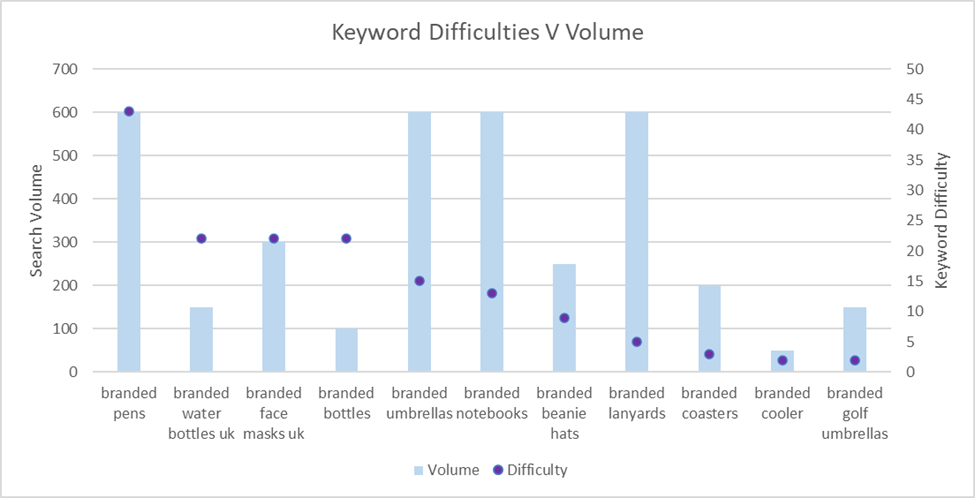
I reference the Excel spreadsheet below – pulled together with data just from AHRefs & plotted on a three axis graph, by overlaying CPC data with Search Volume & Difficulty.

Now this graph can be utilised for both SEO & PPC – for SEO it’s even more useful as you can use AHRefs “competition metric,” which for those of you who aren’t familiar with it, judges how hard it is to rank for a particular keyword given the number of higher Domain Rank websites that currently rank above that term. Essentially, it gives an overview of the volumes of specific keywords mapped against keyword difficulty to give you an idea of how achievable it might be to rank for that given keyword.

From the data above we can quite clearly see a number of significant trends. Initially, we can see that the market place has high search volume for branded pens, but also that this has super high competition & trying to rank on this term might be quite difficult. By contrast, if we look at other branded products such as lanyards, umbrellas or notebooks we can see a similar search volume level but a much lower level of keyword difficulty – an area of opportunity.

From utilising a simple graph above (and there’s many more products that we can populate in there) we are able to draw deductions around how to create an effective SEO/Digital PR strategy to maximise opportunity for the client, while still keeping in mind commercial intent & ensuring we are also applying adequate focus to commercially important terms.

Now we’ve seen this work for branded promotional products, how does it work for higher CPC terms like “medical negligence?”

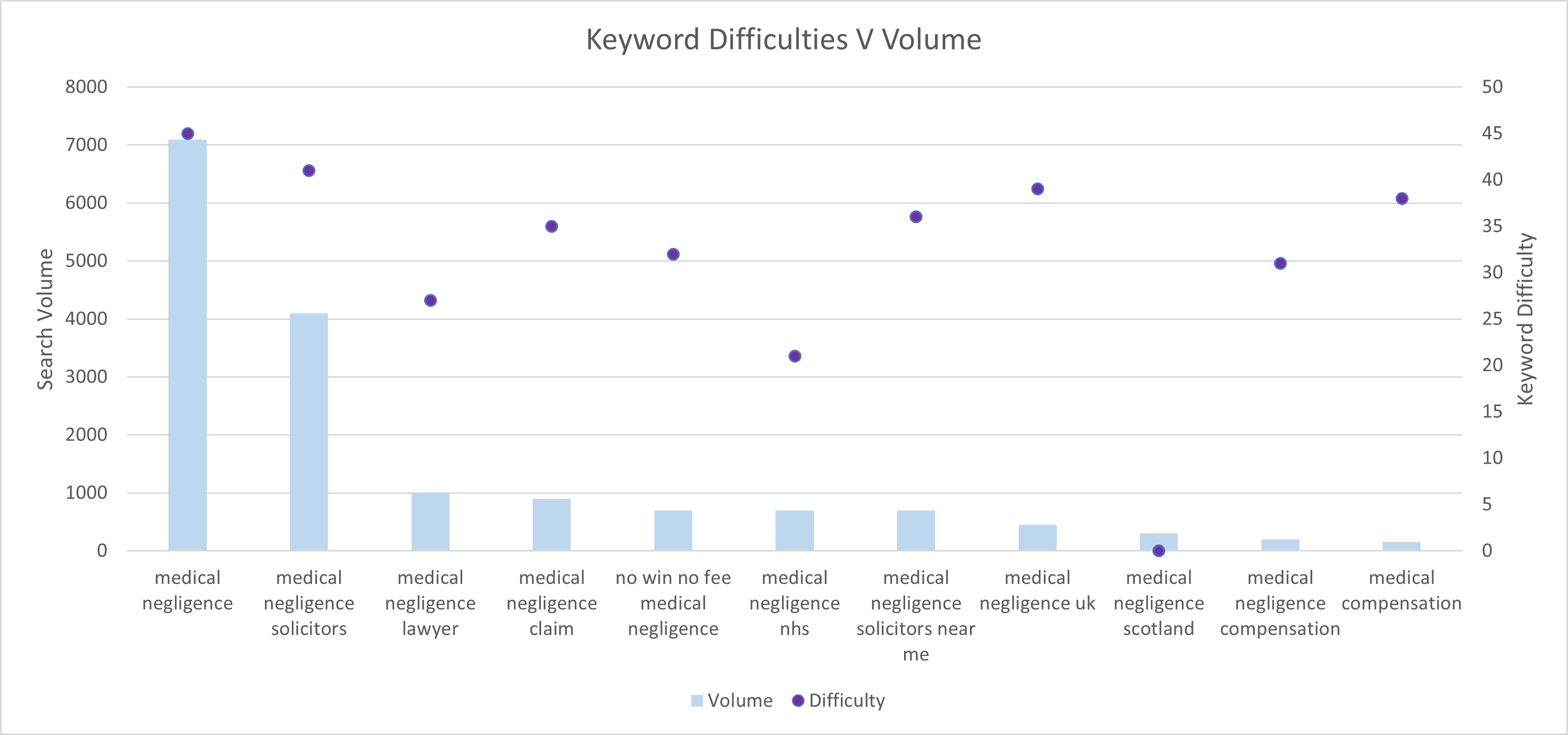
In this example we can see a far more pronounced difference for the high volume terms – but again we have some great areas of opportunity. We can see from this data that the popular “medical compensation” term is, in fact, low search volume for very high competition, compared to something we perhaps wouldn’t target, such as “medical negligence nhs” or even “medical negligence lawyer” which despite still having reasonable keyword difficulty has a much more established search volume (or reward!) to match.

All in all the graphs above are very simple to produce & incredibly easy to pull together utilising the following steps:

  1. Login to your AHREfs account
  2. Navigate to the “Keywords Explorer” tab & input your list of targeted keywords
  3. Download the Spreadsheet
  4. Remove all columns except “Keyword” “KD” & “Search Volume” & pull these into Excel using a multi-touchpoint graph

And there you go… a quick & easy way to pull together an effective graph which allows you to easily identify areas of opportunity, quick wins or perhaps more long-term gains for your clients which ties in with real-word metrics (search volume) to see achievable gains.

[blog]_[How to capitalize on holiday marketing trends]_[Blog Picture]

How to capitalize on holiday marketing trends

This year, all businesses have had to navigate through a very rough terrain, therefore effectively capitalising on the holiday season is essential for many. Our Director, Amanda Walls, recently spoke to Fleximize to share her top tips with SME’s looking to make the most of the holiday season.

Amanda is a digital marketing expert and has worked in Digital Marketing for over a decade. Over the last four years, she has nurtured Cedarwood Digital into the award-winning agency that it is today.

If you need help optimising your digital marketing strategy this holiday season, we have summarised Amanda’s top tips below or check out the full article on Fleximize’s site here.

How to capitalize on holiday marketing trends

1. Experiment with dynamic adverts

Throughout the holiday season markets are flooded with retailers, so it can be difficult for consumers to hear your brand above the noise. Amanda suggested that one simple way to stand out from the crowd is to make the most of Google’s ad extensions. Below are a few examples that have worked well for us in the past…

  • Reviews: “…we tested seller ratings for a gardening centre client and found that ads with seller ratings have a 41% higher CTR than normal text ads.
  • Structured snippets: “…showcase more information from your website
  • Countdown timers: “People have a natural fear of missing out and so the countdown timer extension is great for creating a sense of urgency around your product or service

2. Create shopping feeds

If you’re an ecommerce company, using product feeds in the run up to a holiday season is a no brainer“, Amanda explained. They help to quickly generate engaging ads, showcasing products that are directly pulled from your catalogue.

Where can shopping feeds be utilised?

  • Google Shopping Campaign Ads
  • Facebook Dynamic Product Ads (these show on both Facebook and Instagram)

3. Invest in retargeting advertising

Retargeting allows you to show personalized ads to returning customers, customers who have browsed your site without buying and people similar to existing customers.

“Retargeting not only allows brands to reach out to interested customers, but it also helps to increase brand visibility during noisy holiday periods – something that could encourage a potential customer to buy from you instead of a competitor.

Below are a selection of tools that you can utilise to retarget your customers:

  • Google’s Display network
  • Google’s Dynamic Remarketing
  • Facebook’s Retargeting
  • Facebook Lookalike Audiences

4. Don’t neglect customer reviews

Although the holiday season may be your busiest time of year, customer service must remain paramount. Don’t neglect the long-term goal for a quick win in the holidays.

A few of Amanda’s top tips for maintaining great customer service and positive customer reviews include:

  • Invest in customer service for the pre-buying process, not just the shipping
  • Utilise live chat windows on your site
  • Respond to any queries promptly
  • Enhance the buying experience and increase buying intent with tailored landing pages and gift guides
  • Create landing pages for specific terms you want to rank for during your specific holiday season such as ‘Christmas Trees’ or ‘Valentine’s Day Gifts’

5. Celebrate delivery

Customers are starting to expect free AND fast shipping. Be sure to communicate your shipping offering clearly to your customer. Amanda advises to “…factor delivery charges into your sales model and ensure that this service is featured clearly across your website and marketing channels.

6. Prepare for traffic spikes

Amanda notes that “[c]ustomers will not hang around on websites that are slow or crash”. Ideally, load times should be under 2 or 3 seconds on a desktop. Here are a few ways that you can speed up your load times:

  • Enable GZIP compression on your web serves
  • Compress images
  • Minify Java experience

7. Optimize for mobile

Customer trends are changing. What once was a research tool before buying a product is now being used to make purchases, therefore optimising for mobile is essential.

“The bottom line is that if people have a negative experience on mobile, they’re less likely to purchase from you in the future – no matter how great your website is.”

8. Plan early

Planning holiday campaigns well in advance is crucial. It takes time to build up SEO rankings and prepare a campaign that is going to stand up against a competitive market.

Christmas shopping can begin as early as September, so to maximise on the holiday period your campaigns must be ready before then.

“Plan early for each holiday season and you’ll be putting your business head and shoulders above the competition.

To view the article in full please head over to Fleximize’s site here.

If you found this blog useful, head to our blog page where you will find more advice from our digital marketing experts.

Relevant articles: